
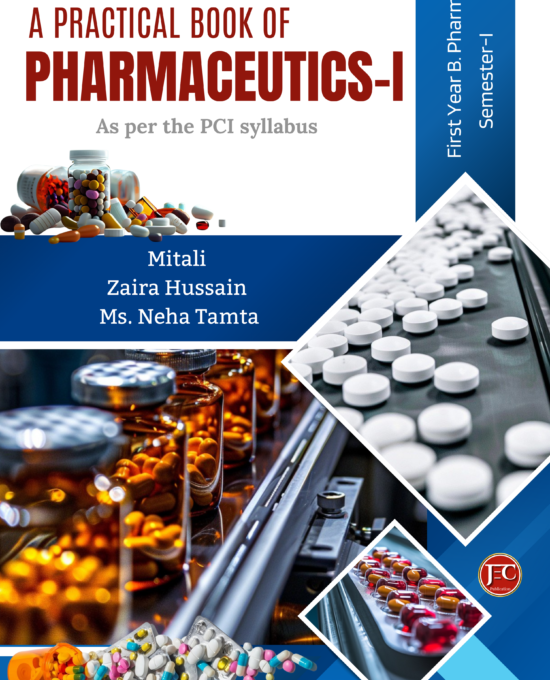
A Practical Book Of Pharmaceutics-I
Published on 2025
₹499.00
It gives me immense pleasure to present to pharmacy students my book entitled "A Practical Book
of Pharmaceutics-I". Writing a book is inspiring, often exciting, and sometimes very challenging
work.
Pharmaceutics practical involve the practical application of scientific principles to the formulation
and development of pharmaceutical products. These practical sessions typically include various
aspects such as drug formulation, dosage form design, and manufacturing techniques. Students learn
to handle equipment, perform experiments, and gain hands-on experience in pharmaceutical
processes. Key components may include compounding, granulation, tablet pressing, and quality
control methods. Proficiency in basic techniques like accurate measurements, proper handling of
equipment, and adherence to good laboratory practices is fundamental, laying the groundwork for
more advanced studies in pharmaceutics. Without a strong foundation in these practical skills,
progressing to advanced pharmaceutical development becomes challenging and resource-intensive.
The book contains calculations and important questions related to the experiments to fulfill the
requirements of students.
I record my sincere thanks to Dr. Navneet Verma, Dr. Arun Kumar Mishra, Dr. Sushil Kumar, Dr.
Munish Mani, Dr. Shweta Verma, and all my coauthors for constant encouragement to write this
book.
I thank my parents for their constant support to review the content of this book and moral support. I
am thankful to my seniors, friends and students who gave me suggestions whenever I asked for
betterment of this book.
I appreciate the cooperation and interest taken by Publishers JEC Publication in bringing out this
book.
I will be grateful to all the teachers and students who will be kind enough to point out my mistakes
that have escaped my attention. Suggestions for future improvement are always welcome.
A Practical Book Of Pharmaceutics-I
₹499.00
It gives me immense pleasure to present to pharmacy students my book entitled "A Practical Book
of Pharmaceutics-I". Writing a book is inspiring, often exciting, and sometimes very challenging
work.
Pharmaceutics practical involve the practical application of scientific principles to the formulation
and development of pharmaceutical products. These practical sessions typically include various
aspects such as drug formulation, dosage form design, and manufacturing techniques. Students learn
to handle equipment, perform experiments, and gain hands-on experience in pharmaceutical
processes. Key components may include compounding, granulation, tablet pressing, and quality
control methods. Proficiency in basic techniques like accurate measurements, proper handling of
equipment, and adherence to good laboratory practices is fundamental, laying the groundwork for
more advanced studies in pharmaceutics. Without a strong foundation in these practical skills,
progressing to advanced pharmaceutical development becomes challenging and resource-intensive.
The book contains calculations and important questions related to the experiments to fulfill the
requirements of students.
I record my sincere thanks to Dr. Navneet Verma, Dr. Arun Kumar Mishra, Dr. Sushil Kumar, Dr.
Munish Mani, Dr. Shweta Verma, and all my coauthors for constant encouragement to write this
book.
I thank my parents for their constant support to review the content of this book and moral support. I
am thankful to my seniors, friends and students who gave me suggestions whenever I asked for
betterment of this book.
I appreciate the cooperation and interest taken by Publishers JEC Publication in bringing out this
book.
I will be grateful to all the teachers and students who will be kind enough to point out my mistakes
that have escaped my attention. Suggestions for future improvement are always welcome.

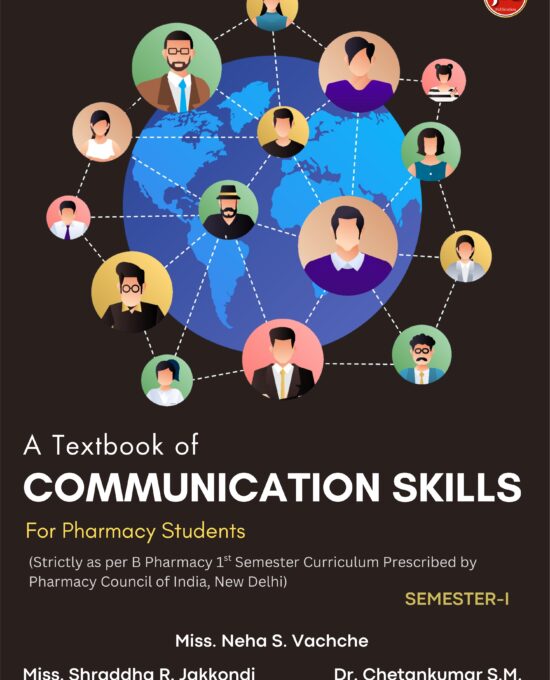
A Textbook of COMMUNICATION SKILLS
₹499.00
A Textbook of Communication Skills for Pharmacy Students is designed to meet
the specific needs of budding pharmacists by equipping them with essential soft skills
required in professional healthcare settings. Communication is the foundation of
effective pharmacy practice, as pharmacists routinely interact with doctors, nurses,
dentists, physiotherapists, patients, and other healthcare professionals. This book
provides a clear, structured approach to developing the ability to convey information
confidently, accurately, and empathetically.
The content is carefully aligned with the Pharmacy Council of India’s BP105T
Communication Skills (Theory) syllabus, ensuring that students acquire not only
theoretical knowledge but also practical competence. Each unit systematically
introduces learners to the fundamentals of communication-covering verbal, nonverbal, and written communication-while also addressing barriers that may hinder
effective interactions.
Students will explore diverse aspects such as communication processes, listening
skills, and communication styles, alongside practical skills like interview techniques,
presentations, and group discussions. The book emphasizes both professional and
interpersonal dimensions, preparing students to become effective team players and
leaders in the pharmaceutical sector.
In addition, the text highlights the behavioural and attitudinal requirements of a
pharmacist, focusing on teamwork, leadership, empathy, and patient-centered
communication. Examples, illustrations, and simplified explanations make the
content easy to understand, while the inclusion of real-life applications encourages
students to practice and refine their skills.
Overall, this book aims to bridge the gap between knowledge and practice, helping
pharmacy students develop confidence, clarity, and professionalism in their
communication. By mastering these skills early in their academic journey, students
will be better prepared to contribute meaningfully to patient care, collaborative
healthcare teams, and the pharmaceutical business environment.
A Textbook of COMMUNICATION SKILLS
₹499.00
A Textbook of Communication Skills for Pharmacy Students is designed to meet
the specific needs of budding pharmacists by equipping them with essential soft skills
required in professional healthcare settings. Communication is the foundation of
effective pharmacy practice, as pharmacists routinely interact with doctors, nurses,
dentists, physiotherapists, patients, and other healthcare professionals. This book
provides a clear, structured approach to developing the ability to convey information
confidently, accurately, and empathetically.
The content is carefully aligned with the Pharmacy Council of India’s BP105T
Communication Skills (Theory) syllabus, ensuring that students acquire not only
theoretical knowledge but also practical competence. Each unit systematically
introduces learners to the fundamentals of communication-covering verbal, nonverbal, and written communication-while also addressing barriers that may hinder
effective interactions.
Students will explore diverse aspects such as communication processes, listening
skills, and communication styles, alongside practical skills like interview techniques,
presentations, and group discussions. The book emphasizes both professional and
interpersonal dimensions, preparing students to become effective team players and
leaders in the pharmaceutical sector.
In addition, the text highlights the behavioural and attitudinal requirements of a
pharmacist, focusing on teamwork, leadership, empathy, and patient-centered
communication. Examples, illustrations, and simplified explanations make the
content easy to understand, while the inclusion of real-life applications encourages
students to practice and refine their skills.
Overall, this book aims to bridge the gap between knowledge and practice, helping
pharmacy students develop confidence, clarity, and professionalism in their
communication. By mastering these skills early in their academic journey, students
will be better prepared to contribute meaningfully to patient care, collaborative
healthcare teams, and the pharmaceutical business environment.
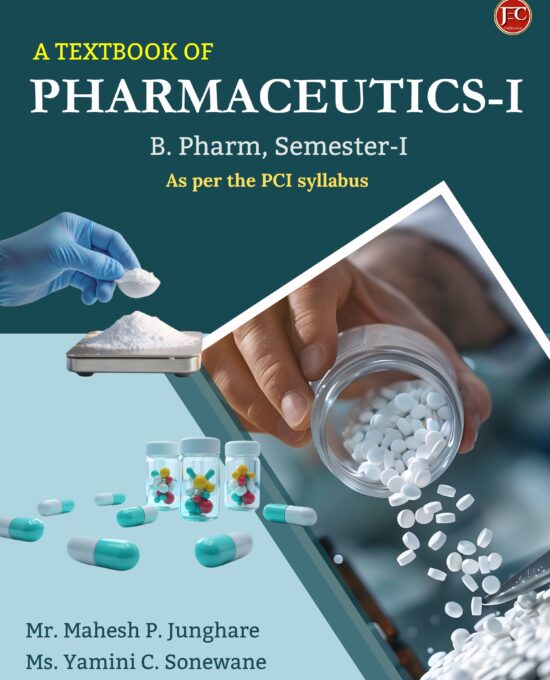
A textbook of Pharmaceutics-I
₹499.00
The discipline of pharmaceutics serves as a vital bridge between drug discovery and the large-scale
production of medications that adhere to regulatory, safety, and efficacy standards. As the pharmaceutical
sciences continue to advance, it is crucial for students to build a solid understanding of the principles,
processes, and practices that underpin the industrial manufacturing of pharmaceutical products.
This textbook on Pharmaceutics is specifically crafted for first-semester B. Pharm students. It offers a
thorough exploration of industrial pharmacy, covering key topics such as formulation development,
quality control, manufacturing processes, regulatory compliance, and the principles of Good
Manufacturing Practices (GMP). The book aims to provide students with both foundational theoretical
knowledge and practical insights essential for navigating the complexities of pharmaceutical production.
Each chapter has been meticulously organized to ensure clarity and comprehension, incorporating
detailed explanations, illustrative diagrams, and real-world examples to enhance the learning experience.
Special attention has been given to industry-relevant subjects to foster critical thinking and problemsolving skills, which are indispensable in today’s rapidly evolving pharmaceutical sector.
Additionally, the textbook addresses significant emerging trends in pharmaceutical manufacturing, such
as advancements in automation, biotechnology, and regulatory affairs. This forward-looking approach
prepares students to tackle future challenges in the field. By bridging academic concepts with practical
applications, the book aligns with the demands of the professional world, making it a valuable resource
for aspiring industrial pharmacy professionals.
It is my hope that this textbook will serve as an indispensable guide, equipping students with the
knowledge and skills necessary to excel in both their academic journey and their professional careers in
industrial pharmacy.
Mr. Mahesh P. Junghare
(M. Pharm. – Pharmacognosy)
Ms. Yamini C. Sonewane
(Bachelor of Pharmacy)
A textbook of Pharmaceutics-I
₹499.00
The discipline of pharmaceutics serves as a vital bridge between drug discovery and the large-scale
production of medications that adhere to regulatory, safety, and efficacy standards. As the pharmaceutical
sciences continue to advance, it is crucial for students to build a solid understanding of the principles,
processes, and practices that underpin the industrial manufacturing of pharmaceutical products.
This textbook on Pharmaceutics is specifically crafted for first-semester B. Pharm students. It offers a
thorough exploration of industrial pharmacy, covering key topics such as formulation development,
quality control, manufacturing processes, regulatory compliance, and the principles of Good
Manufacturing Practices (GMP). The book aims to provide students with both foundational theoretical
knowledge and practical insights essential for navigating the complexities of pharmaceutical production.
Each chapter has been meticulously organized to ensure clarity and comprehension, incorporating
detailed explanations, illustrative diagrams, and real-world examples to enhance the learning experience.
Special attention has been given to industry-relevant subjects to foster critical thinking and problemsolving skills, which are indispensable in today’s rapidly evolving pharmaceutical sector.
Additionally, the textbook addresses significant emerging trends in pharmaceutical manufacturing, such
as advancements in automation, biotechnology, and regulatory affairs. This forward-looking approach
prepares students to tackle future challenges in the field. By bridging academic concepts with practical
applications, the book aligns with the demands of the professional world, making it a valuable resource
for aspiring industrial pharmacy professionals.
It is my hope that this textbook will serve as an indispensable guide, equipping students with the
knowledge and skills necessary to excel in both their academic journey and their professional careers in
industrial pharmacy.
Mr. Mahesh P. Junghare
(M. Pharm. – Pharmacognosy)
Ms. Yamini C. Sonewane
(Bachelor of Pharmacy)

ACL Repair Complications: From Biomechanics to Rehabilitation
₹999.00
Anterior cruciate ligament (ACL) injuries are among the most frequent and
difficult problems faced in sports medicine and orthopaedic practice.
Despite substantial improvement in surgical intervention and rehabilitation
protocol of ACLR, post-operative complications are still an important issue
that can affect function, delay return to previous activities and potentially
increase the risk of re-injury or future articular degeneration. These
difficulties surface via an intricate interrelationship between biomechanical
factors, surgical variables, biological healing influences and rehabilitation
methods.
ACL Repair Complications: Biomechanics to Rehabilitation has been
designed as an integrated, multidisciplinary approach, addressing this
complexity. Awesomeness intro Introduction The theoretical foundation of
this book is that postoperative complications after ACL reconstruction
cannot be properly dealt with and managed in an isolated way. Yet these
elements should be considered along the entire continuum of care—from
injury biomechanics, through surgical treatment and tissue healing to
evidence-based rehabilitation and functional recovery in the long aeon.
This book connects basic biomechanical skills with clinical applications. It
discusses how abnormal joint loading, neuromuscular control deficiencies,
graft selection and placement, and aberrant movement patterns lead to such
complications as graft failure, residual instability, stiffness, pain syndromes,
and early onset osteoarthritis. The same emphasis on rehabilitation as
surgery is considered, understanding that this can also limit recovery if the loading is wrong, progression of exercise or neuromuscular control training
is miss-managed for all technically successful surgeries.
This volume, written by orthopedic surgeons, sports physicians,,
physiotherapists, rehabilitation scientists and athletic trainers and
postgraduate students is a comprehensive textbook for the management of
such advanced treatments. The content is evidence-based where specialists,
scientists and researchers in the field from around the world have written
chapters that synthesise available research on a particular method including
current research evidence, clinical insight, practical application and
guidelines for decision making. Case-based and applied framework
chapters present biomechanical perspectives on specific topics that
demonstrate how theory translates into practice through in-depth study of
clinical examples and practical applications for rehabilitation.
Ultimately, the book is intended to foster a comprehensive and patientoriented approach to ACL care that extends beyond operative success while
emphasizing long-term joint health, performance function, and quality of
life. Combining biomechanics and rehabilitation in a single plot, we aim to
help improve surgical safety and enhance the future of rehabilitation and
patient outcomes for those rehabilitating from ACL repair.
ACL Repair Complications: From Biomechanics to Rehabilitation
₹999.00
Anterior cruciate ligament (ACL) injuries are among the most frequent and
difficult problems faced in sports medicine and orthopaedic practice.
Despite substantial improvement in surgical intervention and rehabilitation
protocol of ACLR, post-operative complications are still an important issue
that can affect function, delay return to previous activities and potentially
increase the risk of re-injury or future articular degeneration. These
difficulties surface via an intricate interrelationship between biomechanical
factors, surgical variables, biological healing influences and rehabilitation
methods.
ACL Repair Complications: Biomechanics to Rehabilitation has been
designed as an integrated, multidisciplinary approach, addressing this
complexity. Awesomeness intro Introduction The theoretical foundation of
this book is that postoperative complications after ACL reconstruction
cannot be properly dealt with and managed in an isolated way. Yet these
elements should be considered along the entire continuum of care—from
injury biomechanics, through surgical treatment and tissue healing to
evidence-based rehabilitation and functional recovery in the long aeon.
This book connects basic biomechanical skills with clinical applications. It
discusses how abnormal joint loading, neuromuscular control deficiencies,
graft selection and placement, and aberrant movement patterns lead to such
complications as graft failure, residual instability, stiffness, pain syndromes,
and early onset osteoarthritis. The same emphasis on rehabilitation as
surgery is considered, understanding that this can also limit recovery if the loading is wrong, progression of exercise or neuromuscular control training
is miss-managed for all technically successful surgeries.
This volume, written by orthopedic surgeons, sports physicians,,
physiotherapists, rehabilitation scientists and athletic trainers and
postgraduate students is a comprehensive textbook for the management of
such advanced treatments. The content is evidence-based where specialists,
scientists and researchers in the field from around the world have written
chapters that synthesise available research on a particular method including
current research evidence, clinical insight, practical application and
guidelines for decision making. Case-based and applied framework
chapters present biomechanical perspectives on specific topics that
demonstrate how theory translates into practice through in-depth study of
clinical examples and practical applications for rehabilitation.
Ultimately, the book is intended to foster a comprehensive and patientoriented approach to ACL care that extends beyond operative success while
emphasizing long-term joint health, performance function, and quality of
life. Combining biomechanics and rehabilitation in a single plot, we aim to
help improve surgical safety and enhance the future of rehabilitation and
patient outcomes for those rehabilitating from ACL repair.
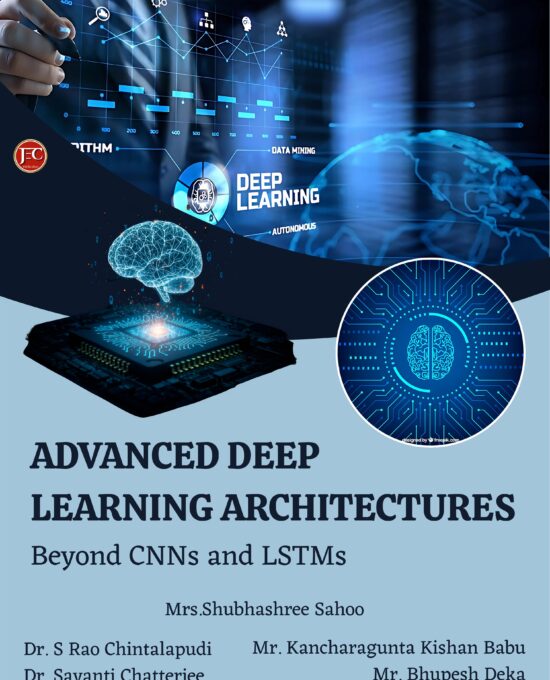
ADVANCED DEEP LEARNING ARCHITECTURES Beyond CNNs and LSTMs
₹499.00
Deep learning has fundamentally transformed the landscape of artificial intelligence, powering
breakthroughs in computer vision, natural language processing, speech recognition, and beyond.
Over the past decade, Convolutional Neural Networks (CNNs) and Long Short-Term Memory
networks (LSTMs) emerged as the dominant architectures for tackling structured image data and
sequential information, respectively. CNNs, with their hierarchical feature extraction and local
receptive fields, revolutionized image classification, object detection, and semantic segmentation,
enabling systems to achieve near-human or even superhuman performance on benchmarks such
as ImageNet. LSTMs, on the other hand, overcame the limitations of traditional recurrent neural
networks, effectively addressing the vanishing gradient problem and enabling long-range
temporal dependencies to be learned, thereby advancing language modeling, machine translation,
and speech synthesis.
However, as datasets expanded to billions of samples, tasks grew increasingly complex, and the
need for generalization across heterogeneous domains intensified, the inherent limitations of
CNNs and LSTMs became apparent. CNNs struggle with modeling long-range dependencies,
processing irregular graph-structured data, or integrating multimodal inputs, while LSTMs face
challenges in parallelization, handling very long sequences efficiently, and scaling to massive
model sizes. Moreover, simply increasing depth, width, or training data does not always guarantee
proportional improvements in performance, highlighting the plateauing effect of these
architectures in cutting-edge AI applications.
This book, Advanced Deep Learning Architectures: Beyond CNNs and LSTMs, is designed to chart
the evolution of next-generation architectures that address these limitations and define the future
of artificial intelligence. It offers a comprehensive journey through the design principles,
mathematical foundations, and practical implementations of state-of-the-art models. The scope
spans transformers — including BERT, GPT, and Vision Transformers — which leverage selfattention to model long-range dependencies and multimodal relationships; graph neural networks,
which enable AI systems to reason about relational and non-Euclidean data; capsule networks,
which improve spatial hierarchies and pose awareness; neural ordinary differential equations,
which introduce continuous-time modeling; and diffusion models, which have redefined
generative AI through probabilistic modeling and denoising frameworks. The book also delves
into hybrid and multimodal architectures, advanced reinforcement learning frameworks, and
emerging paradigms such as neuromorphic computing, quantum deep learning, and evolutionary algorithms. Importantly, the text bridges theory and practice. Each chapter combines rigorous
mathematical derivations — from linear algebra and tensor calculus to probabilistic modeling and
information-theoretic analysis — with hands-on Python implementations using libraries such as
PyTorch, TensorFlow, and NumPy. Readers are guided through step-by-step coding exercises,
practical tips for optimization, and demonstrations of applying these models to real-world datasets.
This dual approach ensures a deep understanding not just of why these architectures work, but
how to implement, experiment, and extend them.
Beyond technical mastery, the book emphasizes the broader implications of advanced AI:
multimodal intelligence, ethical alignment, interpretability, and the path toward general-purpose
AI systems.
ADVANCED DEEP LEARNING ARCHITECTURES Beyond CNNs and LSTMs
₹499.00
Deep learning has fundamentally transformed the landscape of artificial intelligence, powering
breakthroughs in computer vision, natural language processing, speech recognition, and beyond.
Over the past decade, Convolutional Neural Networks (CNNs) and Long Short-Term Memory
networks (LSTMs) emerged as the dominant architectures for tackling structured image data and
sequential information, respectively. CNNs, with their hierarchical feature extraction and local
receptive fields, revolutionized image classification, object detection, and semantic segmentation,
enabling systems to achieve near-human or even superhuman performance on benchmarks such
as ImageNet. LSTMs, on the other hand, overcame the limitations of traditional recurrent neural
networks, effectively addressing the vanishing gradient problem and enabling long-range
temporal dependencies to be learned, thereby advancing language modeling, machine translation,
and speech synthesis.
However, as datasets expanded to billions of samples, tasks grew increasingly complex, and the
need for generalization across heterogeneous domains intensified, the inherent limitations of
CNNs and LSTMs became apparent. CNNs struggle with modeling long-range dependencies,
processing irregular graph-structured data, or integrating multimodal inputs, while LSTMs face
challenges in parallelization, handling very long sequences efficiently, and scaling to massive
model sizes. Moreover, simply increasing depth, width, or training data does not always guarantee
proportional improvements in performance, highlighting the plateauing effect of these
architectures in cutting-edge AI applications.
This book, Advanced Deep Learning Architectures: Beyond CNNs and LSTMs, is designed to chart
the evolution of next-generation architectures that address these limitations and define the future
of artificial intelligence. It offers a comprehensive journey through the design principles,
mathematical foundations, and practical implementations of state-of-the-art models. The scope
spans transformers — including BERT, GPT, and Vision Transformers — which leverage selfattention to model long-range dependencies and multimodal relationships; graph neural networks,
which enable AI systems to reason about relational and non-Euclidean data; capsule networks,
which improve spatial hierarchies and pose awareness; neural ordinary differential equations,
which introduce continuous-time modeling; and diffusion models, which have redefined
generative AI through probabilistic modeling and denoising frameworks. The book also delves
into hybrid and multimodal architectures, advanced reinforcement learning frameworks, and
emerging paradigms such as neuromorphic computing, quantum deep learning, and evolutionary algorithms. Importantly, the text bridges theory and practice. Each chapter combines rigorous
mathematical derivations — from linear algebra and tensor calculus to probabilistic modeling and
information-theoretic analysis — with hands-on Python implementations using libraries such as
PyTorch, TensorFlow, and NumPy. Readers are guided through step-by-step coding exercises,
practical tips for optimization, and demonstrations of applying these models to real-world datasets.
This dual approach ensures a deep understanding not just of why these architectures work, but
how to implement, experiment, and extend them.
Beyond technical mastery, the book emphasizes the broader implications of advanced AI:
multimodal intelligence, ethical alignment, interpretability, and the path toward general-purpose
AI systems.
