


EMAIL: info@jecpublication.com PHONE: +91 8416955630
Filter
Quick View
Add to Wishlist
CompareCompare
Add to cartView cart
Quick View
Add to Wishlist

Physical Pharmaceutics 1

₹499.00
Add to cartView cart
Quick View
Add to Wishlist
CompareCompare
Add to cartView cart

PLANT BIOTECHNOLOGY AND BIOASSAY OF PHYTOMEDICINES

₹499.00
Plant Biotechnology and Bioassay of Phytomedicines is a comprehensive academic book focusing on the application of modern biotechnology and pharmacological evaluation techniques in medicinal plant research. It covers plant biotechnology, genetic engineering, medicinal plant cultivation, tissue culture, protoplast technology, and germplasm conservation. The book explores the production of pharmaceutically important secondary metabolites and biopharmaceuticals, along with upstream and downstream bioprocessing and the pharmaceutical applications of lower plants. It also discusses in vivo bioassay methods for evaluating herbal drugs, including analgesic, anti-inflammatory, anxiolytic, antidepressant, anticonvulsant, antidiabetic, hepatoprotective, antihypertensive, antiarrhythmic, antianginal, diuretic, and antihyperlipidemic activities. The final section introduces in silico approaches such as network pharmacology, molecular docking, pharmacophore modelling, QSAR, machine learning, ADMET prediction, and molecular dynamics. This book is a valuable reference for pharmacy students, researchers, and professionals interested in plant-based drug discovery and phytomedicine.
Quick View
Add to Wishlist

PLANT BIOTECHNOLOGY AND BIOASSAY OF PHYTOMEDICINES

₹499.00
Plant Biotechnology and Bioassay of Phytomedicines is a comprehensive academic book focusing on the application of modern biotechnology and pharmacological evaluation techniques in medicinal plant research. It covers plant biotechnology, genetic engineering, medicinal plant cultivation, tissue culture, protoplast technology, and germplasm conservation. The book explores the production of pharmaceutically important secondary metabolites and biopharmaceuticals, along with upstream and downstream bioprocessing and the pharmaceutical applications of lower plants. It also discusses in vivo bioassay methods for evaluating herbal drugs, including analgesic, anti-inflammatory, anxiolytic, antidepressant, anticonvulsant, antidiabetic, hepatoprotective, antihypertensive, antiarrhythmic, antianginal, diuretic, and antihyperlipidemic activities. The final section introduces in silico approaches such as network pharmacology, molecular docking, pharmacophore modelling, QSAR, machine learning, ADMET prediction, and molecular dynamics. This book is a valuable reference for pharmacy students, researchers, and professionals interested in plant-based drug discovery and phytomedicine.
Add to cartView cart
Quick View
Add to Wishlist
CompareCompare
Add to cartView cart

Practical Handbook of Industrial Pharmacy

₹499.00

'Practical Handbook of Industrial Pharmacy' is an academic laboratory manual authored by Mrs. Lasure Utkarsha Sanjay, Ms. Vanita B. Katore, Ms. Pooja Suresh Thorat, Ms. Sushma G. Shirtar, and Ms. Vaishnavi Sanjay Sake. Published in 2026 by JEC Publishers and Distributors, this handbook is structured specifically for Third Year B. Pharm students (Semester V) in accordance with the Pharmacy Council of India (PCI) syllabus.

The book bridges theoretical concepts and industrial practice by providing detailed methodologies, formulas, and evaluation procedures for pharmaceutical unit operations and dosage form development. It covers 11 practical experiments, including preformulation studies on granules, the preparation and quality control evaluation of paracetamol and aspirin tablets, film coating processes, the formulation of tetracycline hard gelatin capsules, the manufacture of sterile parenterals (such as calcium gluconate and ascorbic acid injections), the compounding of eye drops, eye ointments, and topical creams (cold and vanishing creams), and the quality assessment of pharmaceutical glass containers (hydrolytic resistance and arsenic tests).
Quick View
Add to Wishlist

Practical Handbook of Industrial Pharmacy

₹499.00

'Practical Handbook of Industrial Pharmacy' is an academic laboratory manual authored by Mrs. Lasure Utkarsha Sanjay, Ms. Vanita B. Katore, Ms. Pooja Suresh Thorat, Ms. Sushma G. Shirtar, and Ms. Vaishnavi Sanjay Sake. Published in 2026 by JEC Publishers and Distributors, this handbook is structured specifically for Third Year B. Pharm students (Semester V) in accordance with the Pharmacy Council of India (PCI) syllabus.

The book bridges theoretical concepts and industrial practice by providing detailed methodologies, formulas, and evaluation procedures for pharmaceutical unit operations and dosage form development. It covers 11 practical experiments, including preformulation studies on granules, the preparation and quality control evaluation of paracetamol and aspirin tablets, film coating processes, the formulation of tetracycline hard gelatin capsules, the manufacture of sterile parenterals (such as calcium gluconate and ascorbic acid injections), the compounding of eye drops, eye ointments, and topical creams (cold and vanishing creams), and the quality assessment of pharmaceutical glass containers (hydrolytic resistance and arsenic tests).

Add to cartView cart
Quick View
Add to Wishlist
CompareCompare
Add to cartView cart

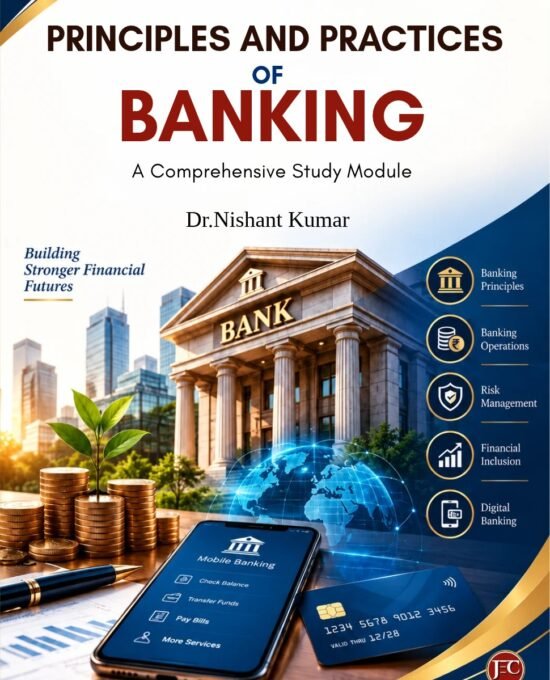
Principles And Practices Of Banking : A Comprehensive Study Module

₹499.00
This book has been prepared as a comprehensive study module in the principles and practices of banking, intended primarily for students of the Bachelor of Business Administration programme. Banking sits at the very centre of the modern financial system, and a sound understanding of how banks originated, how they function, how they are regulated, and how they interact with allied financial institutions is indispensable not only to students preparing for a career in banking and finance, but to any student of business who will, in one capacity or another, engage with banks throughout their professional life. The book is organised into six modules, following the prescribed syllabus. The first module traces the evolution of banking, from its earliest origins through its development in the West and in India, and lays the conceptual foundation of what a bank is and does. The second module examines the primary and secondary functions performed by a commercial bank, from the acceptance of deposits and the granting of loans and advances to the wide range of agency and general utility services banks provide. The third module turns to banking procedure, examining in detail how deposit accounts are opened and operated, and the special considerations that apply to different categories of account holders. The fourth module surveys the principal methods by which funds are remitted through the banking system. The fifth module looks beyond banks themselves to the wider universe of non-banking financial institutions, with particular attention to mutual funds and housing finance institutions. The sixth and concluding module examines the international dimension of banking, including the diversification of banks into new lines of business, the growth of multinational banking, and the distinctive features of the Eurocurrency market.
Quick View
Add to Wishlist

Principles And Practices Of Banking : A Comprehensive Study Module

₹499.00
This book has been prepared as a comprehensive study module in the principles and practices of banking, intended primarily for students of the Bachelor of Business Administration programme. Banking sits at the very centre of the modern financial system, and a sound understanding of how banks originated, how they function, how they are regulated, and how they interact with allied financial institutions is indispensable not only to students preparing for a career in banking and finance, but to any student of business who will, in one capacity or another, engage with banks throughout their professional life. The book is organised into six modules, following the prescribed syllabus. The first module traces the evolution of banking, from its earliest origins through its development in the West and in India, and lays the conceptual foundation of what a bank is and does. The second module examines the primary and secondary functions performed by a commercial bank, from the acceptance of deposits and the granting of loans and advances to the wide range of agency and general utility services banks provide. The third module turns to banking procedure, examining in detail how deposit accounts are opened and operated, and the special considerations that apply to different categories of account holders. The fourth module surveys the principal methods by which funds are remitted through the banking system. The fifth module looks beyond banks themselves to the wider universe of non-banking financial institutions, with particular attention to mutual funds and housing finance institutions. The sixth and concluding module examines the international dimension of banking, including the diversification of banks into new lines of business, the growth of multinational banking, and the distinctive features of the Eurocurrency market.
Add to cartView cart
Quick View
Add to Wishlist
CompareCompare
Add to cartView cart

Psychological Impact of Chronic Diseases

₹499.00
The twenty-first century has witnessed remarkable advances in medical science, resulting in improved diagnosis, treatment, and management of numerous diseases. Despite these achievements, chronic diseases continue to pose one of the greatest challenges to global health. Conditions such as Diabetes Mellitus and Hypertension have become increasingly prevalent, affecting millions of individuals across diverse populations. While their physical manifestations are well documented, their psychological consequences often remain underappreciated in both clinical practice and public health discourse. This book has been written to address that critical gap by presenting a comprehensive psychological perspective on chronic diseases. The foundation of this book is an empirical research study entitled "Psychological Impact of Chronic Diseases on Mental Depression, Alienation, and Neuroticism of Patients." However, this volume is not merely a reproduction of a research dissertation. Rather, it is a carefully revised, expanded, and reader-oriented academic book that translates scientific findings into a coherent and accessible resource for students, researchers, healthcare professionals, and mental health practitioners. The central objective is to demonstrate that chronic diseases are not solely biological conditions but complex human experiences that influence psychological adjustment, emotional well-being, social functioning, and overall quality of life.
Quick View
Add to Wishlist

Psychological Impact of Chronic Diseases

₹499.00
The twenty-first century has witnessed remarkable advances in medical science, resulting in improved diagnosis, treatment, and management of numerous diseases. Despite these achievements, chronic diseases continue to pose one of the greatest challenges to global health. Conditions such as Diabetes Mellitus and Hypertension have become increasingly prevalent, affecting millions of individuals across diverse populations. While their physical manifestations are well documented, their psychological consequences often remain underappreciated in both clinical practice and public health discourse. This book has been written to address that critical gap by presenting a comprehensive psychological perspective on chronic diseases. The foundation of this book is an empirical research study entitled "Psychological Impact of Chronic Diseases on Mental Depression, Alienation, and Neuroticism of Patients." However, this volume is not merely a reproduction of a research dissertation. Rather, it is a carefully revised, expanded, and reader-oriented academic book that translates scientific findings into a coherent and accessible resource for students, researchers, healthcare professionals, and mental health practitioners. The central objective is to demonstrate that chronic diseases are not solely biological conditions but complex human experiences that influence psychological adjustment, emotional well-being, social functioning, and overall quality of life.
Add to cartView cart
Quick View
Add to Wishlist
CompareCompare
Add to cartView cart

Python For Commerce

₹499.00
Written by Ms. J. Evangeline Sherly, Dr. B. Sashi Rekha, and Dr. S. Baby from Providence College for Women, "Python for Commerce" is an introductory textbook designed to help commerce students explore the practical applications of Python programming in business, data analysis, and decision-making. The book systematically covers core programming fundamentals, control structures, and various data collections like lists, tuples, sets, and dictionaries. It further guides learners through functions, object-oriented programming concepts, string manipulations, and error handling. Additionally, the text equips students with essential skills for handling modern data workflows through chapters on file handling, the pickle module for serialization, multithreading, and managing CSV files.
Quick View
Add to Wishlist

Python For Commerce

₹499.00
Written by Ms. J. Evangeline Sherly, Dr. B. Sashi Rekha, and Dr. S. Baby from Providence College for Women, "Python for Commerce" is an introductory textbook designed to help commerce students explore the practical applications of Python programming in business, data analysis, and decision-making. The book systematically covers core programming fundamentals, control structures, and various data collections like lists, tuples, sets, and dictionaries. It further guides learners through functions, object-oriented programming concepts, string manipulations, and error handling. Additionally, the text equips students with essential skills for handling modern data workflows through chapters on file handling, the pickle module for serialization, multithreading, and managing CSV files.
Add to cartView cart
Quick View
Add to Wishlist
CompareCompare
Add to cartView cart

QUALITATIVE RESEARCH : PRINCIPLES AND METHODOLOGICAL APPROCHES

₹499.00
The pursuit of knowledge in the social sciences, management, psychology, law, education, and allied disciplines increasingly demands approaches that move beyond numbers and statistics to understand the deeper meanings, lived experiences, social realities, and contextual complexities of human life. Qualitative research has therefore emerged as one of the most significant and intellectually enriching approaches to inquiry, enabling researchers to explore phenomena through interpretation, observation, interaction, and critical reflection. This book, Qualitative Research: Principles and Methodological Approaches, has been developed with the intention of providing a comprehensive, systematic, and practical understanding of qualitative research methodologies for students, scholars, academicians, and professionals across disciplines. The idea for this book originated from our collective academic experiences as teachers, researchers, mentors, and practitioners engaged in higher education and scholarly inquiry. Over the years, we observed that many students and emerging researchers often encounter difficulties in understanding the philosophical foundations, methodological flexibility, analytical procedures, and practical applications of qualitative research. While several scholarly resources exist, there remains a need for a text that presents qualitative research in a clear, structured, academically rigorous, and contextually relevant manner, particularly for Indian learners and researchers. This book seeks to fulfil that need by combining theoretical depth with practical orientation. The text systematically introduces readers to the nature, evolution, principles, and philosophical foundations of qualitative inquiry. It explores major qualitative traditions such as phenomenology, grounded theory, ethnography, narrative inquiry, action research, and case study research, while also discussing research design, sampling strategies, data collection methods, qualitative data analysis techniques, ethical considerations, and report writing. In addition, contemporary developments such as digital qualitative research and the use of qualitative data analysis software including NVivo, ATLAS.ti, and MAXQDA have been incorporated to make the book aligned with modern research practices. One of the major strengths of this book lies in its interdisciplinary perspective, which reflects the diverse academic and professional backgrounds of its authors. The collaborative effort behind this work integrates expertise from psychology, data analytics, management, law, research methodology, and technology-enabled inquiry. This diversity has enriched the content of the book and enabled the presentation of qualitative research not merely as a methodological technique, but as a holistic approach to understanding human behaviour, institutions, organisations, legal systems, and social transformation. Dr. Ravi Shankar A.V., Professor of Psychology at Alliance University, Bengaluru, brings to this work more than three decades of experience spanning academic, corporate, and applied behavioural domains. His expertise in psychology, behavioural sciences, and research methodology has significantly shaped the conceptual and methodological foundations of this book. Ms. Dixita Gosukonda contributes her expertise in data analytics, SPSS, AMOS, and research methodologies, along with her active involvement in faculty development programmes and academic research initiatives. Her practical orientation toward methodological applications has enriched the analyti…
Quick View
Add to Wishlist

QUALITATIVE RESEARCH : PRINCIPLES AND METHODOLOGICAL APPROCHES

₹499.00
The pursuit of knowledge in the social sciences, management, psychology, law, education, and allied disciplines increasingly demands approaches that move beyond numbers and statistics to understand the deeper meanings, lived experiences, social realities, and contextual complexities of human life. Qualitative research has therefore emerged as one of the most significant and intellectually enriching approaches to inquiry, enabling researchers to explore phenomena through interpretation, observation, interaction, and critical reflection. This book, Qualitative Research: Principles and Methodological Approaches, has been developed with the intention of providing a comprehensive, systematic, and practical understanding of qualitative research methodologies for students, scholars, academicians, and professionals across disciplines. The idea for this book originated from our collective academic experiences as teachers, researchers, mentors, and practitioners engaged in higher education and scholarly inquiry. Over the years, we observed that many students and emerging researchers often encounter difficulties in understanding the philosophical foundations, methodological flexibility, analytical procedures, and practical applications of qualitative research. While several scholarly resources exist, there remains a need for a text that presents qualitative research in a clear, structured, academically rigorous, and contextually relevant manner, particularly for Indian learners and researchers. This book seeks to fulfil that need by combining theoretical depth with practical orientation. The text systematically introduces readers to the nature, evolution, principles, and philosophical foundations of qualitative inquiry. It explores major qualitative traditions such as phenomenology, grounded theory, ethnography, narrative inquiry, action research, and case study research, while also discussing research design, sampling strategies, data collection methods, qualitative data analysis techniques, ethical considerations, and report writing. In addition, contemporary developments such as digital qualitative research and the use of qualitative data analysis software including NVivo, ATLAS.ti, and MAXQDA have been incorporated to make the book aligned with modern research practices. One of the major strengths of this book lies in its interdisciplinary perspective, which reflects the diverse academic and professional backgrounds of its authors. The collaborative effort behind this work integrates expertise from psychology, data analytics, management, law, research methodology, and technology-enabled inquiry. This diversity has enriched the content of the book and enabled the presentation of qualitative research not merely as a methodological technique, but as a holistic approach to understanding human behaviour, institutions, organisations, legal systems, and social transformation. Dr. Ravi Shankar A.V., Professor of Psychology at Alliance University, Bengaluru, brings to this work more than three decades of experience spanning academic, corporate, and applied behavioural domains. His expertise in psychology, behavioural sciences, and research methodology has significantly shaped the conceptual and methodological foundations of this book. Ms. Dixita Gosukonda contributes her expertise in data analytics, SPSS, AMOS, and research methodologies, along with her active involvement in faculty development programmes and academic research initiatives. Her practical orientation toward methodological applications has enriched the analyti…
Add to cartView cart
Select the fields to be shown. Others will be hidden. Drag and drop to rearrange the order.
  • Image
  • SKU
  • Rating
  • Price
  • Stock
  • Availability
  • Add to cart
  • Description
  • Content
  • Weight
  • Dimensions
  • Additional information
Click outside to hide the comparison bar
Compare
    0
    Your Cart
    Your cart is emptyReturn to Shop
    ×