Basics of Python Programming for Pharmaceutical Sciences
Basics of Python Programming for Pharmaceutical Sciences is a comprehensive introductory textbook that equips pharmacy students, researchers, academicians, and healthcare professionals with the essential programming skills required in today's data-driven pharmaceutical industry. Designed according to the NEP 2020 curriculum, this book presents Python programming in a simple, systematic, and application-oriented manner.
Beginning with the fundamentals of Python, the book introduces readers to variables, data types, operators, control statements, functions, file handling, object-oriented programming, exception handling, and popular scientific libraries. Each chapter includes clear explanations, practical coding examples, solved programs, and exercises that help learners build confidence in programming.
The book further demonstrates how Python is transforming pharmaceutical sciences through applications in pharmaceutical data analysis, drug discovery, formulation development, pharmacokinetics, bioinformatics, molecular modeling, machine learning, and data visualization. By connecting programming concepts with real-world pharmaceutical applications, readers gain valuable computational skills that support research, innovation, and evidence-based decision-making.
Whether you are a beginner with no prior coding experience or a professional seeking to integrate programming into pharmaceutical research and practice, this book serves as an ideal learning resource.

Beyond Profit Rethinking Value Creation in modern organizations
Beyond Profit Rethinking Value Creation in modern organizations

Bio-Entrepreneurship and the Future of Pharmacy: Innovation, Business & Sustainable Healthcare
Bio-Entrepreneurship and the Future of Pharmacy: Innovation, Business & Sustainable Healthcare

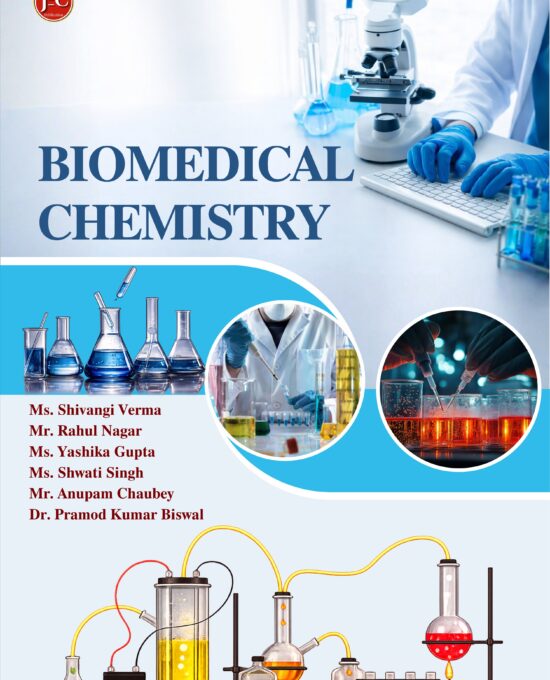
BIOMEDICAL CHEMISTRY
Biomedical Chemistry is a comprehensive textbook designed to provide students with a clear and structured understanding of medicinal and pharmaceutical chemistry. The book covers major therapeutic drug classes, including general anesthetics, sedatives and hypnotics, antipsychotic agents, anticonvulsants, antitubercular and antimalarial drugs, antiprotozoal and antiviral agents, antifungals, anthelmintics, antibiotics, sulfonamides, anticancer agents, endocrine drugs, antidiabetic agents, and narcotic analgesics.
The book presents important drugs with their classification, chemical structures, mechanisms of action, therapeutic uses, and side effects. It also includes structure–activity relationship (SAR) concepts and selected drug syntheses to help readers understand the relationship between chemical structure and pharmacological activity.
With a systematic presentation of individual drugs and therapeutic classes, this book serves as a useful academic reference for pharmacy students and learners of pharmaceutical sciences.