





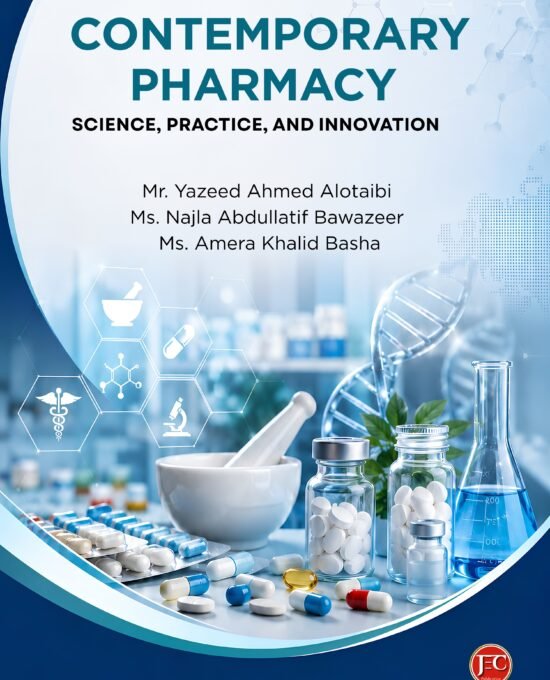
Contemporary Pharmacy Science Practice And Innovation
₹499.00
Pharmacy now is so much more than just dispensing medicines. Today, it is situated at the crossroads of science and
healthcare-technology and patient-center care in a way that makes an indispensable contribution to health outcomes as well
as quality-of-life. Combining novel discoveries in pharmaceutical sciences, biotechnology and artificial intelligence with
precision medicine, digital health measurement modalities along with regulatory frameworks have turned the profession into
one of the most vibrant interdisciplinary fields among many modern professions today. In this context, Contemporary
Pharmacy: Science, Practice and Innovation has been created to help the reader utilise their knowledge of pharmacy with
great understanding.
The goal of this book is to connect the dots between academic pharmaceutical sciences and modern clinical and industrial
practices. This provides a comprehensive blend of theory and application, new technology, and an insight into what is next
for the profession. The scope of the book ranges from drug discovery and formulation development to patient care,
pharmacovigilance, personalized medicine, pharmaceutical manufacturing and regulatory affairs as well as digital
therapeutics emphasizing multidisciplinary nature of pharmacy profession.
The material is specifically arranged to fulfill the academic and career interests of both undergraduate and postgraduate
pharmacy students, researchers, academicians as well healthcare professionals & practitioners. It is also a good reference
for any pharmaceutical scientist employed in industry, hospital or community pharmacy practice and regulatory
organizations. Every effort has gone into presenting academic ideas and concepts as guided by the evidence in a helperfriendly readable style.
A highlight of this book is its emphasis on innovation. Modern pharmacy is being shaped more and more by artificial
intelligence, machine learning, pharmacogenomics, nanotechnology; biologics-entrance products; biosimilars-comparative
generic agents with the same molecular makeup of original drugs that increase treatment affordability. Innovation in drug
development, the safety of medications and treating patients with personalized strategies are some areas that will be
transformed by these innovations to enhance pharmacotherapy practice within multidisciplinary teams. This book equips the
reader with these emerging topics to help them keep pace with, and be more adaptable to changes in this fast paced
pharmaceutical world.
Pharmacy practice has also evolved dramatically. They were not restricted to simply dispensing medications, but became
integral members of the health team in areas such as medication therapy management and chronic disease management,
vaccination services , antimicrobial stewardship interventions, patient counseling on lifestyle changes (eg. Current pharmacy
practice highlights patient safety and rational drug use through evidence-based decisions during interprofessional
collaborative practice while maintaining ethical integrity. These themes are emphasised throughout the book to support
professional competence and caring for patients.
Along with scientific and clinical progress, innovations in manufacturing technologies or quality assurance systems or
regulatory science supply chain management or global harmonization continue to transform the pharmaceutical industry. It
tackles these domains and at the same time discusses Good Manufacturing Practices (GMP), Good Clinical Practices (GCP),
quality-by-design principles, pharmaceutical quality systems, intellectual property rights and on-going changes in
international regulatory framework. This is important for professionals interested in the research, production and policy
development of pharmaceuticals.
Cognizant of the increasing importance being placed on research and evidence generation, this text also familiarizes readers
with contemporary approaches to conducting modern research including clinical trials, biostatistics, pharmacoeconomics
(pharmacomedical economics), real-world evidence and health technology assessment. They also promote the critical
assessment of scientific literature, facilitate innovation and support evidence-based healthcare decision-making by pharmacy
professionals.
Still, the pharmacy profession is centered on ethics and professionalism as well as sustainability and social responsibility.
Antimicrobial resistance, aging populations and emerging infectious diseases challenge healthcare systems to be able deliver
on equitable safe adequate effective health care globally, especially in humanitarian emergencies - therefore pharmacists
have a role. This book motivates one to value these responsibilities while also pursuing innovation with integrity and
accountability.
Contemporary Pharmacy Science Practice And Innovation
₹499.00
Pharmacy now is so much more than just dispensing medicines. Today, it is situated at the crossroads of science and
healthcare-technology and patient-center care in a way that makes an indispensable contribution to health outcomes as well
as quality-of-life. Combining novel discoveries in pharmaceutical sciences, biotechnology and artificial intelligence with
precision medicine, digital health measurement modalities along with regulatory frameworks have turned the profession into
one of the most vibrant interdisciplinary fields among many modern professions today. In this context, Contemporary
Pharmacy: Science, Practice and Innovation has been created to help the reader utilise their knowledge of pharmacy with
great understanding.
The goal of this book is to connect the dots between academic pharmaceutical sciences and modern clinical and industrial
practices. This provides a comprehensive blend of theory and application, new technology, and an insight into what is next
for the profession. The scope of the book ranges from drug discovery and formulation development to patient care,
pharmacovigilance, personalized medicine, pharmaceutical manufacturing and regulatory affairs as well as digital
therapeutics emphasizing multidisciplinary nature of pharmacy profession.
The material is specifically arranged to fulfill the academic and career interests of both undergraduate and postgraduate
pharmacy students, researchers, academicians as well healthcare professionals & practitioners. It is also a good reference
for any pharmaceutical scientist employed in industry, hospital or community pharmacy practice and regulatory
organizations. Every effort has gone into presenting academic ideas and concepts as guided by the evidence in a helperfriendly readable style.
A highlight of this book is its emphasis on innovation. Modern pharmacy is being shaped more and more by artificial
intelligence, machine learning, pharmacogenomics, nanotechnology; biologics-entrance products; biosimilars-comparative
generic agents with the same molecular makeup of original drugs that increase treatment affordability. Innovation in drug
development, the safety of medications and treating patients with personalized strategies are some areas that will be
transformed by these innovations to enhance pharmacotherapy practice within multidisciplinary teams. This book equips the
reader with these emerging topics to help them keep pace with, and be more adaptable to changes in this fast paced
pharmaceutical world.
Pharmacy practice has also evolved dramatically. They were not restricted to simply dispensing medications, but became
integral members of the health team in areas such as medication therapy management and chronic disease management,
vaccination services , antimicrobial stewardship interventions, patient counseling on lifestyle changes (eg. Current pharmacy
practice highlights patient safety and rational drug use through evidence-based decisions during interprofessional
collaborative practice while maintaining ethical integrity. These themes are emphasised throughout the book to support
professional competence and caring for patients.
Along with scientific and clinical progress, innovations in manufacturing technologies or quality assurance systems or
regulatory science supply chain management or global harmonization continue to transform the pharmaceutical industry. It
tackles these domains and at the same time discusses Good Manufacturing Practices (GMP), Good Clinical Practices (GCP),
quality-by-design principles, pharmaceutical quality systems, intellectual property rights and on-going changes in
international regulatory framework. This is important for professionals interested in the research, production and policy
development of pharmaceuticals.
Cognizant of the increasing importance being placed on research and evidence generation, this text also familiarizes readers
with contemporary approaches to conducting modern research including clinical trials, biostatistics, pharmacoeconomics
(pharmacomedical economics), real-world evidence and health technology assessment. They also promote the critical
assessment of scientific literature, facilitate innovation and support evidence-based healthcare decision-making by pharmacy
professionals.
Still, the pharmacy profession is centered on ethics and professionalism as well as sustainability and social responsibility.
Antimicrobial resistance, aging populations and emerging infectious diseases challenge healthcare systems to be able deliver
on equitable safe adequate effective health care globally, especially in humanitarian emergencies - therefore pharmacists
have a role. This book motivates one to value these responsibilities while also pursuing innovation with integrity and
accountability.


