
A Journey Through Computational Biology
₹499.00
A Journey Through Computational Biology was born out of a realization that while many excellent
texts exist on either biology or computer science, a truly integrated approach—one that speaks to
both beginners and those with moderate knowledge—is exceedingly rare.
The aim of this book is to demystify how algorithms extract meaning from the chaotic, vast realms
of biological data. To do this, we structured the book progressively. Readers will begin with
foundations, traverse sequence and structural biology, explore cutting-edge omics, and finally
understand how machine learning and cloud infrastructures are redefining what it means to study
life. Every chapter is designed not only to teach theoretical concepts but also to provide pragmatic,
hands-on activities.
Welcome to the intersection of code and life.
A Journey Through Computational Biology
₹499.00
A Journey Through Computational Biology was born out of a realization that while many excellent
texts exist on either biology or computer science, a truly integrated approach—one that speaks to
both beginners and those with moderate knowledge—is exceedingly rare.
The aim of this book is to demystify how algorithms extract meaning from the chaotic, vast realms
of biological data. To do this, we structured the book progressively. Readers will begin with
foundations, traverse sequence and structural biology, explore cutting-edge omics, and finally
understand how machine learning and cloud infrastructures are redefining what it means to study
life. Every chapter is designed not only to teach theoretical concepts but also to provide pragmatic,
hands-on activities.
Welcome to the intersection of code and life.

A Practical Book Of Pharmaceutics-I
Published on 2025
₹499.00
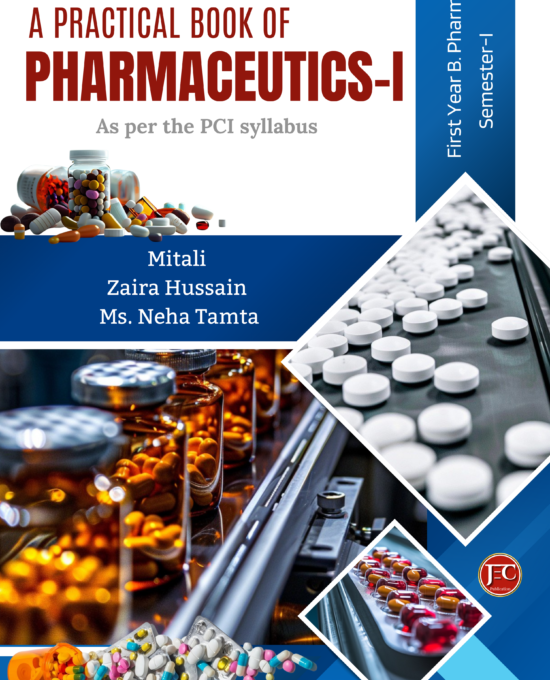
It gives me immense pleasure to present to pharmacy students my book entitled "A Practical Book
of Pharmaceutics-I". Writing a book is inspiring, often exciting, and sometimes very challenging
work.
Pharmaceutics practical involve the practical application of scientific principles to the formulation
and development of pharmaceutical products. These practical sessions typically include various
aspects such as drug formulation, dosage form design, and manufacturing techniques. Students learn
to handle equipment, perform experiments, and gain hands-on experience in pharmaceutical
processes. Key components may include compounding, granulation, tablet pressing, and quality
control methods. Proficiency in basic techniques like accurate measurements, proper handling of
equipment, and adherence to good laboratory practices is fundamental, laying the groundwork for
more advanced studies in pharmaceutics. Without a strong foundation in these practical skills,
progressing to advanced pharmaceutical development becomes challenging and resource-intensive.
The book contains calculations and important questions related to the experiments to fulfill the
requirements of students.
I record my sincere thanks to Dr. Navneet Verma, Dr. Arun Kumar Mishra, Dr. Sushil Kumar, Dr.
Munish Mani, Dr. Shweta Verma, and all my coauthors for constant encouragement to write this
book.
I thank my parents for their constant support to review the content of this book and moral support. I
am thankful to my seniors, friends and students who gave me suggestions whenever I asked for
betterment of this book.
I appreciate the cooperation and interest taken by Publishers JEC Publication in bringing out this
book.
I will be grateful to all the teachers and students who will be kind enough to point out my mistakes
that have escaped my attention. Suggestions for future improvement are always welcome.
A Practical Book Of Pharmaceutics-I
₹499.00
It gives me immense pleasure to present to pharmacy students my book entitled "A Practical Book
of Pharmaceutics-I". Writing a book is inspiring, often exciting, and sometimes very challenging
work.
Pharmaceutics practical involve the practical application of scientific principles to the formulation
and development of pharmaceutical products. These practical sessions typically include various
aspects such as drug formulation, dosage form design, and manufacturing techniques. Students learn
to handle equipment, perform experiments, and gain hands-on experience in pharmaceutical
processes. Key components may include compounding, granulation, tablet pressing, and quality
control methods. Proficiency in basic techniques like accurate measurements, proper handling of
equipment, and adherence to good laboratory practices is fundamental, laying the groundwork for
more advanced studies in pharmaceutics. Without a strong foundation in these practical skills,
progressing to advanced pharmaceutical development becomes challenging and resource-intensive.
The book contains calculations and important questions related to the experiments to fulfill the
requirements of students.
I record my sincere thanks to Dr. Navneet Verma, Dr. Arun Kumar Mishra, Dr. Sushil Kumar, Dr.
Munish Mani, Dr. Shweta Verma, and all my coauthors for constant encouragement to write this
book.
I thank my parents for their constant support to review the content of this book and moral support. I
am thankful to my seniors, friends and students who gave me suggestions whenever I asked for
betterment of this book.
I appreciate the cooperation and interest taken by Publishers JEC Publication in bringing out this
book.
I will be grateful to all the teachers and students who will be kind enough to point out my mistakes
that have escaped my attention. Suggestions for future improvement are always welcome.
A Text Book of General Pharmacy
₹499.00
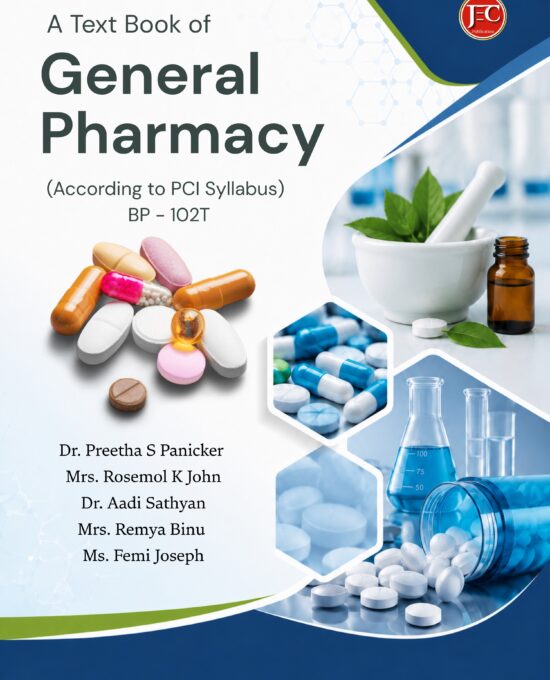
A Text Book of General Pharmacy is a comprehensive academic textbook developed in accordance with the Pharmacy Council of India (PCI) syllabus for BP-102T. Designed for Diploma in Pharmacy (D.Pharm) students, this book provides a strong foundation in the fundamental principles of pharmaceutical sciences through a clear, structured, and student-friendly approach. The book covers essential concepts of general pharmacy, including dosage forms, pharmaceutical calculations, prescription handling, routes of drug administration, pharmaceutical aids, incompatibilities, storage of medicines, and dispensing practices. Complex topics are explained in simple language with illustrations, tables, and practical examples to enhance understanding and classroom learning. Prepared by experienced academicians, this textbook serves as an ideal resource for regular coursework, laboratory sessions, internal assessments, and university examinations. It bridges theoretical knowledge with practical applications, helping students develop the essential skills required for a successful career in pharmacy.
A Text Book of General Pharmacy
₹499.00
A Text Book of General Pharmacy is a comprehensive academic textbook developed in accordance with the Pharmacy Council of India (PCI) syllabus for BP-102T. Designed for Diploma in Pharmacy (D.Pharm) students, this book provides a strong foundation in the fundamental principles of pharmaceutical sciences through a clear, structured, and student-friendly approach. The book covers essential concepts of general pharmacy, including dosage forms, pharmaceutical calculations, prescription handling, routes of drug administration, pharmaceutical aids, incompatibilities, storage of medicines, and dispensing practices. Complex topics are explained in simple language with illustrations, tables, and practical examples to enhance understanding and classroom learning. Prepared by experienced academicians, this textbook serves as an ideal resource for regular coursework, laboratory sessions, internal assessments, and university examinations. It bridges theoretical knowledge with practical applications, helping students develop the essential skills required for a successful career in pharmacy.

A Text Book Of Pharmaceutical Analysis
₹499.00
A Text Book of Pharmaceutical Analysis is a comprehensive academic textbook designed for Diploma, Undergraduate, and Pharmacy students studying Pharmaceutical Analysis as per the latest syllabus. The book provides a clear understanding of the fundamental principles, analytical techniques, instrumentation, and quality control methods used in pharmaceutical sciences. Written in a simple, student-friendly language, the text covers classical chemical analysis, instrumental analytical methods, validation of analytical procedures, calibration techniques, pharmaceutical standards, and laboratory practices. It emphasizes both theoretical concepts and practical applications, helping students build a strong foundation for academic examinations as well as professional pharmaceutical practice. The book includes well-structured chapters, illustrations, tables, flowcharts, solved examples, and review questions to enhance learning and retention. It is an ideal resource for students, educators, researchers, and pharmacy professionals seeking reliable knowledge in pharmaceutical analysis.
A Text Book Of Pharmaceutical Analysis
₹499.00
A Text Book of Pharmaceutical Analysis is a comprehensive academic textbook designed for Diploma, Undergraduate, and Pharmacy students studying Pharmaceutical Analysis as per the latest syllabus. The book provides a clear understanding of the fundamental principles, analytical techniques, instrumentation, and quality control methods used in pharmaceutical sciences. Written in a simple, student-friendly language, the text covers classical chemical analysis, instrumental analytical methods, validation of analytical procedures, calibration techniques, pharmaceutical standards, and laboratory practices. It emphasizes both theoretical concepts and practical applications, helping students build a strong foundation for academic examinations as well as professional pharmaceutical practice. The book includes well-structured chapters, illustrations, tables, flowcharts, solved examples, and review questions to enhance learning and retention. It is an ideal resource for students, educators, researchers, and pharmacy professionals seeking reliable knowledge in pharmaceutical analysis.


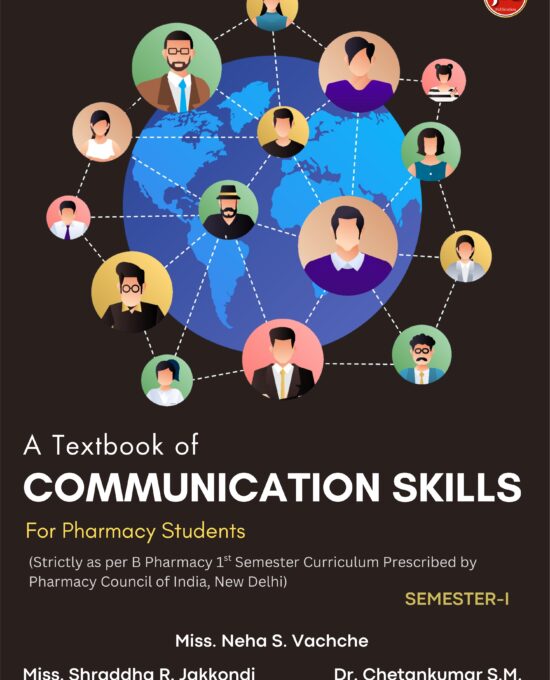
A Textbook of COMMUNICATION SKILLS
₹499.00
A Textbook of Communication Skills for Pharmacy Students is designed to meet
the specific needs of budding pharmacists by equipping them with essential soft skills
required in professional healthcare settings. Communication is the foundation of
effective pharmacy practice, as pharmacists routinely interact with doctors, nurses,
dentists, physiotherapists, patients, and other healthcare professionals. This book
provides a clear, structured approach to developing the ability to convey information
confidently, accurately, and empathetically.
The content is carefully aligned with the Pharmacy Council of India’s BP105T
Communication Skills (Theory) syllabus, ensuring that students acquire not only
theoretical knowledge but also practical competence. Each unit systematically
introduces learners to the fundamentals of communication-covering verbal, nonverbal, and written communication-while also addressing barriers that may hinder
effective interactions.
Students will explore diverse aspects such as communication processes, listening
skills, and communication styles, alongside practical skills like interview techniques,
presentations, and group discussions. The book emphasizes both professional and
interpersonal dimensions, preparing students to become effective team players and
leaders in the pharmaceutical sector.
In addition, the text highlights the behavioural and attitudinal requirements of a
pharmacist, focusing on teamwork, leadership, empathy, and patient-centered
communication. Examples, illustrations, and simplified explanations make the
content easy to understand, while the inclusion of real-life applications encourages
students to practice and refine their skills.
Overall, this book aims to bridge the gap between knowledge and practice, helping
pharmacy students develop confidence, clarity, and professionalism in their
communication. By mastering these skills early in their academic journey, students
will be better prepared to contribute meaningfully to patient care, collaborative
healthcare teams, and the pharmaceutical business environment.
A Textbook of COMMUNICATION SKILLS
₹499.00
A Textbook of Communication Skills for Pharmacy Students is designed to meet
the specific needs of budding pharmacists by equipping them with essential soft skills
required in professional healthcare settings. Communication is the foundation of
effective pharmacy practice, as pharmacists routinely interact with doctors, nurses,
dentists, physiotherapists, patients, and other healthcare professionals. This book
provides a clear, structured approach to developing the ability to convey information
confidently, accurately, and empathetically.
The content is carefully aligned with the Pharmacy Council of India’s BP105T
Communication Skills (Theory) syllabus, ensuring that students acquire not only
theoretical knowledge but also practical competence. Each unit systematically
introduces learners to the fundamentals of communication-covering verbal, nonverbal, and written communication-while also addressing barriers that may hinder
effective interactions.
Students will explore diverse aspects such as communication processes, listening
skills, and communication styles, alongside practical skills like interview techniques,
presentations, and group discussions. The book emphasizes both professional and
interpersonal dimensions, preparing students to become effective team players and
leaders in the pharmaceutical sector.
In addition, the text highlights the behavioural and attitudinal requirements of a
pharmacist, focusing on teamwork, leadership, empathy, and patient-centered
communication. Examples, illustrations, and simplified explanations make the
content easy to understand, while the inclusion of real-life applications encourages
students to practice and refine their skills.
Overall, this book aims to bridge the gap between knowledge and practice, helping
pharmacy students develop confidence, clarity, and professionalism in their
communication. By mastering these skills early in their academic journey, students
will be better prepared to contribute meaningfully to patient care, collaborative
healthcare teams, and the pharmaceutical business environment.
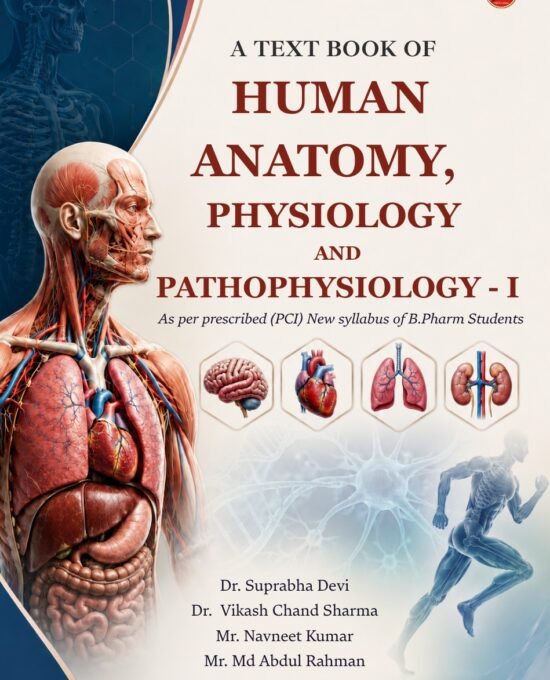
A TEXTBOOK OF HUMAN ANATOMY, PHYSIOLOGY AND PATHOPHYSIOLOGY – I
₹499.00
A Textbook of Human Anatomy, Physiology and Pathophysiology – I is a comprehensive academic textbook designed primarily for B.Pharm 1st Semester students, following the PCI New syllabus. It provides an integrated understanding of the human body by connecting anatomical structures, physiological functions, and disease mechanisms, with emphasis on their relevance to pharmacy and therapeutics.
A TEXTBOOK OF HUMAN ANATOMY, PHYSIOLOGY AND PATHOPHYSIOLOGY – I
₹499.00
A Textbook of Human Anatomy, Physiology and Pathophysiology – I is a comprehensive academic textbook designed primarily for B.Pharm 1st Semester students, following the PCI New syllabus. It provides an integrated understanding of the human body by connecting anatomical structures, physiological functions, and disease mechanisms, with emphasis on their relevance to pharmacy and therapeutics.
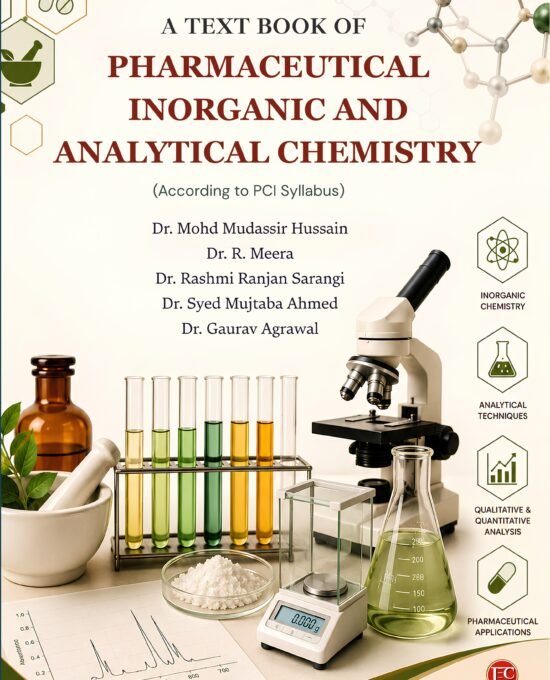
A Textbook of Pharmaceutical Inorganic and Analytical Chemistry
₹499.00
A Textbook of Pharmaceutical Inorganic and Analytical Chemistry is designed as a comprehensive and student-friendly resource for pharmacy students, particularly in accordance with the PCI syllabus and NEP-2020 framework.
The book covers fundamental concepts of pharmaceutical analysis, errors, standards, limit tests, acid–base chemistry, titrations, gastrointestinal agents, antimicrobials, radiopharmaceuticals, and miscellaneous pharmaceutical compounds. It also introduces important analytical techniques such as HPLC, GC, LC-MS, UV-Visible, IR, NMR, DSC, and titrimetric methods, with their principles and pharmaceutical applications.
The content has been presented in a clear and systematic manner to help students understand both theoretical concepts and their practical significance in pharmaceutical analysis. It is hoped that this book will serve as a useful reference for classroom learning, examinations, and developing a strong foundation in pharmaceutical inorganic and analytical chemistry.
A Textbook of Pharmaceutical Inorganic and Analytical Chemistry
₹499.00
A Textbook of Pharmaceutical Inorganic and Analytical Chemistry is designed as a comprehensive and student-friendly resource for pharmacy students, particularly in accordance with the PCI syllabus and NEP-2020 framework.
The book covers fundamental concepts of pharmaceutical analysis, errors, standards, limit tests, acid–base chemistry, titrations, gastrointestinal agents, antimicrobials, radiopharmaceuticals, and miscellaneous pharmaceutical compounds. It also introduces important analytical techniques such as HPLC, GC, LC-MS, UV-Visible, IR, NMR, DSC, and titrimetric methods, with their principles and pharmaceutical applications.
The content has been presented in a clear and systematic manner to help students understand both theoretical concepts and their practical significance in pharmaceutical analysis. It is hoped that this book will serve as a useful reference for classroom learning, examinations, and developing a strong foundation in pharmaceutical inorganic and analytical chemistry.
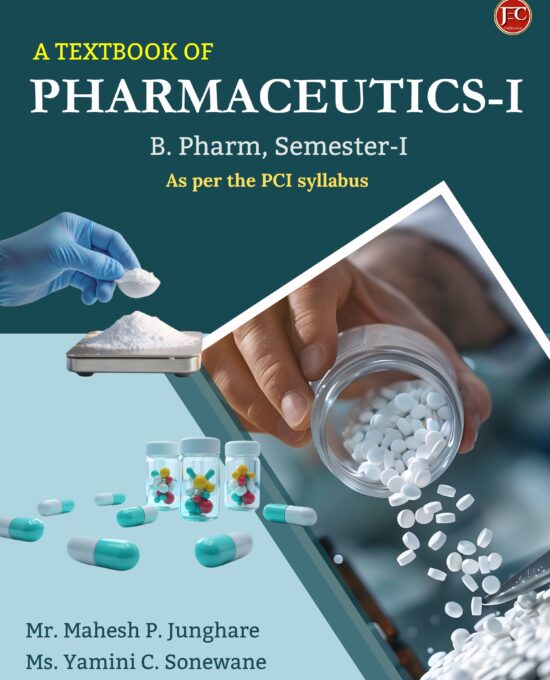
A textbook of Pharmaceutics-I
₹499.00
The discipline of pharmaceutics serves as a vital bridge between drug discovery and the large-scale
production of medications that adhere to regulatory, safety, and efficacy standards. As the pharmaceutical
sciences continue to advance, it is crucial for students to build a solid understanding of the principles,
processes, and practices that underpin the industrial manufacturing of pharmaceutical products.
This textbook on Pharmaceutics is specifically crafted for first-semester B. Pharm students. It offers a
thorough exploration of industrial pharmacy, covering key topics such as formulation development,
quality control, manufacturing processes, regulatory compliance, and the principles of Good
Manufacturing Practices (GMP). The book aims to provide students with both foundational theoretical
knowledge and practical insights essential for navigating the complexities of pharmaceutical production.
Each chapter has been meticulously organized to ensure clarity and comprehension, incorporating
detailed explanations, illustrative diagrams, and real-world examples to enhance the learning experience.
Special attention has been given to industry-relevant subjects to foster critical thinking and problemsolving skills, which are indispensable in today’s rapidly evolving pharmaceutical sector.
Additionally, the textbook addresses significant emerging trends in pharmaceutical manufacturing, such
as advancements in automation, biotechnology, and regulatory affairs. This forward-looking approach
prepares students to tackle future challenges in the field. By bridging academic concepts with practical
applications, the book aligns with the demands of the professional world, making it a valuable resource
for aspiring industrial pharmacy professionals.
It is my hope that this textbook will serve as an indispensable guide, equipping students with the
knowledge and skills necessary to excel in both their academic journey and their professional careers in
industrial pharmacy.
Mr. Mahesh P. Junghare
(M. Pharm. – Pharmacognosy)
Ms. Yamini C. Sonewane
(Bachelor of Pharmacy)
A textbook of Pharmaceutics-I
₹499.00
The discipline of pharmaceutics serves as a vital bridge between drug discovery and the large-scale
production of medications that adhere to regulatory, safety, and efficacy standards. As the pharmaceutical
sciences continue to advance, it is crucial for students to build a solid understanding of the principles,
processes, and practices that underpin the industrial manufacturing of pharmaceutical products.
This textbook on Pharmaceutics is specifically crafted for first-semester B. Pharm students. It offers a
thorough exploration of industrial pharmacy, covering key topics such as formulation development,
quality control, manufacturing processes, regulatory compliance, and the principles of Good
Manufacturing Practices (GMP). The book aims to provide students with both foundational theoretical
knowledge and practical insights essential for navigating the complexities of pharmaceutical production.
Each chapter has been meticulously organized to ensure clarity and comprehension, incorporating
detailed explanations, illustrative diagrams, and real-world examples to enhance the learning experience.
Special attention has been given to industry-relevant subjects to foster critical thinking and problemsolving skills, which are indispensable in today’s rapidly evolving pharmaceutical sector.
Additionally, the textbook addresses significant emerging trends in pharmaceutical manufacturing, such
as advancements in automation, biotechnology, and regulatory affairs. This forward-looking approach
prepares students to tackle future challenges in the field. By bridging academic concepts with practical
applications, the book aligns with the demands of the professional world, making it a valuable resource
for aspiring industrial pharmacy professionals.
It is my hope that this textbook will serve as an indispensable guide, equipping students with the
knowledge and skills necessary to excel in both their academic journey and their professional careers in
industrial pharmacy.
Mr. Mahesh P. Junghare
(M. Pharm. – Pharmacognosy)
Ms. Yamini C. Sonewane
(Bachelor of Pharmacy)
A Textbook Of Pharmacotherapeutics
₹499.00
Pharmacotherapeutics is one of the most important subjects in the Diploma in Pharmacy (D.Pharm.) curriculum, as it provides students with the knowledge and skills required for the rational management of common diseases. A clear understanding of disease pathology, clinical manifestations, diagnosis, and appropriate therapeutic interventions is essential for providing safe and effective patient care. This book has been prepared strictly according to the latest Education Regulations (ER-2020) prescribed by the Pharmacy Council of India (PCI). The content has been presented in simple, clear, and student-friendly language to help learners understand concepts easily while strengthening their theoretical knowledge and examination preparation. Each chapter follows a systematic approach, beginning with an introduction to the disease, followed by etiopathogenesis, clinical manifestations, diagnosis, non-pharmacological and pharmacological management, commonly used drugs, and important exercise questions. Wherever appropriate, tables, flowcharts, and illustrations have been included to improve understanding and facilitate quick revision. Special emphasis has been placed on evidence-based pharmacotherapy, rational use of medicines, patient counselling, and current treatment guidelines. The text has been carefully revised and rephrased to ensure clarity, readability, and academic accuracy while maintaining a concise format suitable for D.Pharm. students. This book is intended to serve as a reliable learning resource for students, teachers, and pharmacy professionals. It will also be useful for classroom teaching, self-study, practical learning, and competitive examination preparation. Although every effort has been made to ensure the accuracy and completeness of the content, constructive suggestions from teachers, students, and readers are always welcome. Their valuable feedback will help improve future editions of this book. We sincerely hope that this book will enhance the understanding of pharmacotherapeutics and contribute to the academic success and professional development of pharmacy students. Authors Ms. Shruti Parshuramkar Ms. Priya Thote Ms. Yugali Charade Ms. Zoya Shaikh Ms. Akanksha Patil Ms. Kiran Deotale
A Textbook Of Pharmacotherapeutics
₹499.00
Pharmacotherapeutics is one of the most important subjects in the Diploma in Pharmacy (D.Pharm.) curriculum, as it provides students with the knowledge and skills required for the rational management of common diseases. A clear understanding of disease pathology, clinical manifestations, diagnosis, and appropriate therapeutic interventions is essential for providing safe and effective patient care. This book has been prepared strictly according to the latest Education Regulations (ER-2020) prescribed by the Pharmacy Council of India (PCI). The content has been presented in simple, clear, and student-friendly language to help learners understand concepts easily while strengthening their theoretical knowledge and examination preparation. Each chapter follows a systematic approach, beginning with an introduction to the disease, followed by etiopathogenesis, clinical manifestations, diagnosis, non-pharmacological and pharmacological management, commonly used drugs, and important exercise questions. Wherever appropriate, tables, flowcharts, and illustrations have been included to improve understanding and facilitate quick revision. Special emphasis has been placed on evidence-based pharmacotherapy, rational use of medicines, patient counselling, and current treatment guidelines. The text has been carefully revised and rephrased to ensure clarity, readability, and academic accuracy while maintaining a concise format suitable for D.Pharm. students. This book is intended to serve as a reliable learning resource for students, teachers, and pharmacy professionals. It will also be useful for classroom teaching, self-study, practical learning, and competitive examination preparation. Although every effort has been made to ensure the accuracy and completeness of the content, constructive suggestions from teachers, students, and readers are always welcome. Their valuable feedback will help improve future editions of this book. We sincerely hope that this book will enhance the understanding of pharmacotherapeutics and contribute to the academic success and professional development of pharmacy students. Authors Ms. Shruti Parshuramkar Ms. Priya Thote Ms. Yugali Charade Ms. Zoya Shaikh Ms. Akanksha Patil Ms. Kiran Deotale
Accounting for the Earth A Sustainable Future Approach
₹499.00
Accounting for the Earth: A Sustainable Future Approach is a comprehensive
academic volume that explores the evolving role of accounting in addressing environmental and sustainability challenges. The book examines how traditional financial accounting systems are transforming to incorporate environmental, social, and governance (ESG) dimensions, enabling organizations to measure not only financial performance but also ecological and social impact. It presents contemporary frameworks such as green accounting, carbon accounting, sustainability reporting, and integrated reporting, while highlighting regulatory developments and emerging global standards. The chapters also discuss the role of technology, including artificial intelligence, data analytics, and digital reporting, in enhancing transparency and accountability. By bridging theory and practical application, the book provides insights for academicians, researchers, policymakers, and industry professionals. Overall, this volume emphasizes responsible decision-making, sustainable development, and long-term value creation, making it a valuable resource for understanding sustainable accounting practices in a rapidly changing global economy
Accounting for the Earth A Sustainable Future Approach
₹499.00
Accounting for the Earth: A Sustainable Future Approach is a comprehensive
academic volume that explores the evolving role of accounting in addressing environmental and sustainability challenges. The book examines how traditional financial accounting systems are transforming to incorporate environmental, social, and governance (ESG) dimensions, enabling organizations to measure not only financial performance but also ecological and social impact. It presents contemporary frameworks such as green accounting, carbon accounting, sustainability reporting, and integrated reporting, while highlighting regulatory developments and emerging global standards. The chapters also discuss the role of technology, including artificial intelligence, data analytics, and digital reporting, in enhancing transparency and accountability. By bridging theory and practical application, the book provides insights for academicians, researchers, policymakers, and industry professionals. Overall, this volume emphasizes responsible decision-making, sustainable development, and long-term value creation, making it a valuable resource for understanding sustainable accounting practices in a rapidly changing global economy