Physical Pharmaceutics -i
₹499.00
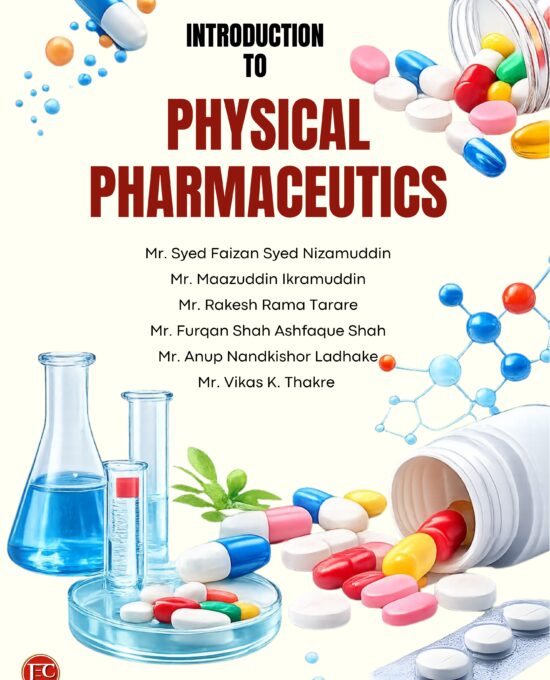
Welcome to the world of Physical Pharmaceutics-I This book is tailored for Bachelor of Pharmacy (B.
Pharm) second-year students, aiming to provide a comprehensive understanding of foundational
concepts in physical pharmaceutics. Physical Pharmaceutics-I forms the bedrock of your journey into
understanding the intricate relationships between pharmaceutical substances and their physical
properties. This book covers essential topics such as solubility, states of matter, physicochemical
properties of drug molecules, and surface and interfacial phenomena. These topics are crucial for
mastering the formulation and delivery of pharmaceutical products, ensuring their efficacy and safety
in clinical settings.
Throughout this book, you will delve into the principles that govern the behavior of drugs in different
physical states, their interactions with various environments, and the mechanisms that influence their
dissolution and absorption in biological systems. Each chapter is designed to build upon the previous
one, offering a structured approach to learning that will deepen your understanding step by step.
We have endeavored to present complex theories and principles in a clear and accessible manner,
supported by illustrative examples, diagrams, and practical applications relevant to pharmaceutical
sciences. This approach will not only help you grasp the theoretical underpinnings but also apply them
to real-world scenarios in drug development and formulation. As you embark on this educational
journey, we encourage you to engage actively with the content, ask questions, and explore the
implications of physical pharmaceutics in shaping the future of pharmaceutical research and practice.
Whether you aspire to be a researcher, formulator, or practitioner in the field of pharmacy, the knowledge
gained from this book will serve as a solid foundation for your professional endeavors.
We hope that this book will inspire your curiosity and passion for physical pharmaceutics, empowering
you to contribute meaningfully to the advancement of pharmaceutical sciences. Your dedication and
commitment to learning will undoubtedly pave the way for a rewarding career in pharmacy. Best wishes
on your academic pursuits and exploration of Physical Pharmaceutics-I
Sincerely,
Authors
Physical Pharmaceutics -i
₹499.00
Welcome to the world of Physical Pharmaceutics-I This book is tailored for Bachelor of Pharmacy (B.
Pharm) second-year students, aiming to provide a comprehensive understanding of foundational
concepts in physical pharmaceutics. Physical Pharmaceutics-I forms the bedrock of your journey into
understanding the intricate relationships between pharmaceutical substances and their physical
properties. This book covers essential topics such as solubility, states of matter, physicochemical
properties of drug molecules, and surface and interfacial phenomena. These topics are crucial for
mastering the formulation and delivery of pharmaceutical products, ensuring their efficacy and safety
in clinical settings.
Throughout this book, you will delve into the principles that govern the behavior of drugs in different
physical states, their interactions with various environments, and the mechanisms that influence their
dissolution and absorption in biological systems. Each chapter is designed to build upon the previous
one, offering a structured approach to learning that will deepen your understanding step by step.
We have endeavored to present complex theories and principles in a clear and accessible manner,
supported by illustrative examples, diagrams, and practical applications relevant to pharmaceutical
sciences. This approach will not only help you grasp the theoretical underpinnings but also apply them
to real-world scenarios in drug development and formulation. As you embark on this educational
journey, we encourage you to engage actively with the content, ask questions, and explore the
implications of physical pharmaceutics in shaping the future of pharmaceutical research and practice.
Whether you aspire to be a researcher, formulator, or practitioner in the field of pharmacy, the knowledge
gained from this book will serve as a solid foundation for your professional endeavors.
We hope that this book will inspire your curiosity and passion for physical pharmaceutics, empowering
you to contribute meaningfully to the advancement of pharmaceutical sciences. Your dedication and
commitment to learning will undoubtedly pave the way for a rewarding career in pharmacy. Best wishes
on your academic pursuits and exploration of Physical Pharmaceutics-I
Sincerely,
Authors
QUALITATIVE RESEARCH METHODS Tools and Techniques
₹499.00
Qualitative research has emerged as an indispensable mode of inquiry for understanding the
complexity, depth, and contextual richness of human Behaviour, social processes, and
organizational realities. In an era marked by rapid social transformation, technological disruption,
and evolving organizational forms, researchers are increasingly confronted with phenomena that
cannot be adequately explained through numerical data alone. It is within this intellectual landscape
that Qualitative Research Methods: Tools and Techniques has been conceived—to offer a
comprehensive, rigorous, and practice-oriented exposition of qualitative inquiry for scholars,
researchers, and advanced learners across disciplines.
This book is designed to serve as both a foundational text and an advanced reference for qualitative
research. It systematically integrates philosophical underpinnings, methodological frameworks, and
contemporary analytical tools to enable readers to develop a nuanced understanding of qualitative
inquiry. Beginning with the evolution, nature, and defining characteristics of qualitative research,
the text carefully situates qualitative methods within broader research paradigms, highlighting their
distinct epistemological and ontological assumptions. By engaging with interpretivism,
constructivism, critical theory, and postmodern perspectives, the book equips readers to make
informed methodological choices aligned with their research objectives and worldviews.
A distinguishing feature of this work is its balanced emphasis on theory and application. Each stage
of the qualitative research process—problem formulation, research design, sampling, data
collection, coding, analysis, interpretation, and validation—is addressed with conceptual clarity and
methodological depth. Special attention has been given to widely used qualitative methods such as
interviews, focus group discussions, observation, document analysis, and narrative inquiry,
alongside emerging approaches including digital ethnography, netnography, and visual analysis.
Ethical considerations and issues of rigor and trustworthiness are discussed in detail, reflecting the
growing demand for accountability and reflexivity in qualitative scholarship.
Recognizing the increasing role of technology in research, the book also introduces readers to
Computer-Assisted Qualitative Data Analysis Software (CAQDAS), offering practical insights into
tools such as NVivo, ATLAS.ti, MAXQDA, and JAMOVI. This integration ensures that readers
are not only theoretically grounded but also methodologically equipped to manage and analyze
complex qualitative datasets in contemporary research environments. Furthermore, the discussion
on mixed methods research underscores the complementary strengths of qualitative and
QUALITATIVE RESEARCH METHODS Tools and Techniques
₹499.00
Qualitative research has emerged as an indispensable mode of inquiry for understanding the
complexity, depth, and contextual richness of human Behaviour, social processes, and
organizational realities. In an era marked by rapid social transformation, technological disruption,
and evolving organizational forms, researchers are increasingly confronted with phenomena that
cannot be adequately explained through numerical data alone. It is within this intellectual landscape
that Qualitative Research Methods: Tools and Techniques has been conceived—to offer a
comprehensive, rigorous, and practice-oriented exposition of qualitative inquiry for scholars,
researchers, and advanced learners across disciplines.
This book is designed to serve as both a foundational text and an advanced reference for qualitative
research. It systematically integrates philosophical underpinnings, methodological frameworks, and
contemporary analytical tools to enable readers to develop a nuanced understanding of qualitative
inquiry. Beginning with the evolution, nature, and defining characteristics of qualitative research,
the text carefully situates qualitative methods within broader research paradigms, highlighting their
distinct epistemological and ontological assumptions. By engaging with interpretivism,
constructivism, critical theory, and postmodern perspectives, the book equips readers to make
informed methodological choices aligned with their research objectives and worldviews.
A distinguishing feature of this work is its balanced emphasis on theory and application. Each stage
of the qualitative research process—problem formulation, research design, sampling, data
collection, coding, analysis, interpretation, and validation—is addressed with conceptual clarity and
methodological depth. Special attention has been given to widely used qualitative methods such as
interviews, focus group discussions, observation, document analysis, and narrative inquiry,
alongside emerging approaches including digital ethnography, netnography, and visual analysis.
Ethical considerations and issues of rigor and trustworthiness are discussed in detail, reflecting the
growing demand for accountability and reflexivity in qualitative scholarship.
Recognizing the increasing role of technology in research, the book also introduces readers to
Computer-Assisted Qualitative Data Analysis Software (CAQDAS), offering practical insights into
tools such as NVivo, ATLAS.ti, MAXQDA, and JAMOVI. This integration ensures that readers
are not only theoretically grounded but also methodologically equipped to manage and analyze
complex qualitative datasets in contemporary research environments. Furthermore, the discussion
on mixed methods research underscores the complementary strengths of qualitative and
Quantitative Decision-making Statistical Modeling And Analytics
₹499.00
Business today operates in an era defined by data, where decisions are increasingly
driven by analytical insights rather than intuition alone. This book, Quantitative
Decision-Making: Statistical Modeling and Analytics, has been carefully structured
to provide students, researchers, and practitioners with both the theoretical foundation
and the practical applications of statistics in the business world. Beginning with the
fundamentals of descriptive and inferential statistics, the text progresses through
advanced topics such as regression analysis, predictive modeling, big data analytics,
and strategic decision-making. Each chapter integrates conceptual clarity with
practical illustrations, ensuring that readers not only understand statistical principles
but also learn to apply them effectively in real-world contexts.
Special emphasis has been placed on bridging statistical theory with business
applications—ranging from hypothesis testing in market research to predictive
modeling in risk assessment and customer behavior analysis. The inclusion of tools
such as Tableau, Power BI, and Python-based visualizations reflects the growing
importance of software-driven analytics in modern organizations. Furthermore, topics
on ethics, transparency, and responsible reporting encourage critical thinking about
the role of data in shaping strategies and policies.
This book aims to serve as a comprehensive guide, equipping readers with the ability
to interpret data, communicate findings, and make informed decisions that foster
sustainable business growth.
Quantitative Decision-making Statistical Modeling And Analytics
₹499.00
Business today operates in an era defined by data, where decisions are increasingly
driven by analytical insights rather than intuition alone. This book, Quantitative
Decision-Making: Statistical Modeling and Analytics, has been carefully structured
to provide students, researchers, and practitioners with both the theoretical foundation
and the practical applications of statistics in the business world. Beginning with the
fundamentals of descriptive and inferential statistics, the text progresses through
advanced topics such as regression analysis, predictive modeling, big data analytics,
and strategic decision-making. Each chapter integrates conceptual clarity with
practical illustrations, ensuring that readers not only understand statistical principles
but also learn to apply them effectively in real-world contexts.
Special emphasis has been placed on bridging statistical theory with business
applications—ranging from hypothesis testing in market research to predictive
modeling in risk assessment and customer behavior analysis. The inclusion of tools
such as Tableau, Power BI, and Python-based visualizations reflects the growing
importance of software-driven analytics in modern organizations. Furthermore, topics
on ethics, transparency, and responsible reporting encourage critical thinking about
the role of data in shaping strategies and policies.
This book aims to serve as a comprehensive guide, equipping readers with the ability
to interpret data, communicate findings, and make informed decisions that foster
sustainable business growth.
RESEARCH AND PUBLICATION ETHICS
₹499.00
In the rapidly transforming world of academia, where research serves as the foundation of innovation
and intellectual advancement, the integrity of scholarly work has never been more crucial. Research and
Publication Ethics emerges as a timely and comprehensive text designed to strengthen the moral,
professional, and intellectual framework of research practice. The purpose of this book is to nurture an
ethical research culture among scholars, academicians, and practitioners by providing a deep and
structured understanding of the principles that govern responsible research and publication.
This book systematically explores the philosophical underpinnings, ethical theories, and professional
guidelines that shape contemporary research ethics. It encompasses a wide spectrum of themes,
including academic integrity, plagiarism, authorship ethics, peer review systems, conflicts of interest,
data management, and publication ethics. In addition, it addresses emerging concerns in the digital
era—such as artificial intelligence, open science, big data analytics, biotechnology, and predatory
publishing—offering readers a holistic view of how ethical frameworks evolve in response to
technological and global academic transformations. Each unit of this book has been designed to blend
theoretical insights with practical implications, supported by case studies, reflective exercises, and
global guidelines such as COPE, ICMJE, and UGC regulations.
The authors of this volume collectively represent a distinguished blend of academic excellence,
research expertise, and professional experience. Prof. (Dr.) Dileep Kumar M, International Research
Fellow at SEGi University, Kuala Lumpur, and Vice Chancellor of Hensard University, Nigeria, brings
to this book over two decades of global academic leadership and scholarly contribution in strategic
management, entrepreneurship, and organizational behavior. Dr. Normala S. Govindarajo, Associate
Professor at HELP University, Malaysia, adds depth with her dual doctoral expertise in Management
and Human Resource, her extensive body of published work, and her interdisciplinary engagement with
technology and professional ethics. Dr. Vijyata, Assistant Professor at ARKA Jain University,
Jamshedpur, contributes her profound academic insight, rich teaching experience, and scholarly
contributions in research methodology, marketing, and digital transformation, reflecting a strong
commitment to ethical scholarship and sustainability. Mrs. Princia Stivenson Coutinho, Assistant
Professor at VIVA College of Arts, Science and Commerce, Mumbai University, lends her deep
expertise in commerce, financial accounting, and corporate governance, bridging ethical theory with
real-world application in finance and business ethics.
This collective endeavor reflects the authors’ shared vision—to cultivate awareness, accountability, and
integrity among current and future researchers. By synthesizing both classical theories and modern frameworks, the book provides a strong ethical foundation necessary for conducting credible,
transparent, and socially responsible research.
It is hoped that Research and Publication Ethics will serve as a comprehensive guide for students,
faculty members, and researchers across disciplines, fostering a scholarly ecosystem grounded in
honesty, fairness, and professional excellence. The authors express their sincere gratitude to their
respective institutions and peers whose encouragement and collaboration made this work possible.
May this book inspire every reader to uphold the sanctity of research and contribute meaningfully to the
global pursuit of knowledge rooted in ethical responsibility.
Prof. (Dr.) Dileep Kumar M
Dr. Normala S. Govindarajo,
Dr. Vijyata
Mrs. Princia Stivenson Coutinho
RESEARCH AND PUBLICATION ETHICS
₹499.00
In the rapidly transforming world of academia, where research serves as the foundation of innovation
and intellectual advancement, the integrity of scholarly work has never been more crucial. Research and
Publication Ethics emerges as a timely and comprehensive text designed to strengthen the moral,
professional, and intellectual framework of research practice. The purpose of this book is to nurture an
ethical research culture among scholars, academicians, and practitioners by providing a deep and
structured understanding of the principles that govern responsible research and publication.
This book systematically explores the philosophical underpinnings, ethical theories, and professional
guidelines that shape contemporary research ethics. It encompasses a wide spectrum of themes,
including academic integrity, plagiarism, authorship ethics, peer review systems, conflicts of interest,
data management, and publication ethics. In addition, it addresses emerging concerns in the digital
era—such as artificial intelligence, open science, big data analytics, biotechnology, and predatory
publishing—offering readers a holistic view of how ethical frameworks evolve in response to
technological and global academic transformations. Each unit of this book has been designed to blend
theoretical insights with practical implications, supported by case studies, reflective exercises, and
global guidelines such as COPE, ICMJE, and UGC regulations.
The authors of this volume collectively represent a distinguished blend of academic excellence,
research expertise, and professional experience. Prof. (Dr.) Dileep Kumar M, International Research
Fellow at SEGi University, Kuala Lumpur, and Vice Chancellor of Hensard University, Nigeria, brings
to this book over two decades of global academic leadership and scholarly contribution in strategic
management, entrepreneurship, and organizational behavior. Dr. Normala S. Govindarajo, Associate
Professor at HELP University, Malaysia, adds depth with her dual doctoral expertise in Management
and Human Resource, her extensive body of published work, and her interdisciplinary engagement with
technology and professional ethics. Dr. Vijyata, Assistant Professor at ARKA Jain University,
Jamshedpur, contributes her profound academic insight, rich teaching experience, and scholarly
contributions in research methodology, marketing, and digital transformation, reflecting a strong
commitment to ethical scholarship and sustainability. Mrs. Princia Stivenson Coutinho, Assistant
Professor at VIVA College of Arts, Science and Commerce, Mumbai University, lends her deep
expertise in commerce, financial accounting, and corporate governance, bridging ethical theory with
real-world application in finance and business ethics.
This collective endeavor reflects the authors’ shared vision—to cultivate awareness, accountability, and
integrity among current and future researchers. By synthesizing both classical theories and modern frameworks, the book provides a strong ethical foundation necessary for conducting credible,
transparent, and socially responsible research.
It is hoped that Research and Publication Ethics will serve as a comprehensive guide for students,
faculty members, and researchers across disciplines, fostering a scholarly ecosystem grounded in
honesty, fairness, and professional excellence. The authors express their sincere gratitude to their
respective institutions and peers whose encouragement and collaboration made this work possible.
May this book inspire every reader to uphold the sanctity of research and contribute meaningfully to the
global pursuit of knowledge rooted in ethical responsibility.
Prof. (Dr.) Dileep Kumar M
Dr. Normala S. Govindarajo,
Dr. Vijyata
Mrs. Princia Stivenson Coutinho