


Industrial Pharmacy – II
Industrial Pharmacy – II
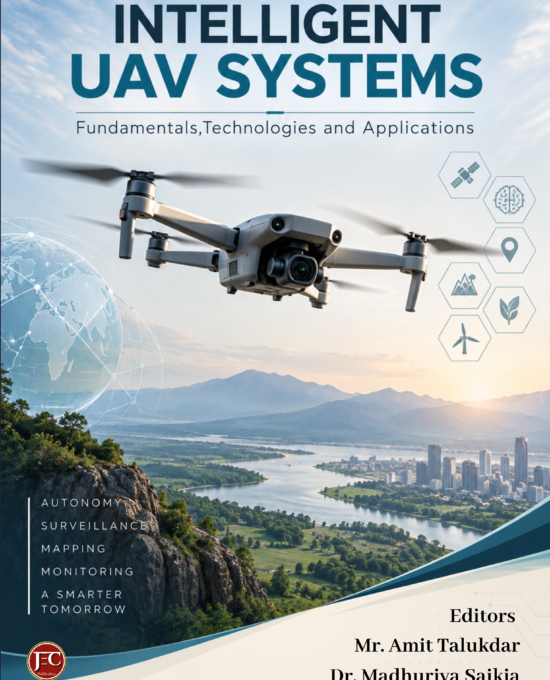
Intelligent UAV Systems: Fundamentals, Technologies And Applications
With the fast pace in which Unmanned Aerial Vehicles (UAVs), popularly known as drones, have been developing, several breakthroughs have been achieved in numerous sectors like surveillance, inspections, security, agriculture, and disaster relief operations. In this project book, an insight into drone technology is provided, covering topics related to the introduction, mechanisms, and types of drones depending on their structure and application. Specifically, the main focus of the book is on crack detection drones, whose application involves inspecting infrastructural assets like buildings, bridges, and structures for any possible damage by utilizing camera sensors. Another type of drone covered in the book is Visual Inertial Odometry (VIO) drones, whose principle of operation allows for smooth and uninterrupted navigation without the need for GPS signals, which are usually integrated with vision and inertial sensors. Furthermore, there is coverage of ant drones, which operate by detecting and preventing unauthorized drone activities using technologies such as radar, RF detection, and jamming systems.
Intelligent UAV Systems: Fundamentals, Technologies And Applications
With the fast pace in which Unmanned Aerial Vehicles (UAVs), popularly known as drones, have been developing, several breakthroughs have been achieved in numerous sectors like surveillance, inspections, security, agriculture, and disaster relief operations. In this project book, an insight into drone technology is provided, covering topics related to the introduction, mechanisms, and types of drones depending on their structure and application. Specifically, the main focus of the book is on crack detection drones, whose application involves inspecting infrastructural assets like buildings, bridges, and structures for any possible damage by utilizing camera sensors. Another type of drone covered in the book is Visual Inertial Odometry (VIO) drones, whose principle of operation allows for smooth and uninterrupted navigation without the need for GPS signals, which are usually integrated with vision and inertial sensors. Furthermore, there is coverage of ant drones, which operate by detecting and preventing unauthorized drone activities using technologies such as radar, RF detection, and jamming systems.

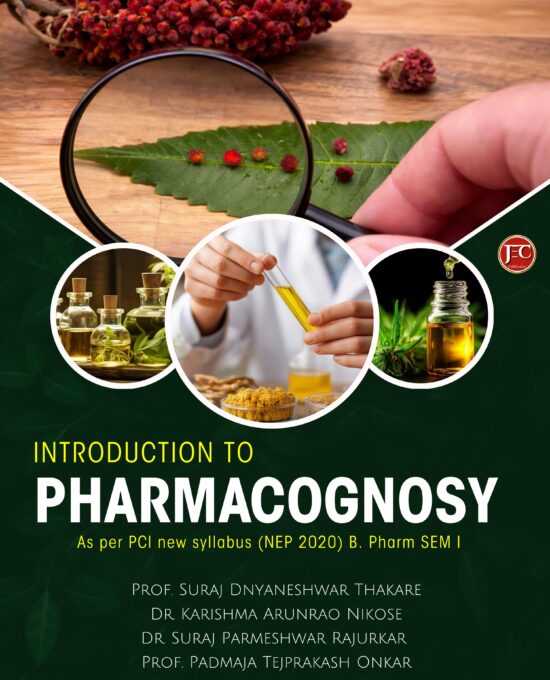


INTRODUCTION TO PHARMACOGNOSY
Introduction to Pharmacognosy is a comprehensive textbook that introduces the scientific study of crude drugs and natural medicinal products. The book covers the fundamentals of pharmacognosy, including the history, sources, pharmacopoeias, codification, and different systems of drug classification.
It explores the cultivation, collection, processing, storage, conservation, and value addition of medicinal plants, with emphasis on Good Agricultural Practices (GAP) and Good Collection Practices (GCP).
The book also discusses quality control and evaluation of natural drugs, including microscopic, physicochemical, and modern analytical approaches. It further covers plant metabolites, traditional systems of medicine, and phytotherapeutic agents used for cardiovascular, diabetic, inflammatory, CNS, antimicrobial, gastrointestinal, dermatological, respiratory, and other health conditions.
Designed for students and learners of pharmaceutical sciences, this book provides a structured understanding of natural drugs, their identification, quality, therapeutic importance, and role in modern drug discovery.
INTRODUCTION TO PHARMACOGNOSY
Introduction to Pharmacognosy is a comprehensive textbook that introduces the scientific study of crude drugs and natural medicinal products. The book covers the fundamentals of pharmacognosy, including the history, sources, pharmacopoeias, codification, and different systems of drug classification.
It explores the cultivation, collection, processing, storage, conservation, and value addition of medicinal plants, with emphasis on Good Agricultural Practices (GAP) and Good Collection Practices (GCP).
The book also discusses quality control and evaluation of natural drugs, including microscopic, physicochemical, and modern analytical approaches. It further covers plant metabolites, traditional systems of medicine, and phytotherapeutic agents used for cardiovascular, diabetic, inflammatory, CNS, antimicrobial, gastrointestinal, dermatological, respiratory, and other health conditions.
Designed for students and learners of pharmaceutical sciences, this book provides a structured understanding of natural drugs, their identification, quality, therapeutic importance, and role in modern drug discovery.

Introduction To Research Methodology – Principles, Methods And Applications