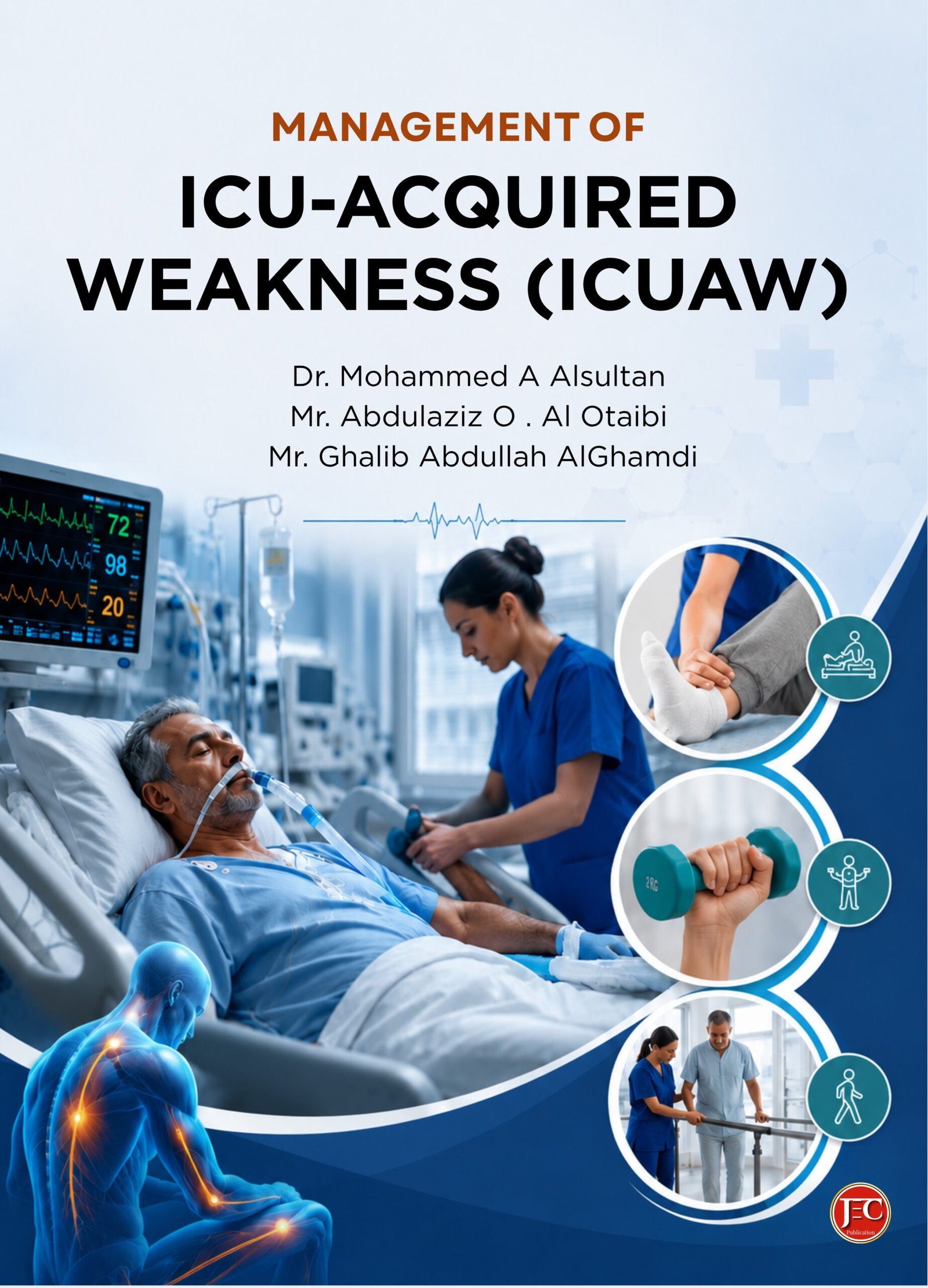
Management Of Icuacquired Weakness (Icuaw)
ISBN: 978-93-6976-357-3
Authors:-
Dr. Mohammed A Alsultan
Mr. Abdulaziz O. Al Otaibi
Mr. Ghalib Abdullah AlGhamdi
Total Pages:- 424
3rd August 2026
The ICU is one of the most remarkable advances in modern medicine, keeping alive those who otherwise would
not have survived and turning around some of the worst epidemiological trajectories as these patients suffer
from major trauma/sepsis/respiratory failure/catastrophic neurological emergencies/cardiovascular
instability/multiple organ dysfunction. Over the course of a few decades, advances in critical care have led to
significant improvements in survival. But as so many patients survive serious illness, clinicians are dealing
increasingly with the long-standing physical, psychological and functional impacts of intensive care. ICUAW
has recently come to be recognized as one of the commonest yet underappreciated complications occurring in
ICU patients, which can have a profound impact on subsequent patient recovery and quality of life as well
healthcare outcomes. ICUAW, which encompasses critical illness polyneuropathy and/or myopathy (CIP/CIM),
is characterized by prolonged mechanical ventilation, difficult rehabilitation, increased morbidity and long-term
disability.
The implications of ICUAW go well beyond weakness of the muscle. This process needs a multidimensional
method, which includes critical care physician physiotherapists rehabilitation specialist nurses occupational
therapists nutritionist respiratory therapist psychologists speech language pathologist. Management can compile
from early identification, prophylactic measures, evidence-guided rehabilitation & nutrition optimization
strategies as well mobilization protocols and systematic post-ICU follow up. In the context of an evolving
healthcare paradigm towards more patient-centered and outcome-driven care, preventing as well as treating
ICUAW now represents a vital component in critical illness management strategies.
Management of ICU-Acquired Weakness (ICUAW) is the first book specifically designed to be an all-in-one,
up-to-date UK evidence-based clinical and practice toolbox for students, clinicians, educators and researchers.
It provides a structured, clinically relevant presentation of the findings available in published literature to fill the
gap between basic science and real clinical practice related to ICUAW. In the book, chapters cover:
epidemiology; pathophysiology; risk factors and clinical presentation; diagnosis prevention strategies
rehabilitation principles nutritional support respiratory management pharmacological considerations
psychological aspects long-term outcomes emerging technologies shaping future of ICU rehabilitation.
Interdisciplinary work, early intervention has been given due importance In the ensuing review, we explore both
established clinical practices and novel ideas (the ABCDEF bundle; early mobilization; neuromuscular
monitoring; point-of-care ultrasound for muscle assessment and biomarkers), as well as cutting-edge approaches
(digital rehabilitation, wearable technologies, artificial intelligence-assisted longitudinal patient-centered
outcome measurements via remote tracking with tele-rehabilitation). These developments indicate the
challenges associated with critical care medicine and are promising strategies to help patients achieve recovery
while reducing long-term disability.
This book brings together scientific evidence, clinical guidelines on practical management concepts and methods
in saturation with illustrative case studies including rehabilitation protocols, tables of key points for quick
reference as well as flow charts that help identify problem at a given time point so readers are supplied readily
available tools to use daily in their profession. Regardless of whether you are caring for patients in the ICU,
step-down units, rehabilitation centers or outpatient clinics — healthcare professionals will learn something that
can lead to improved outcomes along the continuum.
CAN: This book is written for a general readership such as medical students at both the undergraduate and
postgraduate level, residents in critical care medicine, anesthesiology, neurology and rehabilitation medicine;
physiotherapy students; physiotherapists working with intensive care patients (i.e., ICU/intermediate unit specific); expert support from other health professionals like those specializing in critical nursing or respiratory
therapy/medicine; nutrition specialists whose primary area of expertise involves critically ill patients/researchers
reviewing physical activity topics relevant to their profession/pathophysiological studies/faculty members
responsible for teaching courses related specifically to acute/chronic diseases affecting human functionality
recovery Strategies We also hope it is helpful for policymakers and hospital administrators interested in
developing a comprehensive ICU rehabilitation program.
Despite significant progress in understanding ICUAW, many questions regarding its complex mechanisms,
optimal prevention strategies and individualized rehabilitation or long-term recovery remain unanswered. Future
management of this difficult condition will no doubt continue to be driven by further research and innovation,
as well as collaborative clinical practice. We hope that this book serves as a prompt for further exploration,
facilitates evidence-based practice and ultimately enhances the experience of survivor rehabilitation from critical
illness by optimising functional recovery and quality of life.
A heartfelt thanks to all the health workers who give their heart for critical ill patients. They are dedicated,
caring, knowledgeable and tireless professionals who have provided inspiration in the improvement of care for
individuals with critical illness as well as rehabilitation. We continue to be equally thankful for researchers
whose scientific investigations have broadened our knowledge of ICU-acquired weakness and guide clinical
practice far beyond the walls of this institution.
And finally, I would like to dedicate this book to the patients and their families whose fortitude throughout the
ups-and-downs of critical illness proves that survival is just starting point but recovery where success should be
measured. We trust that this work will be a valuable tool in promoting excellence around the prevention,
management and rehabilitation of ICU-Acquired Weakness.


Reviews
There are no reviews yet.