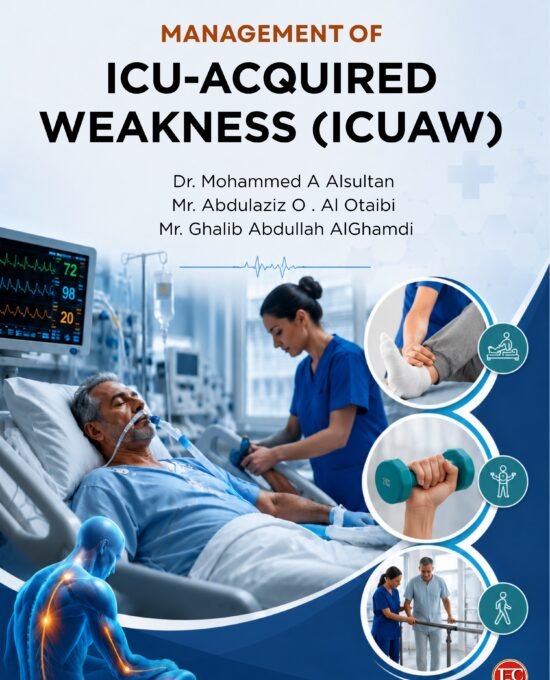
Management Of ICU Acquired Weakness (ICUAW)
Advances in intensive care medicine have greatly improved survival among critically ill patients. However, many survivors experience ICU-Acquired Weakness (ICUAW), a common yet often overlooked complication that includes critical illness polyneuropathy (CIP) and myopathy (CIM). ICUAW can result in prolonged mechanical ventilation, delayed rehabilitation, long-term disability, and reduced quality of life.
Management of ICU-Acquired Weakness (ICUAW) provides a comprehensive, evidence-based guide for medical students, clinicians, physiotherapists, nurses, rehabilitation specialists, and researchers. The book covers the epidemiology, pathophysiology, diagnosis, prevention, rehabilitation, nutritional and respiratory support, psychological care, long-term outcomes, and emerging technologies in ICU rehabilitation. Emphasis is placed on multidisciplinary care, early mobilization, and patient-centered recovery.
With practical case studies, rehabilitation protocols, flowcharts, tables, and clinical guidelines, this book bridges the gap between research and bedside practice, offering healthcare professionals valuable tools to improve patient outcomes.
We sincerely thank all healthcare professionals and researchers whose dedication continues to advance the care of critically ill patients. Above all, we dedicate this book to ICU survivors and their families, whose resilience inspires ongoing efforts to enhance recovery, restore function, and improve quality of life.
Management Of ICU Acquired Weakness (ICUAW)
Advances in intensive care medicine have greatly improved survival among critically ill patients. However, many survivors experience ICU-Acquired Weakness (ICUAW), a common yet often overlooked complication that includes critical illness polyneuropathy (CIP) and myopathy (CIM). ICUAW can result in prolonged mechanical ventilation, delayed rehabilitation, long-term disability, and reduced quality of life.
Management of ICU-Acquired Weakness (ICUAW) provides a comprehensive, evidence-based guide for medical students, clinicians, physiotherapists, nurses, rehabilitation specialists, and researchers. The book covers the epidemiology, pathophysiology, diagnosis, prevention, rehabilitation, nutritional and respiratory support, psychological care, long-term outcomes, and emerging technologies in ICU rehabilitation. Emphasis is placed on multidisciplinary care, early mobilization, and patient-centered recovery.
With practical case studies, rehabilitation protocols, flowcharts, tables, and clinical guidelines, this book bridges the gap between research and bedside practice, offering healthcare professionals valuable tools to improve patient outcomes.
We sincerely thank all healthcare professionals and researchers whose dedication continues to advance the care of critically ill patients. Above all, we dedicate this book to ICU survivors and their families, whose resilience inspires ongoing efforts to enhance recovery, restore function, and improve quality of life.



MARKETING MANAGEMENT The Indian Way
MARKETING MANAGEMENT The Indian Way

Mastering Data Structures Foundations, Implementation, And Applications
Mastering Data Structures Foundations, Implementation, And Applications
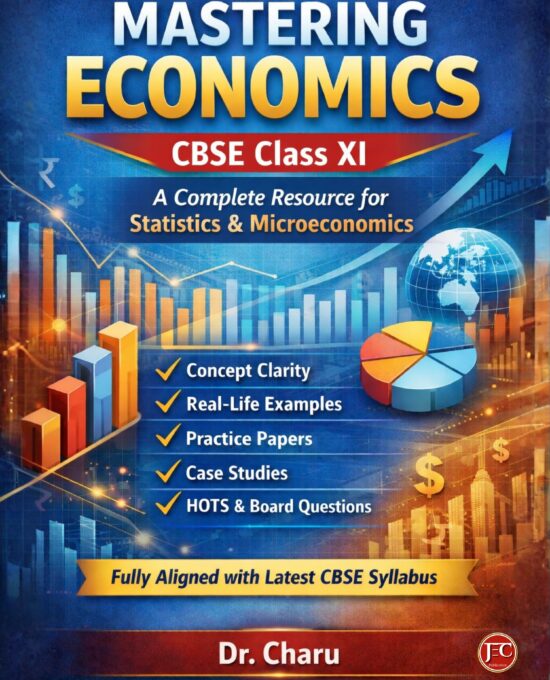
MASTERING ECONOMICS