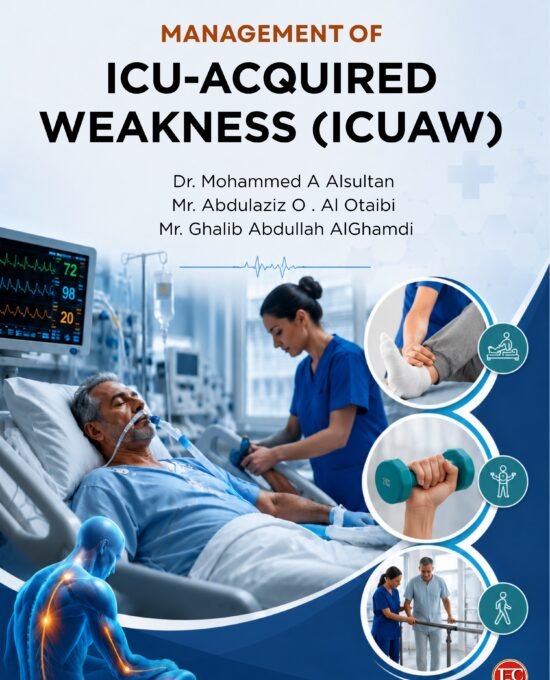
Management Of Icuacquired Weakness (Icuaw)
The ICU is one of the most remarkable advances in modern medicine, keeping alive those who otherwise would
not have survived and turning around some of the worst epidemiological trajectories as these patients suffer
from major trauma/sepsis/respiratory failure/catastrophic neurological emergencies/cardiovascular
instability/multiple organ dysfunction. Over the course of a few decades, advances in critical care have led to
significant improvements in survival. But as so many patients survive serious illness, clinicians are dealing
increasingly with the long-standing physical, psychological and functional impacts of intensive care. ICUAW
has recently come to be recognized as one of the commonest yet underappreciated complications occurring in
ICU patients, which can have a profound impact on subsequent patient recovery and quality of life as well
healthcare outcomes. ICUAW, which encompasses critical illness polyneuropathy and/or myopathy (CIP/CIM),
is characterized by prolonged mechanical ventilation, difficult rehabilitation, increased morbidity and long-term
disability.
The implications of ICUAW go well beyond weakness of the muscle. This process needs a multidimensional
method, which includes critical care physician physiotherapists rehabilitation specialist nurses occupational
therapists nutritionist respiratory therapist psychologists speech language pathologist. Management can compile
from early identification, prophylactic measures, evidence-guided rehabilitation & nutrition optimization
strategies as well mobilization protocols and systematic post-ICU follow up. In the context of an evolving
healthcare paradigm towards more patient-centered and outcome-driven care, preventing as well as treating
ICUAW now represents a vital component in critical illness management strategies.
Management of ICU-Acquired Weakness (ICUAW) is the first book specifically designed to be an all-in-one,
up-to-date UK evidence-based clinical and practice toolbox for students, clinicians, educators and researchers.
It provides a structured, clinically relevant presentation of the findings available in published literature to fill the
gap between basic science and real clinical practice related to ICUAW. In the book, chapters cover:
epidemiology; pathophysiology; risk factors and clinical presentation; diagnosis prevention strategies
rehabilitation principles nutritional support respiratory management pharmacological considerations
psychological aspects long-term outcomes emerging technologies shaping future of ICU rehabilitation.
Interdisciplinary work, early intervention has been given due importance In the ensuing review, we explore both
established clinical practices and novel ideas (the ABCDEF bundle; early mobilization; neuromuscular
monitoring; point-of-care ultrasound for muscle assessment and biomarkers), as well as cutting-edge approaches
(digital rehabilitation, wearable technologies, artificial intelligence-assisted longitudinal patient-centered
outcome measurements via remote tracking with tele-rehabilitation). These developments indicate the
challenges associated with critical care medicine and are promising strategies to help patients achieve recovery
while reducing long-term disability.
This book brings together scientific evidence, clinical guidelines on practical management concepts and methods
in saturation with illustrative case studies including rehabilitation protocols, tables of key points for quick
reference as well as flow charts that help identify problem at a given time point so readers are supplied readily
available tools to use daily in their profession. Regardless of whether you are caring for patients in the ICU,
step-down units, rehabilitation centers or outpatient clinics — healthcare professionals will learn something that
can lead to improved outcomes along the continuum.
CAN: This book is written for a general readership such as medical students at both the undergraduate and
postgraduate level, residents in critical care medicine, anesthesiology, neurology and rehabilitation medicine;
physiotherapy students; physiotherapists working with intensive care patients (i.e., ICU/intermediate unit specific); expert support from other health professionals like those specializing in critical nursing or respiratory
therapy/medicine; nutrition specialists whose primary area of expertise involves critically ill patients/researchers
reviewing physical activity topics relevant to their profession/pathophysiological studies/faculty members
responsible for teaching courses related specifically to acute/chronic diseases affecting human functionality
recovery Strategies We also hope it is helpful for policymakers and hospital administrators interested in
developing a comprehensive ICU rehabilitation program.
Despite significant progress in understanding ICUAW, many questions regarding its complex mechanisms,
optimal prevention strategies and individualized rehabilitation or long-term recovery remain unanswered. Future
management of this difficult condition will no doubt continue to be driven by further research and innovation,
as well as collaborative clinical practice. We hope that this book serves as a prompt for further exploration,
facilitates evidence-based practice and ultimately enhances the experience of survivor rehabilitation from critical
illness by optimising functional recovery and quality of life.
A heartfelt thanks to all the health workers who give their heart for critical ill patients. They are dedicated,
caring, knowledgeable and tireless professionals who have provided inspiration in the improvement of care for
individuals with critical illness as well as rehabilitation. We continue to be equally thankful for researchers
whose scientific investigations have broadened our knowledge of ICU-acquired weakness and guide clinical
practice far beyond the walls of this institution.
And finally, I would like to dedicate this book to the patients and their families whose fortitude throughout the
ups-and-downs of critical illness proves that survival is just starting point but recovery where success should be
measured. We trust that this work will be a valuable tool in promoting excellence around the prevention,
management and rehabilitation of ICU-Acquired Weakness.
Management Of Icuacquired Weakness (Icuaw)
The ICU is one of the most remarkable advances in modern medicine, keeping alive those who otherwise would
not have survived and turning around some of the worst epidemiological trajectories as these patients suffer
from major trauma/sepsis/respiratory failure/catastrophic neurological emergencies/cardiovascular
instability/multiple organ dysfunction. Over the course of a few decades, advances in critical care have led to
significant improvements in survival. But as so many patients survive serious illness, clinicians are dealing
increasingly with the long-standing physical, psychological and functional impacts of intensive care. ICUAW
has recently come to be recognized as one of the commonest yet underappreciated complications occurring in
ICU patients, which can have a profound impact on subsequent patient recovery and quality of life as well
healthcare outcomes. ICUAW, which encompasses critical illness polyneuropathy and/or myopathy (CIP/CIM),
is characterized by prolonged mechanical ventilation, difficult rehabilitation, increased morbidity and long-term
disability.
The implications of ICUAW go well beyond weakness of the muscle. This process needs a multidimensional
method, which includes critical care physician physiotherapists rehabilitation specialist nurses occupational
therapists nutritionist respiratory therapist psychologists speech language pathologist. Management can compile
from early identification, prophylactic measures, evidence-guided rehabilitation & nutrition optimization
strategies as well mobilization protocols and systematic post-ICU follow up. In the context of an evolving
healthcare paradigm towards more patient-centered and outcome-driven care, preventing as well as treating
ICUAW now represents a vital component in critical illness management strategies.
Management of ICU-Acquired Weakness (ICUAW) is the first book specifically designed to be an all-in-one,
up-to-date UK evidence-based clinical and practice toolbox for students, clinicians, educators and researchers.
It provides a structured, clinically relevant presentation of the findings available in published literature to fill the
gap between basic science and real clinical practice related to ICUAW. In the book, chapters cover:
epidemiology; pathophysiology; risk factors and clinical presentation; diagnosis prevention strategies
rehabilitation principles nutritional support respiratory management pharmacological considerations
psychological aspects long-term outcomes emerging technologies shaping future of ICU rehabilitation.
Interdisciplinary work, early intervention has been given due importance In the ensuing review, we explore both
established clinical practices and novel ideas (the ABCDEF bundle; early mobilization; neuromuscular
monitoring; point-of-care ultrasound for muscle assessment and biomarkers), as well as cutting-edge approaches
(digital rehabilitation, wearable technologies, artificial intelligence-assisted longitudinal patient-centered
outcome measurements via remote tracking with tele-rehabilitation). These developments indicate the
challenges associated with critical care medicine and are promising strategies to help patients achieve recovery
while reducing long-term disability.
This book brings together scientific evidence, clinical guidelines on practical management concepts and methods
in saturation with illustrative case studies including rehabilitation protocols, tables of key points for quick
reference as well as flow charts that help identify problem at a given time point so readers are supplied readily
available tools to use daily in their profession. Regardless of whether you are caring for patients in the ICU,
step-down units, rehabilitation centers or outpatient clinics — healthcare professionals will learn something that
can lead to improved outcomes along the continuum.
CAN: This book is written for a general readership such as medical students at both the undergraduate and
postgraduate level, residents in critical care medicine, anesthesiology, neurology and rehabilitation medicine;
physiotherapy students; physiotherapists working with intensive care patients (i.e., ICU/intermediate unit specific); expert support from other health professionals like those specializing in critical nursing or respiratory
therapy/medicine; nutrition specialists whose primary area of expertise involves critically ill patients/researchers
reviewing physical activity topics relevant to their profession/pathophysiological studies/faculty members
responsible for teaching courses related specifically to acute/chronic diseases affecting human functionality
recovery Strategies We also hope it is helpful for policymakers and hospital administrators interested in
developing a comprehensive ICU rehabilitation program.
Despite significant progress in understanding ICUAW, many questions regarding its complex mechanisms,
optimal prevention strategies and individualized rehabilitation or long-term recovery remain unanswered. Future
management of this difficult condition will no doubt continue to be driven by further research and innovation,
as well as collaborative clinical practice. We hope that this book serves as a prompt for further exploration,
facilitates evidence-based practice and ultimately enhances the experience of survivor rehabilitation from critical
illness by optimising functional recovery and quality of life.
A heartfelt thanks to all the health workers who give their heart for critical ill patients. They are dedicated,
caring, knowledgeable and tireless professionals who have provided inspiration in the improvement of care for
individuals with critical illness as well as rehabilitation. We continue to be equally thankful for researchers
whose scientific investigations have broadened our knowledge of ICU-acquired weakness and guide clinical
practice far beyond the walls of this institution.
And finally, I would like to dedicate this book to the patients and their families whose fortitude throughout the
ups-and-downs of critical illness proves that survival is just starting point but recovery where success should be
measured. We trust that this work will be a valuable tool in promoting excellence around the prevention,
management and rehabilitation of ICU-Acquired Weakness.



MARKETING MANAGEMENT The Indian Way
₹499.00
In the rapidly transforming world of academia, where research serves as the foundation of innovation
and intellectual advancement, the integrity of scholarly work has never been more crucial. Research and
Publication Ethics emerges as a timely and comprehensive text designed to strengthen the moral,
professional, and intellectual framework of research practice. The purpose of this book is to nurture an
ethical research culture among scholars, academicians, and practitioners by providing a deep and
structured understanding of the principles that govern responsible research and publication.
This book systematically explores the philosophical underpinnings, ethical theories, and professional
guidelines that shape contemporary research ethics. It encompasses a wide spectrum of themes,
including academic integrity, plagiarism, authorship ethics, peer review systems, conflicts of interest,
data management, and publication ethics. In addition, it addresses emerging concerns in the digital
era—such as artificial intelligence, open science, big data analytics, biotechnology, and predatory
publishing—offering readers a holistic view of how ethical frameworks evolve in response to
technological and global academic transformations. Each unit of this book has been designed to blend
theoretical insights with practical implications, supported by case studies, reflective exercises, and
global guidelines such as COPE, ICMJE, and UGC regulations.
The authors of this volume collectively represent a distinguished blend of academic excellence,
research expertise, and professional experience. Prof. (Dr.) Dileep Kumar M, International Research
Fellow at SEGi University, Kuala Lumpur, and Vice Chancellor of Hensard University, Nigeria, brings
to this book over two decades of global academic leadership and scholarly contribution in strategic
management, entrepreneurship, and organizational behavior. Dr. Normala S. Govindarajo, Associate
Professor at HELP University, Malaysia, adds depth with her dual doctoral expertise in Management
and Human Resource, her extensive body of published work, and her interdisciplinary engagement with
technology and professional ethics. Dr. Vijyata, Assistant Professor at ARKA Jain University,
Jamshedpur, contributes her profound academic insight, rich teaching experience, and scholarly
contributions in research methodology, marketing, and digital transformation, reflecting a strong
commitment to ethical scholarship and sustainability. Mrs. Princia Stivenson Coutinho, Assistant
Professor at VIVA College of Arts, Science and Commerce, Mumbai University, lends her deep
expertise in commerce, financial accounting, and corporate governance, bridging ethical theory with
real-world application in finance and business ethics.
This collective endeavor reflects the authors’ shared vision—to cultivate awareness, accountability, and
integrity among current and future researchers. By synthesizing both classical theories and modern frameworks, the book provides a strong ethical foundation necessary for conducting credible,
transparent, and socially responsible research.
It is hoped that Research and Publication Ethics will serve as a comprehensive guide for students,
faculty members, and researchers across disciplines, fostering a scholarly ecosystem grounded in
honesty, fairness, and professional excellence. The authors express their sincere gratitude to their
respective institutions and peers whose encouragement and collaboration made this work possible.
May this book inspire every reader to uphold the sanctity of research and contribute meaningfully to the
global pursuit of knowledge rooted in ethical responsibility.
Prof. (Dr.) Dileep Kumar M
Dr. Normala S. Govindarajo,
Dr. Vijyata
Mrs. Princia Stivenson Coutinho
MARKETING MANAGEMENT The Indian Way
₹499.00
In the rapidly transforming world of academia, where research serves as the foundation of innovation
and intellectual advancement, the integrity of scholarly work has never been more crucial. Research and
Publication Ethics emerges as a timely and comprehensive text designed to strengthen the moral,
professional, and intellectual framework of research practice. The purpose of this book is to nurture an
ethical research culture among scholars, academicians, and practitioners by providing a deep and
structured understanding of the principles that govern responsible research and publication.
This book systematically explores the philosophical underpinnings, ethical theories, and professional
guidelines that shape contemporary research ethics. It encompasses a wide spectrum of themes,
including academic integrity, plagiarism, authorship ethics, peer review systems, conflicts of interest,
data management, and publication ethics. In addition, it addresses emerging concerns in the digital
era—such as artificial intelligence, open science, big data analytics, biotechnology, and predatory
publishing—offering readers a holistic view of how ethical frameworks evolve in response to
technological and global academic transformations. Each unit of this book has been designed to blend
theoretical insights with practical implications, supported by case studies, reflective exercises, and
global guidelines such as COPE, ICMJE, and UGC regulations.
The authors of this volume collectively represent a distinguished blend of academic excellence,
research expertise, and professional experience. Prof. (Dr.) Dileep Kumar M, International Research
Fellow at SEGi University, Kuala Lumpur, and Vice Chancellor of Hensard University, Nigeria, brings
to this book over two decades of global academic leadership and scholarly contribution in strategic
management, entrepreneurship, and organizational behavior. Dr. Normala S. Govindarajo, Associate
Professor at HELP University, Malaysia, adds depth with her dual doctoral expertise in Management
and Human Resource, her extensive body of published work, and her interdisciplinary engagement with
technology and professional ethics. Dr. Vijyata, Assistant Professor at ARKA Jain University,
Jamshedpur, contributes her profound academic insight, rich teaching experience, and scholarly
contributions in research methodology, marketing, and digital transformation, reflecting a strong
commitment to ethical scholarship and sustainability. Mrs. Princia Stivenson Coutinho, Assistant
Professor at VIVA College of Arts, Science and Commerce, Mumbai University, lends her deep
expertise in commerce, financial accounting, and corporate governance, bridging ethical theory with
real-world application in finance and business ethics.
This collective endeavor reflects the authors’ shared vision—to cultivate awareness, accountability, and
integrity among current and future researchers. By synthesizing both classical theories and modern frameworks, the book provides a strong ethical foundation necessary for conducting credible,
transparent, and socially responsible research.
It is hoped that Research and Publication Ethics will serve as a comprehensive guide for students,
faculty members, and researchers across disciplines, fostering a scholarly ecosystem grounded in
honesty, fairness, and professional excellence. The authors express their sincere gratitude to their
respective institutions and peers whose encouragement and collaboration made this work possible.
May this book inspire every reader to uphold the sanctity of research and contribute meaningfully to the
global pursuit of knowledge rooted in ethical responsibility.
Prof. (Dr.) Dileep Kumar M
Dr. Normala S. Govindarajo,
Dr. Vijyata
Mrs. Princia Stivenson Coutinho

Mastering Data Structures Foundations, Implementation, And Applications
₹499.00
Data Structures form the backbone of computer science and software engineering, providing the
fundamental mechanisms for organizing, managing, and processing data efficiently. A strong
understanding of data structures is essential not only for academic excellence but also for solving realworld computational problems and designing scalable, high-performance systems.
This book, Mastering Data Structures: Foundations, Implementation, and Applications, is written with
the objective of offering a comprehensive, structured, and application-oriented treatment of data
structures. It is designed to bridge the gap between theoretical concepts and practical implementation,
enabling learners to develop both conceptual clarity and problem-solving proficiency.
The content of this book progresses systematically from basic linear data structures such as arrays, stacks,
queues, and linked lists to more advanced non-linear structures including trees, graphs, heaps, and hashing
techniques. Each topic is presented with clear explanations, illustrative examples, and well-structured
algorithms to facilitate ease of understanding. Emphasis has been placed on time and space complexity
analysis to help readers evaluate the efficiency of various approaches.
In addition to core concepts, this book integrates practical programming perspectives, primarily using
Python, to demonstrate real-world applicability. Numerous examples, exercises, and case studies are
included to reinforce learning and encourage hands-on experimentation. A dedicated section on capstone
projects has been incorporated to guide students in applying data structure concepts to realistic problem
scenarios, thereby fostering analytical thinking and design skills.
This book is intended for undergraduate and postgraduate students of Computer Science, Information
Technology, and related disciplines. It will also serve as a useful reference for educators, competitive
programming aspirants, and professionals seeking to strengthen their foundational knowledge of data
structures.
The author sincerely hopes that this book will serve as a valuable learning resource, helping readers
develop a strong and enduring understanding of data structures and their applications. Constructive
feedback and suggestions from readers are warmly welcomed for the improvement of future editions.
Mastering Data Structures Foundations, Implementation, And Applications
₹499.00
Data Structures form the backbone of computer science and software engineering, providing the
fundamental mechanisms for organizing, managing, and processing data efficiently. A strong
understanding of data structures is essential not only for academic excellence but also for solving realworld computational problems and designing scalable, high-performance systems.
This book, Mastering Data Structures: Foundations, Implementation, and Applications, is written with
the objective of offering a comprehensive, structured, and application-oriented treatment of data
structures. It is designed to bridge the gap between theoretical concepts and practical implementation,
enabling learners to develop both conceptual clarity and problem-solving proficiency.
The content of this book progresses systematically from basic linear data structures such as arrays, stacks,
queues, and linked lists to more advanced non-linear structures including trees, graphs, heaps, and hashing
techniques. Each topic is presented with clear explanations, illustrative examples, and well-structured
algorithms to facilitate ease of understanding. Emphasis has been placed on time and space complexity
analysis to help readers evaluate the efficiency of various approaches.
In addition to core concepts, this book integrates practical programming perspectives, primarily using
Python, to demonstrate real-world applicability. Numerous examples, exercises, and case studies are
included to reinforce learning and encourage hands-on experimentation. A dedicated section on capstone
projects has been incorporated to guide students in applying data structure concepts to realistic problem
scenarios, thereby fostering analytical thinking and design skills.
This book is intended for undergraduate and postgraduate students of Computer Science, Information
Technology, and related disciplines. It will also serve as a useful reference for educators, competitive
programming aspirants, and professionals seeking to strengthen their foundational knowledge of data
structures.
The author sincerely hopes that this book will serve as a valuable learning resource, helping readers
develop a strong and enduring understanding of data structures and their applications. Constructive
feedback and suggestions from readers are warmly welcomed for the improvement of future editions.
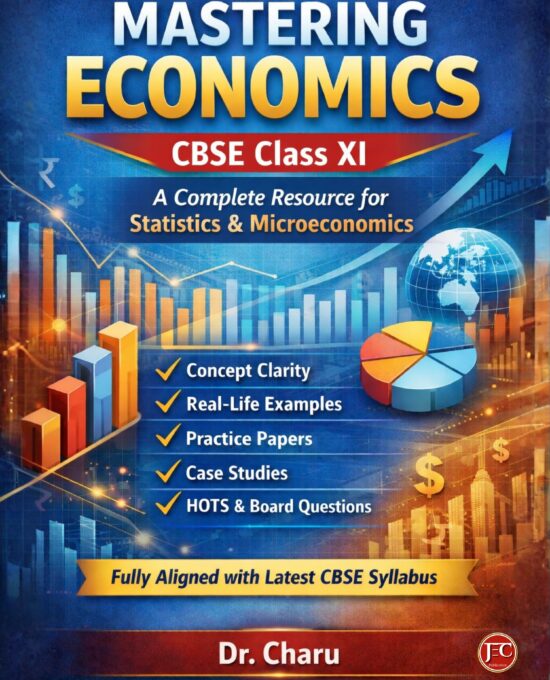
MASTERING ECONOMICS
₹499.00
Economics, as a social science, depends significantly on theoretical reasoning and quantitative
analysis to comprehend and elucidate the intricate issues surrounding the production, distribution,
and use of resources. Statistics for Economics and Introductory Microeconomics together
establish a core framework for students to systematically and rationally evaluate economic
phenomena. Statistics for Economics provides learners with fundamental tools for data collection,
categorization, tabulation, and interpretation, allowing for precise measurement of economic
variables such as income, prices, employment, and growth. Utilizing statistical techniques such as
averages, dispersion, correlation, and index numbers, students acquire the capability to convert
raw data into significant information for economic decision-making and policy development.
Simultaneously, Introductory to Microeconomics familiarizes students with the essential concepts
regulating individual economic entities, including consumers, businesses, and markets. It
elucidates the interaction between demand and supply in price determination, the pursuit of
maximum consumer happiness within the constraints of limited income, and the objective of
producers to attain efficiency and profit amidst scarcity. Through the integration of
microeconomic theory and statistical analysis, students cultivate a comprehensive grasp of both
theoretical and empirical methodologies in economics. These disciplines together promote
analytical reasoning, problem-solving capabilities, and the pragmatic application of economic
principles in real-world contexts, including market dynamics, resource distribution, and public
policy assessment. This course establishes a robust intellectual basis for advanced study in
economics and related fields, while cultivating the analytical and critical thinking skills necessary
for comprehending contemporary economic systems.
MASTERING ECONOMICS
₹499.00
Economics, as a social science, depends significantly on theoretical reasoning and quantitative
analysis to comprehend and elucidate the intricate issues surrounding the production, distribution,
and use of resources. Statistics for Economics and Introductory Microeconomics together
establish a core framework for students to systematically and rationally evaluate economic
phenomena. Statistics for Economics provides learners with fundamental tools for data collection,
categorization, tabulation, and interpretation, allowing for precise measurement of economic
variables such as income, prices, employment, and growth. Utilizing statistical techniques such as
averages, dispersion, correlation, and index numbers, students acquire the capability to convert
raw data into significant information for economic decision-making and policy development.
Simultaneously, Introductory to Microeconomics familiarizes students with the essential concepts
regulating individual economic entities, including consumers, businesses, and markets. It
elucidates the interaction between demand and supply in price determination, the pursuit of
maximum consumer happiness within the constraints of limited income, and the objective of
producers to attain efficiency and profit amidst scarcity. Through the integration of
microeconomic theory and statistical analysis, students cultivate a comprehensive grasp of both
theoretical and empirical methodologies in economics. These disciplines together promote
analytical reasoning, problem-solving capabilities, and the pragmatic application of economic
principles in real-world contexts, including market dynamics, resource distribution, and public
policy assessment. This course establishes a robust intellectual basis for advanced study in
economics and related fields, while cultivating the analytical and critical thinking skills necessary
for comprehending contemporary economic systems.