
Industrial Pharmacy – II
₹499.00
Industrial Pharmacy-II stands at the gateway where classroom knowledge
transforms into real pharmaceutical practice. This subject connects theory with the
living world of manufacturing plants, validation floors, quality control laboratories,
regulatory corridors, and packaging lines. Understanding these concepts is not
merely for passing examinations, but for shaping competent, confident, and
industry-ready pharmacists.
This book has been carefully designed as per the latest PCI syllabus for B. Pharma
7th semester students, covering every topic in a clear, concise, and systematic
manner. Each chapter follows a structured approach with simple explanations,
flowcharts, tables, figures, and practical examples to make complex industrial
processes easy to grasp and remember. From GMP, validation, and documentation
to packaging technology, regulatory guidelines, and quality assurance, every
concept is presented with precision and relevance.
The aim is straightforward: if you study this book thoroughly, you will not require
any additional reference text. It serves as both a learning guide and a quick revision
companion.
May these pages help you think like an industrial pharmacist, act like a professional,
and step confidently into the pharmaceutical industry of tomorrow.
Happy learning and best wishes for your success.
Om Prakash Verma
Raj Kumar Vishwakarma
Sahil Akhtar
Industrial Pharmacy – II
₹499.00
Industrial Pharmacy-II stands at the gateway where classroom knowledge
transforms into real pharmaceutical practice. This subject connects theory with the
living world of manufacturing plants, validation floors, quality control laboratories,
regulatory corridors, and packaging lines. Understanding these concepts is not
merely for passing examinations, but for shaping competent, confident, and
industry-ready pharmacists.
This book has been carefully designed as per the latest PCI syllabus for B. Pharma
7th semester students, covering every topic in a clear, concise, and systematic
manner. Each chapter follows a structured approach with simple explanations,
flowcharts, tables, figures, and practical examples to make complex industrial
processes easy to grasp and remember. From GMP, validation, and documentation
to packaging technology, regulatory guidelines, and quality assurance, every
concept is presented with precision and relevance.
The aim is straightforward: if you study this book thoroughly, you will not require
any additional reference text. It serves as both a learning guide and a quick revision
companion.
May these pages help you think like an industrial pharmacist, act like a professional,
and step confidently into the pharmaceutical industry of tomorrow.
Happy learning and best wishes for your success.
Om Prakash Verma
Raj Kumar Vishwakarma
Sahil Akhtar


Introduction To Robotics
₹499.00
The field of Robotics—the exciting blend of Science, Technology, Engineering,
and Mathematics (STEM)—is rapidly shaping our future, but for many young
adults and students eager to begin their studies, the subject can seem overly
complex and inaccessible. This book serves as your essential introduction, written
specifically for beginners with no prior experience, aiming to transform your
initial curiosity into genuine competence. You are standing at the edge of the next
great technological revolution. Robotics is no longer science fiction; it is the
powerful blend of Science, Technology, Engineering, and Mathematics (STEM)
that is currently reshaping our daily lives. We will demystify the core components
of any robot, focusing on the basics of mechanical design, the principles of
sensing and perception, and the fundamentals of programming and control
systems. By clearly explaining these foundations, this book provides the crucial
first steps necessary to understand and eventually build your own intelligent
machines, preparing you for a future where mastery of robotics is key to
innovation and problem-solving.
Introduction To Robotics
₹499.00
The field of Robotics—the exciting blend of Science, Technology, Engineering,
and Mathematics (STEM)—is rapidly shaping our future, but for many young
adults and students eager to begin their studies, the subject can seem overly
complex and inaccessible. This book serves as your essential introduction, written
specifically for beginners with no prior experience, aiming to transform your
initial curiosity into genuine competence. You are standing at the edge of the next
great technological revolution. Robotics is no longer science fiction; it is the
powerful blend of Science, Technology, Engineering, and Mathematics (STEM)
that is currently reshaping our daily lives. We will demystify the core components
of any robot, focusing on the basics of mechanical design, the principles of
sensing and perception, and the fundamentals of programming and control
systems. By clearly explaining these foundations, this book provides the crucial
first steps necessary to understand and eventually build your own intelligent
machines, preparing you for a future where mastery of robotics is key to
innovation and problem-solving.

INTRODUCTION TO THEORY OF STATISTICS
₹499.00
This book, Introduction to Theory of Statistics, provides a foundational and advanced
exploration of the core principles that govern statistical analysis. Beginning with Chapter
1: Theory of Probability, the text introduces the fundamental concepts of chance,
randomness, and the axiomatic foundations of probability that serve as the bedrock of
statistical reasoning. Chapter 2 delves into Random Variables and Distribution Functions,
emphasizing both discrete and continuous variables and the rules governing their
distributions. Chapter 3 builds on this by exploring Expectations and Moments, offering
insight into key statistical measures such as the mean, variance, skewness, and kurtosis,
which describe the central tendency and shape of data distributions. Moving forward,
Chapter 4 focuses on Distribution Functions, presenting detailed studies of probability
distributions and their real-world applications. Chapter 5 addresses Continuous
Distributions, introducing vital continuous probability models such as the normal,
exponential, and gamma distributions, which are instrumental in various fields of
research and industry. The comprehensive nature of the text is further exemplified in
Chapter 6, which covers Joint and Conditional Distributions, Stochastic Independence,
and Advanced Expectations, facilitating a deeper understanding of how random variables
interact and influence one another. Finally, Chapter 7 discusses Sampling Methods,
Sample Mean, and Population Estimation, where the theory meets practical application. It
examines different sampling techniques, the importance of sample statistics, and how
these are used to estimate and infer characteristics of larger populations. This chapter
bridges theoretical statistics and empirical analysis, highlighting estimation procedures
and the significance of inferential statistics in research and decision-making. Overall, the
book is structured to build statistical literacy progressively, supporting learners in
developing both conceptual clarity and applied skills necessary for advanced study and
real-world data analysis.
INTRODUCTION TO THEORY OF STATISTICS
₹499.00
This book, Introduction to Theory of Statistics, provides a foundational and advanced
exploration of the core principles that govern statistical analysis. Beginning with Chapter
1: Theory of Probability, the text introduces the fundamental concepts of chance,
randomness, and the axiomatic foundations of probability that serve as the bedrock of
statistical reasoning. Chapter 2 delves into Random Variables and Distribution Functions,
emphasizing both discrete and continuous variables and the rules governing their
distributions. Chapter 3 builds on this by exploring Expectations and Moments, offering
insight into key statistical measures such as the mean, variance, skewness, and kurtosis,
which describe the central tendency and shape of data distributions. Moving forward,
Chapter 4 focuses on Distribution Functions, presenting detailed studies of probability
distributions and their real-world applications. Chapter 5 addresses Continuous
Distributions, introducing vital continuous probability models such as the normal,
exponential, and gamma distributions, which are instrumental in various fields of
research and industry. The comprehensive nature of the text is further exemplified in
Chapter 6, which covers Joint and Conditional Distributions, Stochastic Independence,
and Advanced Expectations, facilitating a deeper understanding of how random variables
interact and influence one another. Finally, Chapter 7 discusses Sampling Methods,
Sample Mean, and Population Estimation, where the theory meets practical application. It
examines different sampling techniques, the importance of sample statistics, and how
these are used to estimate and infer characteristics of larger populations. This chapter
bridges theoretical statistics and empirical analysis, highlighting estimation procedures
and the significance of inferential statistics in research and decision-making. Overall, the
book is structured to build statistical literacy progressively, supporting learners in
developing both conceptual clarity and applied skills necessary for advanced study and
real-world data analysis.


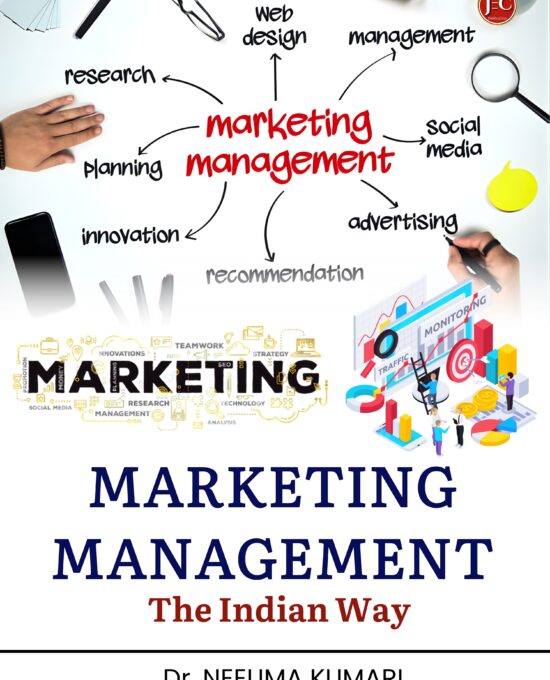
MARKETING MANAGEMENT The Indian Way
₹499.00
In the rapidly transforming world of academia, where research serves as the foundation of innovation
and intellectual advancement, the integrity of scholarly work has never been more crucial. Research and
Publication Ethics emerges as a timely and comprehensive text designed to strengthen the moral,
professional, and intellectual framework of research practice. The purpose of this book is to nurture an
ethical research culture among scholars, academicians, and practitioners by providing a deep and
structured understanding of the principles that govern responsible research and publication.
This book systematically explores the philosophical underpinnings, ethical theories, and professional
guidelines that shape contemporary research ethics. It encompasses a wide spectrum of themes,
including academic integrity, plagiarism, authorship ethics, peer review systems, conflicts of interest,
data management, and publication ethics. In addition, it addresses emerging concerns in the digital
era—such as artificial intelligence, open science, big data analytics, biotechnology, and predatory
publishing—offering readers a holistic view of how ethical frameworks evolve in response to
technological and global academic transformations. Each unit of this book has been designed to blend
theoretical insights with practical implications, supported by case studies, reflective exercises, and
global guidelines such as COPE, ICMJE, and UGC regulations.
The authors of this volume collectively represent a distinguished blend of academic excellence,
research expertise, and professional experience. Prof. (Dr.) Dileep Kumar M, International Research
Fellow at SEGi University, Kuala Lumpur, and Vice Chancellor of Hensard University, Nigeria, brings
to this book over two decades of global academic leadership and scholarly contribution in strategic
management, entrepreneurship, and organizational behavior. Dr. Normala S. Govindarajo, Associate
Professor at HELP University, Malaysia, adds depth with her dual doctoral expertise in Management
and Human Resource, her extensive body of published work, and her interdisciplinary engagement with
technology and professional ethics. Dr. Vijyata, Assistant Professor at ARKA Jain University,
Jamshedpur, contributes her profound academic insight, rich teaching experience, and scholarly
contributions in research methodology, marketing, and digital transformation, reflecting a strong
commitment to ethical scholarship and sustainability. Mrs. Princia Stivenson Coutinho, Assistant
Professor at VIVA College of Arts, Science and Commerce, Mumbai University, lends her deep
expertise in commerce, financial accounting, and corporate governance, bridging ethical theory with
real-world application in finance and business ethics.
This collective endeavor reflects the authors’ shared vision—to cultivate awareness, accountability, and
integrity among current and future researchers. By synthesizing both classical theories and modern frameworks, the book provides a strong ethical foundation necessary for conducting credible,
transparent, and socially responsible research.
It is hoped that Research and Publication Ethics will serve as a comprehensive guide for students,
faculty members, and researchers across disciplines, fostering a scholarly ecosystem grounded in
honesty, fairness, and professional excellence. The authors express their sincere gratitude to their
respective institutions and peers whose encouragement and collaboration made this work possible.
May this book inspire every reader to uphold the sanctity of research and contribute meaningfully to the
global pursuit of knowledge rooted in ethical responsibility.
Prof. (Dr.) Dileep Kumar M
Dr. Normala S. Govindarajo,
Dr. Vijyata
Mrs. Princia Stivenson Coutinho
MARKETING MANAGEMENT The Indian Way
₹499.00
In the rapidly transforming world of academia, where research serves as the foundation of innovation
and intellectual advancement, the integrity of scholarly work has never been more crucial. Research and
Publication Ethics emerges as a timely and comprehensive text designed to strengthen the moral,
professional, and intellectual framework of research practice. The purpose of this book is to nurture an
ethical research culture among scholars, academicians, and practitioners by providing a deep and
structured understanding of the principles that govern responsible research and publication.
This book systematically explores the philosophical underpinnings, ethical theories, and professional
guidelines that shape contemporary research ethics. It encompasses a wide spectrum of themes,
including academic integrity, plagiarism, authorship ethics, peer review systems, conflicts of interest,
data management, and publication ethics. In addition, it addresses emerging concerns in the digital
era—such as artificial intelligence, open science, big data analytics, biotechnology, and predatory
publishing—offering readers a holistic view of how ethical frameworks evolve in response to
technological and global academic transformations. Each unit of this book has been designed to blend
theoretical insights with practical implications, supported by case studies, reflective exercises, and
global guidelines such as COPE, ICMJE, and UGC regulations.
The authors of this volume collectively represent a distinguished blend of academic excellence,
research expertise, and professional experience. Prof. (Dr.) Dileep Kumar M, International Research
Fellow at SEGi University, Kuala Lumpur, and Vice Chancellor of Hensard University, Nigeria, brings
to this book over two decades of global academic leadership and scholarly contribution in strategic
management, entrepreneurship, and organizational behavior. Dr. Normala S. Govindarajo, Associate
Professor at HELP University, Malaysia, adds depth with her dual doctoral expertise in Management
and Human Resource, her extensive body of published work, and her interdisciplinary engagement with
technology and professional ethics. Dr. Vijyata, Assistant Professor at ARKA Jain University,
Jamshedpur, contributes her profound academic insight, rich teaching experience, and scholarly
contributions in research methodology, marketing, and digital transformation, reflecting a strong
commitment to ethical scholarship and sustainability. Mrs. Princia Stivenson Coutinho, Assistant
Professor at VIVA College of Arts, Science and Commerce, Mumbai University, lends her deep
expertise in commerce, financial accounting, and corporate governance, bridging ethical theory with
real-world application in finance and business ethics.
This collective endeavor reflects the authors’ shared vision—to cultivate awareness, accountability, and
integrity among current and future researchers. By synthesizing both classical theories and modern frameworks, the book provides a strong ethical foundation necessary for conducting credible,
transparent, and socially responsible research.
It is hoped that Research and Publication Ethics will serve as a comprehensive guide for students,
faculty members, and researchers across disciplines, fostering a scholarly ecosystem grounded in
honesty, fairness, and professional excellence. The authors express their sincere gratitude to their
respective institutions and peers whose encouragement and collaboration made this work possible.
May this book inspire every reader to uphold the sanctity of research and contribute meaningfully to the
global pursuit of knowledge rooted in ethical responsibility.
Prof. (Dr.) Dileep Kumar M
Dr. Normala S. Govindarajo,
Dr. Vijyata
Mrs. Princia Stivenson Coutinho

Mastering Data Structures Foundations, Implementation, And Applications
₹499.00
Data Structures form the backbone of computer science and software engineering, providing the
fundamental mechanisms for organizing, managing, and processing data efficiently. A strong
understanding of data structures is essential not only for academic excellence but also for solving realworld computational problems and designing scalable, high-performance systems.
This book, Mastering Data Structures: Foundations, Implementation, and Applications, is written with
the objective of offering a comprehensive, structured, and application-oriented treatment of data
structures. It is designed to bridge the gap between theoretical concepts and practical implementation,
enabling learners to develop both conceptual clarity and problem-solving proficiency.
The content of this book progresses systematically from basic linear data structures such as arrays, stacks,
queues, and linked lists to more advanced non-linear structures including trees, graphs, heaps, and hashing
techniques. Each topic is presented with clear explanations, illustrative examples, and well-structured
algorithms to facilitate ease of understanding. Emphasis has been placed on time and space complexity
analysis to help readers evaluate the efficiency of various approaches.
In addition to core concepts, this book integrates practical programming perspectives, primarily using
Python, to demonstrate real-world applicability. Numerous examples, exercises, and case studies are
included to reinforce learning and encourage hands-on experimentation. A dedicated section on capstone
projects has been incorporated to guide students in applying data structure concepts to realistic problem
scenarios, thereby fostering analytical thinking and design skills.
This book is intended for undergraduate and postgraduate students of Computer Science, Information
Technology, and related disciplines. It will also serve as a useful reference for educators, competitive
programming aspirants, and professionals seeking to strengthen their foundational knowledge of data
structures.
The author sincerely hopes that this book will serve as a valuable learning resource, helping readers
develop a strong and enduring understanding of data structures and their applications. Constructive
feedback and suggestions from readers are warmly welcomed for the improvement of future editions.
Mastering Data Structures Foundations, Implementation, And Applications
₹499.00
Data Structures form the backbone of computer science and software engineering, providing the
fundamental mechanisms for organizing, managing, and processing data efficiently. A strong
understanding of data structures is essential not only for academic excellence but also for solving realworld computational problems and designing scalable, high-performance systems.
This book, Mastering Data Structures: Foundations, Implementation, and Applications, is written with
the objective of offering a comprehensive, structured, and application-oriented treatment of data
structures. It is designed to bridge the gap between theoretical concepts and practical implementation,
enabling learners to develop both conceptual clarity and problem-solving proficiency.
The content of this book progresses systematically from basic linear data structures such as arrays, stacks,
queues, and linked lists to more advanced non-linear structures including trees, graphs, heaps, and hashing
techniques. Each topic is presented with clear explanations, illustrative examples, and well-structured
algorithms to facilitate ease of understanding. Emphasis has been placed on time and space complexity
analysis to help readers evaluate the efficiency of various approaches.
In addition to core concepts, this book integrates practical programming perspectives, primarily using
Python, to demonstrate real-world applicability. Numerous examples, exercises, and case studies are
included to reinforce learning and encourage hands-on experimentation. A dedicated section on capstone
projects has been incorporated to guide students in applying data structure concepts to realistic problem
scenarios, thereby fostering analytical thinking and design skills.
This book is intended for undergraduate and postgraduate students of Computer Science, Information
Technology, and related disciplines. It will also serve as a useful reference for educators, competitive
programming aspirants, and professionals seeking to strengthen their foundational knowledge of data
structures.
The author sincerely hopes that this book will serve as a valuable learning resource, helping readers
develop a strong and enduring understanding of data structures and their applications. Constructive
feedback and suggestions from readers are warmly welcomed for the improvement of future editions.