EMAIL: info@jecpublication.com PHONE: +91 8416955630
Filter
Quick View
Add to Wishlist
CompareCompare
Add to cartView cart
Quick View
Add to Wishlist
Quick View
Add to Wishlist
CompareCompare
Add to cartView cart

A Practical Book Of Pharmaceutics-I

Published on 2025
499.00
It gives me immense pleasure to present to pharmacy students my book entitled "A Practical Book of Pharmaceutics-I". Writing a book is inspiring, often exciting, and sometimes very challenging work. Pharmaceutics practical involve the practical application of scientific principles to the formulation and development of pharmaceutical products. These practical sessions typically include various aspects such as drug formulation, dosage form design, and manufacturing techniques. Students learn to handle equipment, perform experiments, and gain hands-on experience in pharmaceutical processes. Key components may include compounding, granulation, tablet pressing, and quality control methods. Proficiency in basic techniques like accurate measurements, proper handling of equipment, and adherence to good laboratory practices is fundamental, laying the groundwork for more advanced studies in pharmaceutics. Without a strong foundation in these practical skills, progressing to advanced pharmaceutical development becomes challenging and resource-intensive. The book contains calculations and important questions related to the experiments to fulfill the requirements of students. I record my sincere thanks to Dr. Navneet Verma, Dr. Arun Kumar Mishra, Dr. Sushil Kumar, Dr. Munish Mani, Dr. Shweta Verma, and all my coauthors for constant encouragement to write this book. I thank my parents for their constant support to review the content of this book and moral support. I am thankful to my seniors, friends and students who gave me suggestions whenever I asked for betterment of this book. I appreciate the cooperation and interest taken by Publishers JEC Publication in bringing out this book. I will be grateful to all the teachers and students who will be kind enough to point out my mistakes that have escaped my attention. Suggestions for future improvement are always welcome.
Quick View
Add to Wishlist

A Practical Book Of Pharmaceutics-I

499.00
It gives me immense pleasure to present to pharmacy students my book entitled "A Practical Book of Pharmaceutics-I". Writing a book is inspiring, often exciting, and sometimes very challenging work. Pharmaceutics practical involve the practical application of scientific principles to the formulation and development of pharmaceutical products. These practical sessions typically include various aspects such as drug formulation, dosage form design, and manufacturing techniques. Students learn to handle equipment, perform experiments, and gain hands-on experience in pharmaceutical processes. Key components may include compounding, granulation, tablet pressing, and quality control methods. Proficiency in basic techniques like accurate measurements, proper handling of equipment, and adherence to good laboratory practices is fundamental, laying the groundwork for more advanced studies in pharmaceutics. Without a strong foundation in these practical skills, progressing to advanced pharmaceutical development becomes challenging and resource-intensive. The book contains calculations and important questions related to the experiments to fulfill the requirements of students. I record my sincere thanks to Dr. Navneet Verma, Dr. Arun Kumar Mishra, Dr. Sushil Kumar, Dr. Munish Mani, Dr. Shweta Verma, and all my coauthors for constant encouragement to write this book. I thank my parents for their constant support to review the content of this book and moral support. I am thankful to my seniors, friends and students who gave me suggestions whenever I asked for betterment of this book. I appreciate the cooperation and interest taken by Publishers JEC Publication in bringing out this book. I will be grateful to all the teachers and students who will be kind enough to point out my mistakes that have escaped my attention. Suggestions for future improvement are always welcome.
Add to cartView cart
-41%
Quick View
Add to Wishlist
CompareCompare
Add to cartView cart
-41%
Quick View
Add to Wishlist
Quick View
Add to Wishlist
CompareCompare
Add to cartView cart

A Textbook of COMMUNICATION SKILLS

499.00
A Textbook of Communication Skills for Pharmacy Students is designed to meet the specific needs of budding pharmacists by equipping them with essential soft skills required in professional healthcare settings. Communication is the foundation of effective pharmacy practice, as pharmacists routinely interact with doctors, nurses, dentists, physiotherapists, patients, and other healthcare professionals. This book provides a clear, structured approach to developing the ability to convey information confidently, accurately, and empathetically. The content is carefully aligned with the Pharmacy Council of India’s BP105T Communication Skills (Theory) syllabus, ensuring that students acquire not only theoretical knowledge but also practical competence. Each unit systematically introduces learners to the fundamentals of communication-covering verbal, nonverbal, and written communication-while also addressing barriers that may hinder effective interactions. Students will explore diverse aspects such as communication processes, listening skills, and communication styles, alongside practical skills like interview techniques, presentations, and group discussions. The book emphasizes both professional and interpersonal dimensions, preparing students to become effective team players and leaders in the pharmaceutical sector. In addition, the text highlights the behavioural and attitudinal requirements of a pharmacist, focusing on teamwork, leadership, empathy, and patient-centered communication. Examples, illustrations, and simplified explanations make the content easy to understand, while the inclusion of real-life applications encourages students to practice and refine their skills. Overall, this book aims to bridge the gap between knowledge and practice, helping pharmacy students develop confidence, clarity, and professionalism in their communication. By mastering these skills early in their academic journey, students will be better prepared to contribute meaningfully to patient care, collaborative healthcare teams, and the pharmaceutical business environment.
Quick View
Add to Wishlist

A Textbook of COMMUNICATION SKILLS

499.00
A Textbook of Communication Skills for Pharmacy Students is designed to meet the specific needs of budding pharmacists by equipping them with essential soft skills required in professional healthcare settings. Communication is the foundation of effective pharmacy practice, as pharmacists routinely interact with doctors, nurses, dentists, physiotherapists, patients, and other healthcare professionals. This book provides a clear, structured approach to developing the ability to convey information confidently, accurately, and empathetically. The content is carefully aligned with the Pharmacy Council of India’s BP105T Communication Skills (Theory) syllabus, ensuring that students acquire not only theoretical knowledge but also practical competence. Each unit systematically introduces learners to the fundamentals of communication-covering verbal, nonverbal, and written communication-while also addressing barriers that may hinder effective interactions. Students will explore diverse aspects such as communication processes, listening skills, and communication styles, alongside practical skills like interview techniques, presentations, and group discussions. The book emphasizes both professional and interpersonal dimensions, preparing students to become effective team players and leaders in the pharmaceutical sector. In addition, the text highlights the behavioural and attitudinal requirements of a pharmacist, focusing on teamwork, leadership, empathy, and patient-centered communication. Examples, illustrations, and simplified explanations make the content easy to understand, while the inclusion of real-life applications encourages students to practice and refine their skills. Overall, this book aims to bridge the gap between knowledge and practice, helping pharmacy students develop confidence, clarity, and professionalism in their communication. By mastering these skills early in their academic journey, students will be better prepared to contribute meaningfully to patient care, collaborative healthcare teams, and the pharmaceutical business environment.
Add to cartView cart
Quick View
Add to Wishlist
CompareCompare
Add to cartView cart

A textbook of Pharmaceutics-I

499.00
The discipline of pharmaceutics serves as a vital bridge between drug discovery and the large-scale production of medications that adhere to regulatory, safety, and efficacy standards. As the pharmaceutical sciences continue to advance, it is crucial for students to build a solid understanding of the principles, processes, and practices that underpin the industrial manufacturing of pharmaceutical products. This textbook on Pharmaceutics is specifically crafted for first-semester B. Pharm students. It offers a thorough exploration of industrial pharmacy, covering key topics such as formulation development, quality control, manufacturing processes, regulatory compliance, and the principles of Good Manufacturing Practices (GMP). The book aims to provide students with both foundational theoretical knowledge and practical insights essential for navigating the complexities of pharmaceutical production. Each chapter has been meticulously organized to ensure clarity and comprehension, incorporating detailed explanations, illustrative diagrams, and real-world examples to enhance the learning experience. Special attention has been given to industry-relevant subjects to foster critical thinking and problemsolving skills, which are indispensable in today’s rapidly evolving pharmaceutical sector. Additionally, the textbook addresses significant emerging trends in pharmaceutical manufacturing, such as advancements in automation, biotechnology, and regulatory affairs. This forward-looking approach prepares students to tackle future challenges in the field. By bridging academic concepts with practical applications, the book aligns with the demands of the professional world, making it a valuable resource for aspiring industrial pharmacy professionals. It is my hope that this textbook will serve as an indispensable guide, equipping students with the knowledge and skills necessary to excel in both their academic journey and their professional careers in industrial pharmacy. Mr. Mahesh P. Junghare (M. Pharm. – Pharmacognosy) Ms. Yamini C. Sonewane (Bachelor of Pharmacy)
Quick View
Add to Wishlist

A textbook of Pharmaceutics-I

499.00
The discipline of pharmaceutics serves as a vital bridge between drug discovery and the large-scale production of medications that adhere to regulatory, safety, and efficacy standards. As the pharmaceutical sciences continue to advance, it is crucial for students to build a solid understanding of the principles, processes, and practices that underpin the industrial manufacturing of pharmaceutical products. This textbook on Pharmaceutics is specifically crafted for first-semester B. Pharm students. It offers a thorough exploration of industrial pharmacy, covering key topics such as formulation development, quality control, manufacturing processes, regulatory compliance, and the principles of Good Manufacturing Practices (GMP). The book aims to provide students with both foundational theoretical knowledge and practical insights essential for navigating the complexities of pharmaceutical production. Each chapter has been meticulously organized to ensure clarity and comprehension, incorporating detailed explanations, illustrative diagrams, and real-world examples to enhance the learning experience. Special attention has been given to industry-relevant subjects to foster critical thinking and problemsolving skills, which are indispensable in today’s rapidly evolving pharmaceutical sector. Additionally, the textbook addresses significant emerging trends in pharmaceutical manufacturing, such as advancements in automation, biotechnology, and regulatory affairs. This forward-looking approach prepares students to tackle future challenges in the field. By bridging academic concepts with practical applications, the book aligns with the demands of the professional world, making it a valuable resource for aspiring industrial pharmacy professionals. It is my hope that this textbook will serve as an indispensable guide, equipping students with the knowledge and skills necessary to excel in both their academic journey and their professional careers in industrial pharmacy. Mr. Mahesh P. Junghare (M. Pharm. – Pharmacognosy) Ms. Yamini C. Sonewane (Bachelor of Pharmacy)
Add to cartView cart
Quick View
Add to Wishlist
CompareCompare
Add to cartView cart

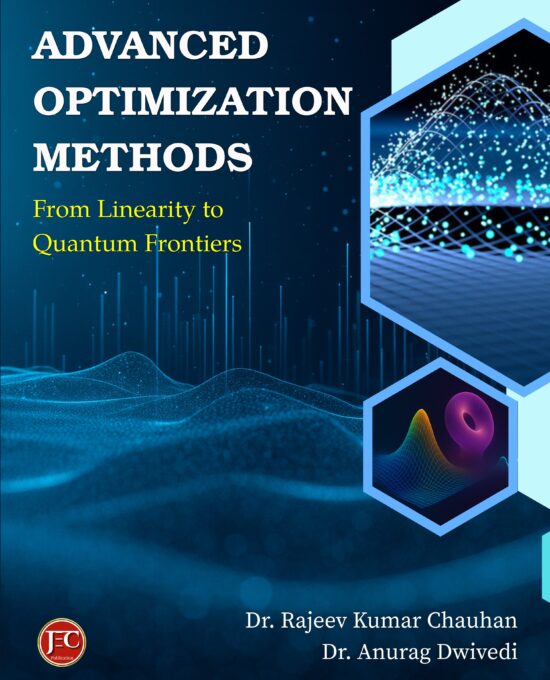
ADVANCED DEEP LEARNING ARCHITECTURES Beyond CNNs and LSTMs
499.00
Deep learning has fundamentally transformed the landscape of artificial intelligence, powering breakthroughs in computer vision, natural language processing, speech recognition, and beyond. Over the past decade, Convolutional Neural Networks (CNNs) and Long Short-Term Memory networks (LSTMs) emerged as the dominant architectures for tackling structured image data and sequential information, respectively. CNNs, with their hierarchical feature extraction and local receptive fields, revolutionized image classification, object detection, and semantic segmentation, enabling systems to achieve near-human or even superhuman performance on benchmarks such as ImageNet. LSTMs, on the other hand, overcame the limitations of traditional recurrent neural networks, effectively addressing the vanishing gradient problem and enabling long-range temporal dependencies to be learned, thereby advancing language modeling, machine translation, and speech synthesis. However, as datasets expanded to billions of samples, tasks grew increasingly complex, and the need for generalization across heterogeneous domains intensified, the inherent limitations of CNNs and LSTMs became apparent. CNNs struggle with modeling long-range dependencies, processing irregular graph-structured data, or integrating multimodal inputs, while LSTMs face challenges in parallelization, handling very long sequences efficiently, and scaling to massive model sizes. Moreover, simply increasing depth, width, or training data does not always guarantee proportional improvements in performance, highlighting the plateauing effect of these architectures in cutting-edge AI applications. This book, Advanced Deep Learning Architectures: Beyond CNNs and LSTMs, is designed to chart the evolution of next-generation architectures that address these limitations and define the future of artificial intelligence. It offers a comprehensive journey through the design principles, mathematical foundations, and practical implementations of state-of-the-art models. The scope spans transformers — including BERT, GPT, and Vision Transformers — which leverage selfattention to model long-range dependencies and multimodal relationships; graph neural networks, which enable AI systems to reason about relational and non-Euclidean data; capsule networks, which improve spatial hierarchies and pose awareness; neural ordinary differential equations, which introduce continuous-time modeling; and diffusion models, which have redefined generative AI through probabilistic modeling and denoising frameworks. The book also delves into hybrid and multimodal architectures, advanced reinforcement learning frameworks, and emerging paradigms such as neuromorphic computing, quantum deep learning, and evolutionary algorithms. Importantly, the text bridges theory and practice. Each chapter combines rigorous mathematical derivations — from linear algebra and tensor calculus to probabilistic modeling and information-theoretic analysis — with hands-on Python implementations using libraries such as PyTorch, TensorFlow, and NumPy. Readers are guided through step-by-step coding exercises, practical tips for optimization, and demonstrations of applying these models to real-world datasets. This dual approach ensures a deep understanding not just of why these architectures work, but how to implement, experiment, and extend them. Beyond technical mastery, the book emphasizes the broader implications of advanced AI: multimodal intelligence, ethical alignment, interpretability, and the path toward general-purpose AI systems.
Quick View
Add to Wishlist

ADVANCED DEEP LEARNING ARCHITECTURES Beyond CNNs and LSTMs

499.00
Deep learning has fundamentally transformed the landscape of artificial intelligence, powering breakthroughs in computer vision, natural language processing, speech recognition, and beyond. Over the past decade, Convolutional Neural Networks (CNNs) and Long Short-Term Memory networks (LSTMs) emerged as the dominant architectures for tackling structured image data and sequential information, respectively. CNNs, with their hierarchical feature extraction and local receptive fields, revolutionized image classification, object detection, and semantic segmentation, enabling systems to achieve near-human or even superhuman performance on benchmarks such as ImageNet. LSTMs, on the other hand, overcame the limitations of traditional recurrent neural networks, effectively addressing the vanishing gradient problem and enabling long-range temporal dependencies to be learned, thereby advancing language modeling, machine translation, and speech synthesis. However, as datasets expanded to billions of samples, tasks grew increasingly complex, and the need for generalization across heterogeneous domains intensified, the inherent limitations of CNNs and LSTMs became apparent. CNNs struggle with modeling long-range dependencies, processing irregular graph-structured data, or integrating multimodal inputs, while LSTMs face challenges in parallelization, handling very long sequences efficiently, and scaling to massive model sizes. Moreover, simply increasing depth, width, or training data does not always guarantee proportional improvements in performance, highlighting the plateauing effect of these architectures in cutting-edge AI applications. This book, Advanced Deep Learning Architectures: Beyond CNNs and LSTMs, is designed to chart the evolution of next-generation architectures that address these limitations and define the future of artificial intelligence. It offers a comprehensive journey through the design principles, mathematical foundations, and practical implementations of state-of-the-art models. The scope spans transformers — including BERT, GPT, and Vision Transformers — which leverage selfattention to model long-range dependencies and multimodal relationships; graph neural networks, which enable AI systems to reason about relational and non-Euclidean data; capsule networks, which improve spatial hierarchies and pose awareness; neural ordinary differential equations, which introduce continuous-time modeling; and diffusion models, which have redefined generative AI through probabilistic modeling and denoising frameworks. The book also delves into hybrid and multimodal architectures, advanced reinforcement learning frameworks, and emerging paradigms such as neuromorphic computing, quantum deep learning, and evolutionary algorithms. Importantly, the text bridges theory and practice. Each chapter combines rigorous mathematical derivations — from linear algebra and tensor calculus to probabilistic modeling and information-theoretic analysis — with hands-on Python implementations using libraries such as PyTorch, TensorFlow, and NumPy. Readers are guided through step-by-step coding exercises, practical tips for optimization, and demonstrations of applying these models to real-world datasets. This dual approach ensures a deep understanding not just of why these architectures work, but how to implement, experiment, and extend them. Beyond technical mastery, the book emphasizes the broader implications of advanced AI: multimodal intelligence, ethical alignment, interpretability, and the path toward general-purpose AI systems.
Add to cartView cart
ATLAS OF HUMAN ANATOMY
Quick View
Add to Wishlist
CompareCompare
Add to cartView cart

ATLAS OF HUMAN ANATOMY

Published on 2025
2,499.00
Human anatomy is the scientific study of the structure of the human body. It explores how organs, tissues, and systems are organized and how they function together. Major systems include the skeletal, muscular, circulatory, respiratory, digestive, nervous, and reproductive systems. Understanding anatomy helps in medicine, biology, and health sciences by explaining how the body works and responds to injury or disease.  The study of anatomy aims to provide a detailed map of the human body that is essential for maintaining health, diagnosing diseases, and performing medical interventions safely. Keeping the requirements of the students of Pharmacy and basic science in view, the authors of Atlas of Human Anatomy (An Approach for Easy Understanding of the Human Anatomical Features) have put a small effort to bring the different systems of human anatomy with quality picture of the anatomical structures of different systems with this book. Pictures are collected from search engine google. As the anatomy of different organs are too difficult to memorize so the authors concise the description and along with provided a picture of the organ to make it simple and attractive for the students to read and memorize.  It would be grateful to the readers if they draw the attention to the deficiencies and errors that might have remained. We place on record our sincere gratitude to all who have extended their cooperation and help in completion of this book. Hope, this book would be well accepted by the students and teacher community. 
ATLAS OF HUMAN ANATOMY
Quick View
Add to Wishlist

ATLAS OF HUMAN ANATOMY

2,499.00
Human anatomy is the scientific study of the structure of the human body. It explores how organs, tissues, and systems are organized and how they function together. Major systems include the skeletal, muscular, circulatory, respiratory, digestive, nervous, and reproductive systems. Understanding anatomy helps in medicine, biology, and health sciences by explaining how the body works and responds to injury or disease.  The study of anatomy aims to provide a detailed map of the human body that is essential for maintaining health, diagnosing diseases, and performing medical interventions safely. Keeping the requirements of the students of Pharmacy and basic science in view, the authors of Atlas of Human Anatomy (An Approach for Easy Understanding of the Human Anatomical Features) have put a small effort to bring the different systems of human anatomy with quality picture of the anatomical structures of different systems with this book. Pictures are collected from search engine google. As the anatomy of different organs are too difficult to memorize so the authors concise the description and along with provided a picture of the organ to make it simple and attractive for the students to read and memorize.  It would be grateful to the readers if they draw the attention to the deficiencies and errors that might have remained. We place on record our sincere gratitude to all who have extended their cooperation and help in completion of this book. Hope, this book would be well accepted by the students and teacher community. 
Add to cartView cart
Quick View
Add to Wishlist
CompareCompare
Add to cartView cart
Quick View
Add to Wishlist

BIOCHEMISTRY

499.00
Add to cartView cart
Quick View
Add to Wishlist
CompareCompare
Add to cartView cart

BUSINESS ENVIRONMENT

499.00
The contemporary business landscape is characterized by rapid transformation, global integration, and a growing interdependence between economic, political, social, technological, and environmental systems. In such a volatile and dynamic milieu, understanding the business environment has become indispensable for students, managers, policymakers, and entrepreneurs alike. The ability to interpret environmental signals, anticipate change, and respond strategically distinguishes successful organizations from those that merely adapt to circumstances. Against this backdrop, “Business Environment” has been conceived as a comprehensive textbook that presents both theoretical foundations and practical insights into the multifaceted forces shaping business decisions and performance. This book provides a holistic view of the business ecosystem, encompassing the macro and micro environments, the legal and regulatory framework, technological evolution, socio-cultural dynamics, globalization, and the growing emphasis on sustainability and corporate ethics. Each chapter is carefully designed to blend conceptual understanding with real-world applications, supported by contemporary examples, analytical frameworks, and self-assessment exercises. The text aligns with the syllabi prescribed for undergraduate and postgraduate management programs across Indian universities, making it equally valuable for learners preparing for competitive and professional examinations. The authors have sought to present the subject matter in a lucid, structured, and pedagogically sound manner. Each unit begins with clear learning objectives and concludes with summaries and reflective questions to aid comprehension. The chapters are logically sequenced to ensure continuity—from introducing the concept of business environment to exploring global challenges and strategic responses. The inclusion of recent developments such as digital transformation, environmental sustainability, and corporate governance ensures that the book remains relevant in an era marked by technological disruption and responsible business practices. What makes this book distinctive is its contextual grounding in the Indian business environment. The text not only highlights global trends but also interprets their implications for Indian enterprises operating within a complex and evolving policy framework. The discussion integrates perspectives from economics, management, sociology, and public policy, thereby reflecting the interdisciplinary nature of the subject. Our purpose has been to help learners appreciate that business decisions do not occur in isolation—they are continuously influenced by the interplay of societal, technological, political, and ecological factors. This work represents the culmination of our shared academic experience and collective commitment to excellence in management education. We express our profound gratitude to our respective institutions, colleagues, and students for their encouragement, insights, and constructive feedback throughout the development of this book. We also acknowledge the contributions of scholars and practitioners whose research and real-world experiences have enriched our understanding of this dynamic field. Finally, we extend heartfelt appreciation to our families for their unwavering support, patience, and inspiration during this intellectual journey. It is our sincere hope that “Business Environment” will serve as a valuable learning resource and intellectual companion for students, educators, and professionals alike. We believe that by cultivating a deep understanding of environmental complexities and interconnections, learners will be better equipped to lead organizations responsibly and contribute meaningfully to sustainable economic and social progress. - Prof. (Dr.) Dileep Kumar M - Dr. Shreedevi Siddanna - Dr. Vijyata - Dr. Richa Sinha
Quick View
Add to Wishlist

BUSINESS ENVIRONMENT

499.00
The contemporary business landscape is characterized by rapid transformation, global integration, and a growing interdependence between economic, political, social, technological, and environmental systems. In such a volatile and dynamic milieu, understanding the business environment has become indispensable for students, managers, policymakers, and entrepreneurs alike. The ability to interpret environmental signals, anticipate change, and respond strategically distinguishes successful organizations from those that merely adapt to circumstances. Against this backdrop, “Business Environment” has been conceived as a comprehensive textbook that presents both theoretical foundations and practical insights into the multifaceted forces shaping business decisions and performance. This book provides a holistic view of the business ecosystem, encompassing the macro and micro environments, the legal and regulatory framework, technological evolution, socio-cultural dynamics, globalization, and the growing emphasis on sustainability and corporate ethics. Each chapter is carefully designed to blend conceptual understanding with real-world applications, supported by contemporary examples, analytical frameworks, and self-assessment exercises. The text aligns with the syllabi prescribed for undergraduate and postgraduate management programs across Indian universities, making it equally valuable for learners preparing for competitive and professional examinations. The authors have sought to present the subject matter in a lucid, structured, and pedagogically sound manner. Each unit begins with clear learning objectives and concludes with summaries and reflective questions to aid comprehension. The chapters are logically sequenced to ensure continuity—from introducing the concept of business environment to exploring global challenges and strategic responses. The inclusion of recent developments such as digital transformation, environmental sustainability, and corporate governance ensures that the book remains relevant in an era marked by technological disruption and responsible business practices. What makes this book distinctive is its contextual grounding in the Indian business environment. The text not only highlights global trends but also interprets their implications for Indian enterprises operating within a complex and evolving policy framework. The discussion integrates perspectives from economics, management, sociology, and public policy, thereby reflecting the interdisciplinary nature of the subject. Our purpose has been to help learners appreciate that business decisions do not occur in isolation—they are continuously influenced by the interplay of societal, technological, political, and ecological factors. This work represents the culmination of our shared academic experience and collective commitment to excellence in management education. We express our profound gratitude to our respective institutions, colleagues, and students for their encouragement, insights, and constructive feedback throughout the development of this book. We also acknowledge the contributions of scholars and practitioners whose research and real-world experiences have enriched our understanding of this dynamic field. Finally, we extend heartfelt appreciation to our families for their unwavering support, patience, and inspiration during this intellectual journey. It is our sincere hope that “Business Environment” will serve as a valuable learning resource and intellectual companion for students, educators, and professionals alike. We believe that by cultivating a deep understanding of environmental complexities and interconnections, learners will be better equipped to lead organizations responsibly and contribute meaningfully to sustainable economic and social progress. - Prof. (Dr.) Dileep Kumar M - Dr. Shreedevi Siddanna - Dr. Vijyata - Dr. Richa Sinha
Add to cartView cart
Quick View
Add to Wishlist
CompareCompare
Add to cartView cart

DIGITAL MARKETING ESSENTIALS A Practical Guide for Modern Marketers

499.00
The digital era has revolutionized how businesses connect, communicate, and create value for their customers. Marketing—once confined to print, radio, and television—has undergone a profound transformation with the advent of the internet and social media. Today, the marketer’s toolkit is redefined by data analytics, search engine optimization, social media engagement, and automation tools that make interactions faster, smarter, and measurable. Digital Marketing Essentials: A Practical Guide for Modern Marketers has been conceptualized and designed to serve as a comprehensive academic and practical reference for learners, educators, and professionals navigating this dynamic digital landscape. This book systematically explores the foundations and applications of digital marketing through a structured, learner-centric approach. It covers essential areas such as Search Engine Optimization (SEO), Search Engine Marketing (SEM), Social Media Marketing, Content Strategy, Email Campaigns, and Digital Analytics— supported by real-world case studies, visual frameworks, and actionable insights. Each unit aims to bridge the gap between theory and practice, ensuring that readers not only understand digital concepts but can also apply them effectively in professional scenarios. In developing this work, the emphasis has been placed on clarity, relevance, and applicability. The chapters are aligned with the evolving academic curriculum and industry expectations, integrating conceptual understanding with hands-on tools used by modern marketers. The inclusion of “Check Your Progress” sections, practical examples, and curated references further enhances the reader’s engagement and comprehension. The author extends heartfelt gratitude to colleagues, mentors, students, and professionals who contributed their insights and feedback during the development of this book. Their encouragement and critical perspectives have played a vital role in refining the content. Special thanks are due to the Institute of Management Studies, Ranchi University, for fostering an environment that promotes academic excellence and innovation. It is hoped that this book will serve as a valuable guide for students, educators, and marketing practitioners seeking to master the evolving dimensions of digital marketing. In a world where technology continues to reshape communication and commerce, the knowledge contained within these pages aspires to equip readers with both the strategic thinking and practical skills necessary to thrive as future-ready marketers. Dr. Soni Kumari Assistant Professor, Institute of Management Studies, Ranchi University
Quick View
Add to Wishlist

DIGITAL MARKETING ESSENTIALS A Practical Guide for Modern Marketers

499.00
The digital era has revolutionized how businesses connect, communicate, and create value for their customers. Marketing—once confined to print, radio, and television—has undergone a profound transformation with the advent of the internet and social media. Today, the marketer’s toolkit is redefined by data analytics, search engine optimization, social media engagement, and automation tools that make interactions faster, smarter, and measurable. Digital Marketing Essentials: A Practical Guide for Modern Marketers has been conceptualized and designed to serve as a comprehensive academic and practical reference for learners, educators, and professionals navigating this dynamic digital landscape. This book systematically explores the foundations and applications of digital marketing through a structured, learner-centric approach. It covers essential areas such as Search Engine Optimization (SEO), Search Engine Marketing (SEM), Social Media Marketing, Content Strategy, Email Campaigns, and Digital Analytics— supported by real-world case studies, visual frameworks, and actionable insights. Each unit aims to bridge the gap between theory and practice, ensuring that readers not only understand digital concepts but can also apply them effectively in professional scenarios. In developing this work, the emphasis has been placed on clarity, relevance, and applicability. The chapters are aligned with the evolving academic curriculum and industry expectations, integrating conceptual understanding with hands-on tools used by modern marketers. The inclusion of “Check Your Progress” sections, practical examples, and curated references further enhances the reader’s engagement and comprehension. The author extends heartfelt gratitude to colleagues, mentors, students, and professionals who contributed their insights and feedback during the development of this book. Their encouragement and critical perspectives have played a vital role in refining the content. Special thanks are due to the Institute of Management Studies, Ranchi University, for fostering an environment that promotes academic excellence and innovation. It is hoped that this book will serve as a valuable guide for students, educators, and marketing practitioners seeking to master the evolving dimensions of digital marketing. In a world where technology continues to reshape communication and commerce, the knowledge contained within these pages aspires to equip readers with both the strategic thinking and practical skills necessary to thrive as future-ready marketers. Dr. Soni Kumari Assistant Professor, Institute of Management Studies, Ranchi University
Add to cartView cart
Quick View
Add to Wishlist
CompareCompare
Add to cartView cart

ENTREPRENEURSHIP AND INNOVATION THEORY, PRACTICE, AND ETHICS

499.00
Entrepreneurship and innovation have emerged as defining forces of the twenty-first-century global economy. In an era characterized by rapid technological disruptions, shifting consumer expectations, and the continual reconfiguration of markets, understanding these forces is no longer optional—it is essential. This book has been conceived as a comprehensive, conceptually rigorous, and pedagogically grounded text to support learners, educators, and practitioners in navigating the evolving landscape of entrepreneurial thought and practice. The chapters in this volume span the foundational to the frontier. Beginning with the conceptual roots of entrepreneurship and innovation, the book progressively unfolds into sophisticated theories, models, and real-world applications that shape contemporary entrepreneurial ecosystems. The content traverses classical, neo-classical, and modern economic perspectives; Schumpeterian innovation dynamics; effectuation and Lean Startup approaches; and emerging paradigms of digital transformation, sustainability, and social entrepreneurship. Each unit has been carefully structured to provide clarity, contextual depth, and analytical precision, supported by learning objectives, outcomes, and reflective exercises that strengthen comprehension and application. This text is deeply informed by the collective academic experience, research engagement, and industry exposure of its authors. Drawing on interdisciplinary insights and empirical realities, it places equal emphasis on theory and practice, ensuring that readers not only understand the evolution of entrepreneurial ideas but also gain the analytical tools to apply them in diverse environments. Our intention is to facilitate a holistic understanding—one that equips students to become opportunityseekers, innovators, problem-solvers, and ethically responsible leaders. We hope that this book serves as a valuable companion for undergraduate and postgraduate learners of management, commerce, and allied disciplines; for educators designing curricula and teaching entrepreneurship; and for aspiring entrepreneurs who seek structured guidance in their journey from idea to enterprise. The rapidly changing entrepreneurial landscape demands continuous learning, adaptability, and critical thinking—qualities that this text endeavours to cultivate. We express our sincere gratitude to JEC Publication for their support in bringing this work to life, and to all scholars, students, and professionals whose insights continue to enrich the field of entrepreneurship studies. It is our earnest belief that this book will inspire readers to reflect, explore, innovate, and contribute meaningfully to society through entrepreneurial action. Dr. Trilochan Nayak Dr. Jyoti Khurana Shubham Gaur Tanya Jolly
Quick View
Add to Wishlist

ENTREPRENEURSHIP AND INNOVATION THEORY, PRACTICE, AND ETHICS

499.00
Entrepreneurship and innovation have emerged as defining forces of the twenty-first-century global economy. In an era characterized by rapid technological disruptions, shifting consumer expectations, and the continual reconfiguration of markets, understanding these forces is no longer optional—it is essential. This book has been conceived as a comprehensive, conceptually rigorous, and pedagogically grounded text to support learners, educators, and practitioners in navigating the evolving landscape of entrepreneurial thought and practice. The chapters in this volume span the foundational to the frontier. Beginning with the conceptual roots of entrepreneurship and innovation, the book progressively unfolds into sophisticated theories, models, and real-world applications that shape contemporary entrepreneurial ecosystems. The content traverses classical, neo-classical, and modern economic perspectives; Schumpeterian innovation dynamics; effectuation and Lean Startup approaches; and emerging paradigms of digital transformation, sustainability, and social entrepreneurship. Each unit has been carefully structured to provide clarity, contextual depth, and analytical precision, supported by learning objectives, outcomes, and reflective exercises that strengthen comprehension and application. This text is deeply informed by the collective academic experience, research engagement, and industry exposure of its authors. Drawing on interdisciplinary insights and empirical realities, it places equal emphasis on theory and practice, ensuring that readers not only understand the evolution of entrepreneurial ideas but also gain the analytical tools to apply them in diverse environments. Our intention is to facilitate a holistic understanding—one that equips students to become opportunityseekers, innovators, problem-solvers, and ethically responsible leaders. We hope that this book serves as a valuable companion for undergraduate and postgraduate learners of management, commerce, and allied disciplines; for educators designing curricula and teaching entrepreneurship; and for aspiring entrepreneurs who seek structured guidance in their journey from idea to enterprise. The rapidly changing entrepreneurial landscape demands continuous learning, adaptability, and critical thinking—qualities that this text endeavours to cultivate. We express our sincere gratitude to JEC Publication for their support in bringing this work to life, and to all scholars, students, and professionals whose insights continue to enrich the field of entrepreneurship studies. It is our earnest belief that this book will inspire readers to reflect, explore, innovate, and contribute meaningfully to society through entrepreneurial action. Dr. Trilochan Nayak Dr. Jyoti Khurana Shubham Gaur Tanya Jolly
Add to cartView cart
Quick View
Add to Wishlist
CompareCompare
Add to cartView cart

ESSENTIALS OF HEALTH INFORMATION AND DATA MANAGEMENT
799.00
Healthcare is going through the rapid digital transformation leading to transformation in how configuring, managing, sharing, and analyzing patient information. With the adoption of electronic health records, data analytics, telehealth, and artificial intelligence around the world, Health Information Management (HIM) has branched out even further from its traditional domains. HIM professionals today play a pivotal role in some the most complex technologies, standards, policies, and ethics issues that need to be addressed while allowing the health information to flow accurately, securely, and accessible. Essentials of Health Information and Data Management has been created as a solid and up-to-date resource available for use by students, practitioners, and educators that will provide these individuals with necessary fundamentals in this changing field. It combines the essentials, with practical frameworks and emerging innovations in a structured, eyebrow-raising easy to digest format. This anthology of chapters covers the basic topics, such as health information systems, medical records and standards of the data, to the higher level topics, such as analytics, artificial intelligence, digital health transformation and national health information infrastructures. It captures the world and national issues like global or national updates on interoperability standards, cloud, cyber security and India Ayushman Bharat Digital Mission (ABDM). One of the most unique features of this book is its combination of technology, governance, and practice, so that readers understand not just what HIM is, but why it is important and how it is done in practice among healthcare sectors. Several chapters correlate technical elements and their actual influences on the institution of quality care and patient safety, administrative efficiency, and ethical decision-making. By using case examples, conceptual explanations, and forward-looking discussions, learners work respectively to prepare for the challenges they face in real-world healthcare environments.
Quick View
Add to Wishlist

ESSENTIALS OF HEALTH INFORMATION AND DATA MANAGEMENT

799.00
Healthcare is going through the rapid digital transformation leading to transformation in how configuring, managing, sharing, and analyzing patient information. With the adoption of electronic health records, data analytics, telehealth, and artificial intelligence around the world, Health Information Management (HIM) has branched out even further from its traditional domains. HIM professionals today play a pivotal role in some the most complex technologies, standards, policies, and ethics issues that need to be addressed while allowing the health information to flow accurately, securely, and accessible. Essentials of Health Information and Data Management has been created as a solid and up-to-date resource available for use by students, practitioners, and educators that will provide these individuals with necessary fundamentals in this changing field. It combines the essentials, with practical frameworks and emerging innovations in a structured, eyebrow-raising easy to digest format. This anthology of chapters covers the basic topics, such as health information systems, medical records and standards of the data, to the higher level topics, such as analytics, artificial intelligence, digital health transformation and national health information infrastructures. It captures the world and national issues like global or national updates on interoperability standards, cloud, cyber security and India Ayushman Bharat Digital Mission (ABDM). One of the most unique features of this book is its combination of technology, governance, and practice, so that readers understand not just what HIM is, but why it is important and how it is done in practice among healthcare sectors. Several chapters correlate technical elements and their actual influences on the institution of quality care and patient safety, administrative efficiency, and ethical decision-making. By using case examples, conceptual explanations, and forward-looking discussions, learners work respectively to prepare for the challenges they face in real-world healthcare environments.
Add to cartView cart
Quick View
Add to Wishlist
CompareCompare
Add to cartView cart

ETHICS AND UNIVERSAL HUMAN VALUES

499.00
Ethics and universal values have always formed the foundation of human life and society. In the present era of rapid scientific, technological, and social advancement, the importance of ethical conduct and value-based living has become even more significant. This book has been prepared with the aim of offering a comprehensive understanding of ethics and universal values in both theoretical and practical dimensions. It seeks to serve as a guiding companion not only for students and professionals but also for every reader who aspires to live a meaningful and responsible life. The subject of ethics is not confined to academic study alone; it touches every aspect of human existence. Universal values such as truth, honesty, compassion, justice, respect, and responsibility transcend boundaries of culture, religion, and geography. They act as a unifying force for humanity and provide the moral compass needed to face the challenges of modern life. This book emphasizes these eternal values and highlights their relevance in family, society, workplace, environment, and in the global context. The scope of the book extends from the philosophical foundations of ethics to the practical application of values in daily decision-making. It is written in simple and accessible language to facilitate better understanding and reflection. Case studies, examples, and thought-provoking ideas have been included to connect concepts with real-life situations. The work is aligned with the vision of value-based education as highlighted in the National Education Policy (NEP 2020), aiming to strengthen moral clarity along with intellectual growth. This book has drawn inspiration from ancient wisdom traditions, modern philosophers, and contemporary thinkers. It reflects an interdisciplinary perspective, enriched by insights from philosophy, psychology, sociology, and spirituality. I owe deep gratitude to my teachers, mentors, colleagues, and students whose constant encouragement and feedback have guided the preparation of this work. It is my sincere hope that this book will help readers to reflect upon their own values, develop ethical decision-making skills, and contribute towards building a harmonious society. By integrating ethical principles with knowledge and action, we can collectively move towards a future that balances material progress with inner growth, ensuring peace, justice, and universal brotherhood. Mr. Durgesh Samadhan Pagar Assistant Professor Shreeshakti Shaikshnik Sanstha’s Divine College of Pharmacy, Satana, Nashik. (Maharashtra)
Quick View
Add to Wishlist

ETHICS AND UNIVERSAL HUMAN VALUES

499.00
Ethics and universal values have always formed the foundation of human life and society. In the present era of rapid scientific, technological, and social advancement, the importance of ethical conduct and value-based living has become even more significant. This book has been prepared with the aim of offering a comprehensive understanding of ethics and universal values in both theoretical and practical dimensions. It seeks to serve as a guiding companion not only for students and professionals but also for every reader who aspires to live a meaningful and responsible life. The subject of ethics is not confined to academic study alone; it touches every aspect of human existence. Universal values such as truth, honesty, compassion, justice, respect, and responsibility transcend boundaries of culture, religion, and geography. They act as a unifying force for humanity and provide the moral compass needed to face the challenges of modern life. This book emphasizes these eternal values and highlights their relevance in family, society, workplace, environment, and in the global context. The scope of the book extends from the philosophical foundations of ethics to the practical application of values in daily decision-making. It is written in simple and accessible language to facilitate better understanding and reflection. Case studies, examples, and thought-provoking ideas have been included to connect concepts with real-life situations. The work is aligned with the vision of value-based education as highlighted in the National Education Policy (NEP 2020), aiming to strengthen moral clarity along with intellectual growth. This book has drawn inspiration from ancient wisdom traditions, modern philosophers, and contemporary thinkers. It reflects an interdisciplinary perspective, enriched by insights from philosophy, psychology, sociology, and spirituality. I owe deep gratitude to my teachers, mentors, colleagues, and students whose constant encouragement and feedback have guided the preparation of this work. It is my sincere hope that this book will help readers to reflect upon their own values, develop ethical decision-making skills, and contribute towards building a harmonious society. By integrating ethical principles with knowledge and action, we can collectively move towards a future that balances material progress with inner growth, ensuring peace, justice, and universal brotherhood. Mr. Durgesh Samadhan Pagar Assistant Professor Shreeshakti Shaikshnik Sanstha’s Divine College of Pharmacy, Satana, Nashik. (Maharashtra)
Add to cartView cart
Quick View
Add to Wishlist
CompareCompare
Add to cartView cart
Quick View
Add to Wishlist
Quick View
Add to Wishlist
CompareCompare
Add to cartView cart
Quick View
Add to Wishlist

GENERAL PHARMACY

499.00
Add to cartView cart
Quick View
Add to Wishlist
CompareCompare
Add to cartView cart
Quick View
Add to Wishlist

General pharmacy

499.00
Add to cartView cart
Quick View
Add to Wishlist
CompareCompare
Add to cartView cart
Quick View
Add to Wishlist
Quick View
Add to Wishlist
CompareCompare
Add to cartView cart
Quick View
Add to Wishlist

Introduction to General Pharmacy

499.00
Add to cartView cart
Quick View
Add to Wishlist
CompareCompare
Add to cartView cart

INTRODUCTION TO THEORY OF STATISTICS

499.00
This book, Introduction to Theory of Statistics, provides a foundational and advanced exploration of the core principles that govern statistical analysis. Beginning with Chapter 1: Theory of Probability, the text introduces the fundamental concepts of chance, randomness, and the axiomatic foundations of probability that serve as the bedrock of statistical reasoning. Chapter 2 delves into Random Variables and Distribution Functions, emphasizing both discrete and continuous variables and the rules governing their distributions. Chapter 3 builds on this by exploring Expectations and Moments, offering insight into key statistical measures such as the mean, variance, skewness, and kurtosis, which describe the central tendency and shape of data distributions. Moving forward, Chapter 4 focuses on Distribution Functions, presenting detailed studies of probability distributions and their real-world applications. Chapter 5 addresses Continuous Distributions, introducing vital continuous probability models such as the normal, exponential, and gamma distributions, which are instrumental in various fields of research and industry. The comprehensive nature of the text is further exemplified in Chapter 6, which covers Joint and Conditional Distributions, Stochastic Independence, and Advanced Expectations, facilitating a deeper understanding of how random variables interact and influence one another. Finally, Chapter 7 discusses Sampling Methods, Sample Mean, and Population Estimation, where the theory meets practical application. It examines different sampling techniques, the importance of sample statistics, and how these are used to estimate and infer characteristics of larger populations. This chapter bridges theoretical statistics and empirical analysis, highlighting estimation procedures and the significance of inferential statistics in research and decision-making. Overall, the book is structured to build statistical literacy progressively, supporting learners in developing both conceptual clarity and applied skills necessary for advanced study and real-world data analysis.
Quick View
Add to Wishlist

INTRODUCTION TO THEORY OF STATISTICS

499.00
This book, Introduction to Theory of Statistics, provides a foundational and advanced exploration of the core principles that govern statistical analysis. Beginning with Chapter 1: Theory of Probability, the text introduces the fundamental concepts of chance, randomness, and the axiomatic foundations of probability that serve as the bedrock of statistical reasoning. Chapter 2 delves into Random Variables and Distribution Functions, emphasizing both discrete and continuous variables and the rules governing their distributions. Chapter 3 builds on this by exploring Expectations and Moments, offering insight into key statistical measures such as the mean, variance, skewness, and kurtosis, which describe the central tendency and shape of data distributions. Moving forward, Chapter 4 focuses on Distribution Functions, presenting detailed studies of probability distributions and their real-world applications. Chapter 5 addresses Continuous Distributions, introducing vital continuous probability models such as the normal, exponential, and gamma distributions, which are instrumental in various fields of research and industry. The comprehensive nature of the text is further exemplified in Chapter 6, which covers Joint and Conditional Distributions, Stochastic Independence, and Advanced Expectations, facilitating a deeper understanding of how random variables interact and influence one another. Finally, Chapter 7 discusses Sampling Methods, Sample Mean, and Population Estimation, where the theory meets practical application. It examines different sampling techniques, the importance of sample statistics, and how these are used to estimate and infer characteristics of larger populations. This chapter bridges theoretical statistics and empirical analysis, highlighting estimation procedures and the significance of inferential statistics in research and decision-making. Overall, the book is structured to build statistical literacy progressively, supporting learners in developing both conceptual clarity and applied skills necessary for advanced study and real-world data analysis.
Add to cartView cart
Quick View
Add to Wishlist
CompareCompare
Add to cartView cart
Quick View
Add to Wishlist
Quick View
Add to Wishlist
CompareCompare
Add to cartView cart

MARKETING MANAGEMENT The Indian Way

499.00
In the rapidly transforming world of academia, where research serves as the foundation of innovation and intellectual advancement, the integrity of scholarly work has never been more crucial. Research and Publication Ethics emerges as a timely and comprehensive text designed to strengthen the moral, professional, and intellectual framework of research practice. The purpose of this book is to nurture an ethical research culture among scholars, academicians, and practitioners by providing a deep and structured understanding of the principles that govern responsible research and publication. This book systematically explores the philosophical underpinnings, ethical theories, and professional guidelines that shape contemporary research ethics. It encompasses a wide spectrum of themes, including academic integrity, plagiarism, authorship ethics, peer review systems, conflicts of interest, data management, and publication ethics. In addition, it addresses emerging concerns in the digital era—such as artificial intelligence, open science, big data analytics, biotechnology, and predatory publishing—offering readers a holistic view of how ethical frameworks evolve in response to technological and global academic transformations. Each unit of this book has been designed to blend theoretical insights with practical implications, supported by case studies, reflective exercises, and global guidelines such as COPE, ICMJE, and UGC regulations. The authors of this volume collectively represent a distinguished blend of academic excellence, research expertise, and professional experience. Prof. (Dr.) Dileep Kumar M, International Research Fellow at SEGi University, Kuala Lumpur, and Vice Chancellor of Hensard University, Nigeria, brings to this book over two decades of global academic leadership and scholarly contribution in strategic management, entrepreneurship, and organizational behavior. Dr. Normala S. Govindarajo, Associate Professor at HELP University, Malaysia, adds depth with her dual doctoral expertise in Management and Human Resource, her extensive body of published work, and her interdisciplinary engagement with technology and professional ethics. Dr. Vijyata, Assistant Professor at ARKA Jain University, Jamshedpur, contributes her profound academic insight, rich teaching experience, and scholarly contributions in research methodology, marketing, and digital transformation, reflecting a strong commitment to ethical scholarship and sustainability. Mrs. Princia Stivenson Coutinho, Assistant Professor at VIVA College of Arts, Science and Commerce, Mumbai University, lends her deep expertise in commerce, financial accounting, and corporate governance, bridging ethical theory with real-world application in finance and business ethics. This collective endeavor reflects the authors’ shared vision—to cultivate awareness, accountability, and integrity among current and future researchers. By synthesizing both classical theories and modern frameworks, the book provides a strong ethical foundation necessary for conducting credible, transparent, and socially responsible research. It is hoped that Research and Publication Ethics will serve as a comprehensive guide for students, faculty members, and researchers across disciplines, fostering a scholarly ecosystem grounded in honesty, fairness, and professional excellence. The authors express their sincere gratitude to their respective institutions and peers whose encouragement and collaboration made this work possible. May this book inspire every reader to uphold the sanctity of research and contribute meaningfully to the global pursuit of knowledge rooted in ethical responsibility. Prof. (Dr.) Dileep Kumar M Dr. Normala S. Govindarajo, Dr. Vijyata Mrs. Princia Stivenson Coutinho
Quick View
Add to Wishlist

MARKETING MANAGEMENT The Indian Way

499.00
In the rapidly transforming world of academia, where research serves as the foundation of innovation and intellectual advancement, the integrity of scholarly work has never been more crucial. Research and Publication Ethics emerges as a timely and comprehensive text designed to strengthen the moral, professional, and intellectual framework of research practice. The purpose of this book is to nurture an ethical research culture among scholars, academicians, and practitioners by providing a deep and structured understanding of the principles that govern responsible research and publication. This book systematically explores the philosophical underpinnings, ethical theories, and professional guidelines that shape contemporary research ethics. It encompasses a wide spectrum of themes, including academic integrity, plagiarism, authorship ethics, peer review systems, conflicts of interest, data management, and publication ethics. In addition, it addresses emerging concerns in the digital era—such as artificial intelligence, open science, big data analytics, biotechnology, and predatory publishing—offering readers a holistic view of how ethical frameworks evolve in response to technological and global academic transformations. Each unit of this book has been designed to blend theoretical insights with practical implications, supported by case studies, reflective exercises, and global guidelines such as COPE, ICMJE, and UGC regulations. The authors of this volume collectively represent a distinguished blend of academic excellence, research expertise, and professional experience. Prof. (Dr.) Dileep Kumar M, International Research Fellow at SEGi University, Kuala Lumpur, and Vice Chancellor of Hensard University, Nigeria, brings to this book over two decades of global academic leadership and scholarly contribution in strategic management, entrepreneurship, and organizational behavior. Dr. Normala S. Govindarajo, Associate Professor at HELP University, Malaysia, adds depth with her dual doctoral expertise in Management and Human Resource, her extensive body of published work, and her interdisciplinary engagement with technology and professional ethics. Dr. Vijyata, Assistant Professor at ARKA Jain University, Jamshedpur, contributes her profound academic insight, rich teaching experience, and scholarly contributions in research methodology, marketing, and digital transformation, reflecting a strong commitment to ethical scholarship and sustainability. Mrs. Princia Stivenson Coutinho, Assistant Professor at VIVA College of Arts, Science and Commerce, Mumbai University, lends her deep expertise in commerce, financial accounting, and corporate governance, bridging ethical theory with real-world application in finance and business ethics. This collective endeavor reflects the authors’ shared vision—to cultivate awareness, accountability, and integrity among current and future researchers. By synthesizing both classical theories and modern frameworks, the book provides a strong ethical foundation necessary for conducting credible, transparent, and socially responsible research. It is hoped that Research and Publication Ethics will serve as a comprehensive guide for students, faculty members, and researchers across disciplines, fostering a scholarly ecosystem grounded in honesty, fairness, and professional excellence. The authors express their sincere gratitude to their respective institutions and peers whose encouragement and collaboration made this work possible. May this book inspire every reader to uphold the sanctity of research and contribute meaningfully to the global pursuit of knowledge rooted in ethical responsibility. Prof. (Dr.) Dileep Kumar M Dr. Normala S. Govindarajo, Dr. Vijyata Mrs. Princia Stivenson Coutinho
Add to cartView cart
Quick View
Add to Wishlist
CompareCompare
Add to cartView cart

PHARMACEUTICAL JURISPRUDENCE Principles, Laws and Regulations

499.00
Pharmacy students can better understand the rules that affect their profession and the larger pharmaceutical business in India by studying pharmaceutical jurisprudence, which is the basic study of the legal and regulatory frameworks governing pharmacy. With its clear, student-friendly presentation of key statutory instruments like the Drugs and Cosmetics Act, the Pharmacy Act, numerous pertinent regulations, and supplemental legislations like the IPR provisions. This book is especially made to fit the updated syllabus of B. Pharmacy according to (NEP 2020) for Semester VI which is established by the Pharmacy Council of India. The material is clearly structured to support self-study and improve conceptual clarity through the use of images, tables, and chapterend questions, and it is divided into five units and thirty sections. Each section's goal is communicated clearly to help readers grasp the learning objectives and make sure they comprehend the legislative and practical ramifications of pharmaceutical law. The writers sincerely thank the publishing team and their academic institutions for their steadfast support. Faculty, librarians, and co-workers who provided resources and support during the book's preparation are especially acknowledged. Readers, whether professionals, instructors, or students, are encouraged to provide constructive criticism so that subsequent versions can be improved. This book explains fundamental legal concepts in pharmaceutical practice, giving pharmacy professionals and students the necessary legal knowledge to navigate regulatory compliance, protect patient safety, and steer clear of legal pitfalls by presenting ethics and legislation in an understandable and straightforward manner.
Quick View
Add to Wishlist

PHARMACEUTICAL JURISPRUDENCE Principles, Laws and Regulations

499.00
Pharmacy students can better understand the rules that affect their profession and the larger pharmaceutical business in India by studying pharmaceutical jurisprudence, which is the basic study of the legal and regulatory frameworks governing pharmacy. With its clear, student-friendly presentation of key statutory instruments like the Drugs and Cosmetics Act, the Pharmacy Act, numerous pertinent regulations, and supplemental legislations like the IPR provisions. This book is especially made to fit the updated syllabus of B. Pharmacy according to (NEP 2020) for Semester VI which is established by the Pharmacy Council of India. The material is clearly structured to support self-study and improve conceptual clarity through the use of images, tables, and chapterend questions, and it is divided into five units and thirty sections. Each section's goal is communicated clearly to help readers grasp the learning objectives and make sure they comprehend the legislative and practical ramifications of pharmaceutical law. The writers sincerely thank the publishing team and their academic institutions for their steadfast support. Faculty, librarians, and co-workers who provided resources and support during the book's preparation are especially acknowledged. Readers, whether professionals, instructors, or students, are encouraged to provide constructive criticism so that subsequent versions can be improved. This book explains fundamental legal concepts in pharmaceutical practice, giving pharmacy professionals and students the necessary legal knowledge to navigate regulatory compliance, protect patient safety, and steer clear of legal pitfalls by presenting ethics and legislation in an understandable and straightforward manner.
Add to cartView cart
Quick View
Add to Wishlist
CompareCompare
Add to cartView cart
Quick View
Add to Wishlist
Quick View
Add to Wishlist
CompareCompare
Add to cartView cart

Pharmacy Practice in the Digital Era: Innovations, Challenges, and Future Trends

799.00
The practice of pharmacy is undergoing a profound transformation driven by rapid advancements in digital technology and evolving healthcare needs. Innovations such as electronic health records, telepharmacy, artificial intelligence, big data analytics, automation, blockchain, and digital therapeutics are reshaping how medicines are developed, dispensed, monitored, and optimized for patient care. In this context, “Pharmacy Practice in the Digital Era: Innovations, Challenges, and Future Trends” aims to provide a comprehensive and structured understanding of the changing landscape of pharmacy practice in a technology-enabled healthcare ecosystem. This book has been designed to bridge the gap between traditional pharmacy roles and emerging digital competencies required of modern pharmacists. It explores key technological innovations influencing pharmacy practice, examines regulatory, ethical, and operational challenges associated with digital transformation, and highlights the expanding role of pharmacists in clinical decision-making, data-driven care, and interdisciplinary collaboration. Special emphasis is placed on patient safety, data security, regulatory compliance, and equitable access to digital pharmacy services. The content of this book is intended for a wide audience, including undergraduate and postgraduate pharmacy students, practicing pharmacists, educators, researchers, and healthcare professionals seeking to adapt to the demands of digital health. By integrating theoretical concepts with practical insights, case-based discussions, and future-oriented perspectives, the book serves as both an academic reference and a practical guide for real-world application.
Quick View
Add to Wishlist

Pharmacy Practice in the Digital Era: Innovations, Challenges, and Future Trends
799.00
The practice of pharmacy is undergoing a profound transformation driven by rapid advancements in digital technology and evolving healthcare needs. Innovations such as electronic health records, telepharmacy, artificial intelligence, big data analytics, automation, blockchain, and digital therapeutics are reshaping how medicines are developed, dispensed, monitored, and optimized for patient care. In this context, “Pharmacy Practice in the Digital Era: Innovations, Challenges, and Future Trends” aims to provide a comprehensive and structured understanding of the changing landscape of pharmacy practice in a technology-enabled healthcare ecosystem. This book has been designed to bridge the gap between traditional pharmacy roles and emerging digital competencies required of modern pharmacists. It explores key technological innovations influencing pharmacy practice, examines regulatory, ethical, and operational challenges associated with digital transformation, and highlights the expanding role of pharmacists in clinical decision-making, data-driven care, and interdisciplinary collaboration. Special emphasis is placed on patient safety, data security, regulatory compliance, and equitable access to digital pharmacy services. The content of this book is intended for a wide audience, including undergraduate and postgraduate pharmacy students, practicing pharmacists, educators, researchers, and healthcare professionals seeking to adapt to the demands of digital health. By integrating theoretical concepts with practical insights, case-based discussions, and future-oriented perspectives, the book serves as both an academic reference and a practical guide for real-world application.
Add to cartView cart
Quick View
Add to Wishlist
CompareCompare
Add to cartView cart
Quick View
Add to Wishlist

PHYSICAL PHARMACEUTICS – 1

499.00
Add to cartView cart
Quick View
Add to Wishlist
CompareCompare
Add to cartView cart

QUALITATIVE RESEARCH METHODS Tools and Techniques

499.00
Qualitative research has emerged as an indispensable mode of inquiry for understanding the complexity, depth, and contextual richness of human Behaviour, social processes, and organizational realities. In an era marked by rapid social transformation, technological disruption, and evolving organizational forms, researchers are increasingly confronted with phenomena that cannot be adequately explained through numerical data alone. It is within this intellectual landscape that Qualitative Research Methods: Tools and Techniques has been conceived—to offer a comprehensive, rigorous, and practice-oriented exposition of qualitative inquiry for scholars, researchers, and advanced learners across disciplines. This book is designed to serve as both a foundational text and an advanced reference for qualitative research. It systematically integrates philosophical underpinnings, methodological frameworks, and contemporary analytical tools to enable readers to develop a nuanced understanding of qualitative inquiry. Beginning with the evolution, nature, and defining characteristics of qualitative research, the text carefully situates qualitative methods within broader research paradigms, highlighting their distinct epistemological and ontological assumptions. By engaging with interpretivism, constructivism, critical theory, and postmodern perspectives, the book equips readers to make informed methodological choices aligned with their research objectives and worldviews. A distinguishing feature of this work is its balanced emphasis on theory and application. Each stage of the qualitative research process—problem formulation, research design, sampling, data collection, coding, analysis, interpretation, and validation—is addressed with conceptual clarity and methodological depth. Special attention has been given to widely used qualitative methods such as interviews, focus group discussions, observation, document analysis, and narrative inquiry, alongside emerging approaches including digital ethnography, netnography, and visual analysis. Ethical considerations and issues of rigor and trustworthiness are discussed in detail, reflecting the growing demand for accountability and reflexivity in qualitative scholarship. Recognizing the increasing role of technology in research, the book also introduces readers to Computer-Assisted Qualitative Data Analysis Software (CAQDAS), offering practical insights into tools such as NVivo, ATLAS.ti, MAXQDA, and JAMOVI. This integration ensures that readers are not only theoretically grounded but also methodologically equipped to manage and analyze complex qualitative datasets in contemporary research environments. Furthermore, the discussion on mixed methods research underscores the complementary strengths of qualitative and
Quick View
Add to Wishlist

QUALITATIVE RESEARCH METHODS Tools and Techniques
499.00
Qualitative research has emerged as an indispensable mode of inquiry for understanding the complexity, depth, and contextual richness of human Behaviour, social processes, and organizational realities. In an era marked by rapid social transformation, technological disruption, and evolving organizational forms, researchers are increasingly confronted with phenomena that cannot be adequately explained through numerical data alone. It is within this intellectual landscape that Qualitative Research Methods: Tools and Techniques has been conceived—to offer a comprehensive, rigorous, and practice-oriented exposition of qualitative inquiry for scholars, researchers, and advanced learners across disciplines. This book is designed to serve as both a foundational text and an advanced reference for qualitative research. It systematically integrates philosophical underpinnings, methodological frameworks, and contemporary analytical tools to enable readers to develop a nuanced understanding of qualitative inquiry. Beginning with the evolution, nature, and defining characteristics of qualitative research, the text carefully situates qualitative methods within broader research paradigms, highlighting their distinct epistemological and ontological assumptions. By engaging with interpretivism, constructivism, critical theory, and postmodern perspectives, the book equips readers to make informed methodological choices aligned with their research objectives and worldviews. A distinguishing feature of this work is its balanced emphasis on theory and application. Each stage of the qualitative research process—problem formulation, research design, sampling, data collection, coding, analysis, interpretation, and validation—is addressed with conceptual clarity and methodological depth. Special attention has been given to widely used qualitative methods such as interviews, focus group discussions, observation, document analysis, and narrative inquiry, alongside emerging approaches including digital ethnography, netnography, and visual analysis. Ethical considerations and issues of rigor and trustworthiness are discussed in detail, reflecting the growing demand for accountability and reflexivity in qualitative scholarship. Recognizing the increasing role of technology in research, the book also introduces readers to Computer-Assisted Qualitative Data Analysis Software (CAQDAS), offering practical insights into tools such as NVivo, ATLAS.ti, MAXQDA, and JAMOVI. This integration ensures that readers are not only theoretically grounded but also methodologically equipped to manage and analyze complex qualitative datasets in contemporary research environments. Furthermore, the discussion on mixed methods research underscores the complementary strengths of qualitative and
Add to cartView cart
Quick View
Add to Wishlist
CompareCompare
Add to cartView cart
Quick View
Add to Wishlist

QUALITY ASSUARANCE

499.00
Add to cartView cart
Quick View
Add to Wishlist
CompareCompare
Add to cartView cart

RESEARCH AND PUBLICATION ETHICS

499.00
In the rapidly transforming world of academia, where research serves as the foundation of innovation and intellectual advancement, the integrity of scholarly work has never been more crucial. Research and Publication Ethics emerges as a timely and comprehensive text designed to strengthen the moral, professional, and intellectual framework of research practice. The purpose of this book is to nurture an ethical research culture among scholars, academicians, and practitioners by providing a deep and structured understanding of the principles that govern responsible research and publication. This book systematically explores the philosophical underpinnings, ethical theories, and professional guidelines that shape contemporary research ethics. It encompasses a wide spectrum of themes, including academic integrity, plagiarism, authorship ethics, peer review systems, conflicts of interest, data management, and publication ethics. In addition, it addresses emerging concerns in the digital era—such as artificial intelligence, open science, big data analytics, biotechnology, and predatory publishing—offering readers a holistic view of how ethical frameworks evolve in response to technological and global academic transformations. Each unit of this book has been designed to blend theoretical insights with practical implications, supported by case studies, reflective exercises, and global guidelines such as COPE, ICMJE, and UGC regulations. The authors of this volume collectively represent a distinguished blend of academic excellence, research expertise, and professional experience. Prof. (Dr.) Dileep Kumar M, International Research Fellow at SEGi University, Kuala Lumpur, and Vice Chancellor of Hensard University, Nigeria, brings to this book over two decades of global academic leadership and scholarly contribution in strategic management, entrepreneurship, and organizational behavior. Dr. Normala S. Govindarajo, Associate Professor at HELP University, Malaysia, adds depth with her dual doctoral expertise in Management and Human Resource, her extensive body of published work, and her interdisciplinary engagement with technology and professional ethics. Dr. Vijyata, Assistant Professor at ARKA Jain University, Jamshedpur, contributes her profound academic insight, rich teaching experience, and scholarly contributions in research methodology, marketing, and digital transformation, reflecting a strong commitment to ethical scholarship and sustainability. Mrs. Princia Stivenson Coutinho, Assistant Professor at VIVA College of Arts, Science and Commerce, Mumbai University, lends her deep expertise in commerce, financial accounting, and corporate governance, bridging ethical theory with real-world application in finance and business ethics. This collective endeavor reflects the authors’ shared vision—to cultivate awareness, accountability, and integrity among current and future researchers. By synthesizing both classical theories and modern frameworks, the book provides a strong ethical foundation necessary for conducting credible, transparent, and socially responsible research. It is hoped that Research and Publication Ethics will serve as a comprehensive guide for students, faculty members, and researchers across disciplines, fostering a scholarly ecosystem grounded in honesty, fairness, and professional excellence. The authors express their sincere gratitude to their respective institutions and peers whose encouragement and collaboration made this work possible. May this book inspire every reader to uphold the sanctity of research and contribute meaningfully to the global pursuit of knowledge rooted in ethical responsibility. Prof. (Dr.) Dileep Kumar M Dr. Normala S. Govindarajo, Dr. Vijyata Mrs. Princia Stivenson Coutinho
Quick View
Add to Wishlist

RESEARCH AND PUBLICATION ETHICS

499.00
In the rapidly transforming world of academia, where research serves as the foundation of innovation and intellectual advancement, the integrity of scholarly work has never been more crucial. Research and Publication Ethics emerges as a timely and comprehensive text designed to strengthen the moral, professional, and intellectual framework of research practice. The purpose of this book is to nurture an ethical research culture among scholars, academicians, and practitioners by providing a deep and structured understanding of the principles that govern responsible research and publication. This book systematically explores the philosophical underpinnings, ethical theories, and professional guidelines that shape contemporary research ethics. It encompasses a wide spectrum of themes, including academic integrity, plagiarism, authorship ethics, peer review systems, conflicts of interest, data management, and publication ethics. In addition, it addresses emerging concerns in the digital era—such as artificial intelligence, open science, big data analytics, biotechnology, and predatory publishing—offering readers a holistic view of how ethical frameworks evolve in response to technological and global academic transformations. Each unit of this book has been designed to blend theoretical insights with practical implications, supported by case studies, reflective exercises, and global guidelines such as COPE, ICMJE, and UGC regulations. The authors of this volume collectively represent a distinguished blend of academic excellence, research expertise, and professional experience. Prof. (Dr.) Dileep Kumar M, International Research Fellow at SEGi University, Kuala Lumpur, and Vice Chancellor of Hensard University, Nigeria, brings to this book over two decades of global academic leadership and scholarly contribution in strategic management, entrepreneurship, and organizational behavior. Dr. Normala S. Govindarajo, Associate Professor at HELP University, Malaysia, adds depth with her dual doctoral expertise in Management and Human Resource, her extensive body of published work, and her interdisciplinary engagement with technology and professional ethics. Dr. Vijyata, Assistant Professor at ARKA Jain University, Jamshedpur, contributes her profound academic insight, rich teaching experience, and scholarly contributions in research methodology, marketing, and digital transformation, reflecting a strong commitment to ethical scholarship and sustainability. Mrs. Princia Stivenson Coutinho, Assistant Professor at VIVA College of Arts, Science and Commerce, Mumbai University, lends her deep expertise in commerce, financial accounting, and corporate governance, bridging ethical theory with real-world application in finance and business ethics. This collective endeavor reflects the authors’ shared vision—to cultivate awareness, accountability, and integrity among current and future researchers. By synthesizing both classical theories and modern frameworks, the book provides a strong ethical foundation necessary for conducting credible, transparent, and socially responsible research. It is hoped that Research and Publication Ethics will serve as a comprehensive guide for students, faculty members, and researchers across disciplines, fostering a scholarly ecosystem grounded in honesty, fairness, and professional excellence. The authors express their sincere gratitude to their respective institutions and peers whose encouragement and collaboration made this work possible. May this book inspire every reader to uphold the sanctity of research and contribute meaningfully to the global pursuit of knowledge rooted in ethical responsibility. Prof. (Dr.) Dileep Kumar M Dr. Normala S. Govindarajo, Dr. Vijyata Mrs. Princia Stivenson Coutinho
Add to cartView cart
Quick View
Add to Wishlist
CompareCompare
Add to cartView cart
Quick View
Add to Wishlist

Social and Preventive Pharmacy

499.00
Add to cartView cart
Quick View
Add to Wishlist
CompareCompare
Add to cartView cart
Quick View
Add to Wishlist

TEXBOOK OF BIOCHEMISTRY

499.00
Add to cartView cart
Quick View
Add to Wishlist
CompareCompare
Add to cartView cart

TEXTBOOK OF REGULATORY ASPECTS OF MEDICAL DEVICES

499.00
This Textbook is designed to impart the fundamental knowledge on the medical devices and in vitro diagnostics, basis of classification and product life cycle of medical devices, regulatory requirements for approval of medical devices in regulated countries like USFDA, EMA and ASAIN countries along with WHO regulations. It prepares the students to learn in detail on the harmonization initiatives, quality and ethical considerations, regulatory and documentation requirements for marketing medical devices and IVDs in regulated country and global level.
Quick View
Add to Wishlist

TEXTBOOK OF REGULATORY ASPECTS OF MEDICAL DEVICES

499.00
This Textbook is designed to impart the fundamental knowledge on the medical devices and in vitro diagnostics, basis of classification and product life cycle of medical devices, regulatory requirements for approval of medical devices in regulated countries like USFDA, EMA and ASAIN countries along with WHO regulations. It prepares the students to learn in detail on the harmonization initiatives, quality and ethical considerations, regulatory and documentation requirements for marketing medical devices and IVDs in regulated country and global level.
Add to cartView cart
Quick View
Add to Wishlist
CompareCompare
Add to cartView cart
Quick View
Add to Wishlist
Quick View
Add to Wishlist
CompareCompare
Add to cartView cart

TRANSFORMING NUTRITION CARE THROUGH HEALTH INFORMATICS

499.00
The transformative rise of digital technologies has changed the landscape of virtually all facets of healthcare and nutrition care is no different. With the world at perhaps its greatest risk for lifestyle-related disease, there is a greater and greater need for accurate, evidence-based, individualized nutritional services. This need for better integration of nutrition science, clinical practice, and health information technology led to the emergence of a work group that would propose the title: Transforming Nutrition Care through Health Informatics. This book was designed to be a practical toolbox for students, clinicians,13–15 nutritionists, health informatics professionals16 and policymakers17 who are making their way through the transition to digital nutrition care. It offers an insight into the application of health informatics tools for the improvement of assessment, diagnosis, monitoring, and patient engagement in nutritional care including Electronic Health Records (EHRs), telephone decision support systems (CDSS), tele-nutrition platforms, mobile health applications, and data analytics. This chapter provides examples of how a range of digital health systems have developed, been used to implement nutrition interventions, and the potential features of such systems to ease care coordination, decrease documentation burden, and help implement evidence-based interventions. This includes a particular stress on future interoperability, governance & appropriate privacy, and ethics in the use of AI in nutrition practice. It also points to the realities on the ground, including the digital divides, the workflow not working with the patient portal, and the inability of different healthcare systems to talk to one another. We aim not just to inform, but to inspire. Highlighting new technologies, creative care models, and global best practices, this resource invites the reader to envision the future of the nutrition professional in a digitally driven health system. Whether a resource for curriculum development, a guide for nutrition practice policy, or a blueprint for systems change, Transforming Nutrition Care Through Health Informatics will serve as a foundational tool to help build a workforce of future nutrition leaders who provide safer, smarter, and personalized care.I want the upmost to thank the teachers, the practitioners, the techies and the scientists whose work over the years has all lead up to this project. The hard work in the field of nutrition and health informatics continues to help enrich the future of health through a corporate link between health and nutrition.
Quick View
Add to Wishlist

TRANSFORMING NUTRITION CARE THROUGH HEALTH INFORMATICS

499.00
The transformative rise of digital technologies has changed the landscape of virtually all facets of healthcare and nutrition care is no different. With the world at perhaps its greatest risk for lifestyle-related disease, there is a greater and greater need for accurate, evidence-based, individualized nutritional services. This need for better integration of nutrition science, clinical practice, and health information technology led to the emergence of a work group that would propose the title: Transforming Nutrition Care through Health Informatics. This book was designed to be a practical toolbox for students, clinicians,13–15 nutritionists, health informatics professionals16 and policymakers17 who are making their way through the transition to digital nutrition care. It offers an insight into the application of health informatics tools for the improvement of assessment, diagnosis, monitoring, and patient engagement in nutritional care including Electronic Health Records (EHRs), telephone decision support systems (CDSS), tele-nutrition platforms, mobile health applications, and data analytics. This chapter provides examples of how a range of digital health systems have developed, been used to implement nutrition interventions, and the potential features of such systems to ease care coordination, decrease documentation burden, and help implement evidence-based interventions. This includes a particular stress on future interoperability, governance & appropriate privacy, and ethics in the use of AI in nutrition practice. It also points to the realities on the ground, including the digital divides, the workflow not working with the patient portal, and the inability of different healthcare systems to talk to one another. We aim not just to inform, but to inspire. Highlighting new technologies, creative care models, and global best practices, this resource invites the reader to envision the future of the nutrition professional in a digitally driven health system. Whether a resource for curriculum development, a guide for nutrition practice policy, or a blueprint for systems change, Transforming Nutrition Care Through Health Informatics will serve as a foundational tool to help build a workforce of future nutrition leaders who provide safer, smarter, and personalized care.I want the upmost to thank the teachers, the practitioners, the techies and the scientists whose work over the years has all lead up to this project. The hard work in the field of nutrition and health informatics continues to help enrich the future of health through a corporate link between health and nutrition.
Add to cartView cart
Select the fields to be shown. Others will be hidden. Drag and drop to rearrange the order.
  • Image
  • SKU
  • Rating
  • Price
  • Stock
  • Availability
  • Add to cart
  • Description
  • Content
  • Weight
  • Dimensions
  • Additional information
Click outside to hide the comparison bar
Compare
    0
    Your Cart
    Your cart is emptyReturn to Shop
    ×