

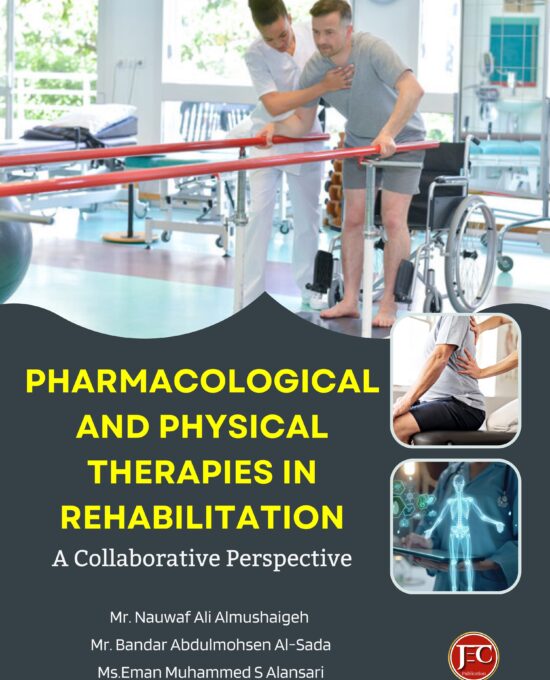
Pharmacological and Physical Therapies in Rehabilitation: A Collaborative Perspective
₹799.00
Over the past few decades, rehabilitation science has undergone a profound
transformation: from a largely siloed discipline concerned mainly with
restoring physical capability to an integrated, multidisciplinary field
characterized by evidence-based practice, patient-centered care, and
collaborative decision-making. Rehabilitation professionals today work in
ever more complex clinical environment where pharmacologic agents,
physical activity and exercise, and technology converge to promote
function, to decrease disability and to improve the quality of life.
Pharmacological and Physical Therapies in Rehabilitation: A Collaborative
Perspective was written to address the gap in knowledge that exists
between the disciplines of pharmacology and physical rehabilitation
practice. Though, each domain has their own depth in standards and
sophistication, the ideal patient outcome occurs with the context that
clinicians have an understanding of how the therapeutic strategies actually
complement—and usually influence—each other. The reasons are multiple
but organized strategy is required in the management of pain, spasticity,
inflammation, neuromuscular disorders, cardiopulmonary dysfunction,
orthopedic and chronic disease affecting mobility and functional status.
We want to provide a full resource to health professionals, students and
researchers, which encompasses:
Core pharmacological practices applicable to rehabilitation
This article reviews common drugs in use including their mechanism,
indication and adverse effects Physical therapy modalities like exercise therapy, electrotherapy, manual
therapy, therapeutic technologies, functional training
Integrated models of interprofessional collaboration that provide seamless
patient care.
Examples from various theatres of practice demonstrating practical
applications
At every stage in this book, readers will see evidence-based practice,
interprofessional collaboration, and moral obligation to provide safe and
effective care. Written at the appropriate level of clarity, with clinical
relevance and scientific rigor each chapter is designed to benefit students
beginning their journey, practicing clinicians fine tuning their skills, and
researchers pursuing creative new rehabilitation pathways.
With ongoing innovations in pharmacology, artificial intelligence,
regenerative medicine, and individualized rehabilitation, the demand for
integrated treatment strategies will continue to increase. Perhaps not just an
academic reference but also a prompt, we hope the text can stimulate some
collaborative thinking, and innovative practice.
We also thank the clinicians, educators, and other experts who have
contributed to this work and offer our heartfelt gratitude. This book has
been made possible by their dedication to the improvement of
rehabilitation science. Finally, we thank patients who, through their
resilience and trust, and willingness to teach us, have enabled our respective
journeys of learning and reflection, so that we might continue to improve
the science and practice of anesthesia. We hope that this book will aid in
the education of clinicians to be competent but also collaborative,
comprehensive, and perspective-based in their approach to rehabilitation.
Pharmacological and Physical Therapies in Rehabilitation: A Collaborative Perspective
₹799.00
Over the past few decades, rehabilitation science has undergone a profound
transformation: from a largely siloed discipline concerned mainly with
restoring physical capability to an integrated, multidisciplinary field
characterized by evidence-based practice, patient-centered care, and
collaborative decision-making. Rehabilitation professionals today work in
ever more complex clinical environment where pharmacologic agents,
physical activity and exercise, and technology converge to promote
function, to decrease disability and to improve the quality of life.
Pharmacological and Physical Therapies in Rehabilitation: A Collaborative
Perspective was written to address the gap in knowledge that exists
between the disciplines of pharmacology and physical rehabilitation
practice. Though, each domain has their own depth in standards and
sophistication, the ideal patient outcome occurs with the context that
clinicians have an understanding of how the therapeutic strategies actually
complement—and usually influence—each other. The reasons are multiple
but organized strategy is required in the management of pain, spasticity,
inflammation, neuromuscular disorders, cardiopulmonary dysfunction,
orthopedic and chronic disease affecting mobility and functional status.
We want to provide a full resource to health professionals, students and
researchers, which encompasses:
Core pharmacological practices applicable to rehabilitation
This article reviews common drugs in use including their mechanism,
indication and adverse effects Physical therapy modalities like exercise therapy, electrotherapy, manual
therapy, therapeutic technologies, functional training
Integrated models of interprofessional collaboration that provide seamless
patient care.
Examples from various theatres of practice demonstrating practical
applications
At every stage in this book, readers will see evidence-based practice,
interprofessional collaboration, and moral obligation to provide safe and
effective care. Written at the appropriate level of clarity, with clinical
relevance and scientific rigor each chapter is designed to benefit students
beginning their journey, practicing clinicians fine tuning their skills, and
researchers pursuing creative new rehabilitation pathways.
With ongoing innovations in pharmacology, artificial intelligence,
regenerative medicine, and individualized rehabilitation, the demand for
integrated treatment strategies will continue to increase. Perhaps not just an
academic reference but also a prompt, we hope the text can stimulate some
collaborative thinking, and innovative practice.
We also thank the clinicians, educators, and other experts who have
contributed to this work and offer our heartfelt gratitude. This book has
been made possible by their dedication to the improvement of
rehabilitation science. Finally, we thank patients who, through their
resilience and trust, and willingness to teach us, have enabled our respective
journeys of learning and reflection, so that we might continue to improve
the science and practice of anesthesia. We hope that this book will aid in
the education of clinicians to be competent but also collaborative,
comprehensive, and perspective-based in their approach to rehabilitation.

Pharmacy Practice in the Digital Era: Innovations, Challenges, and Future Trends
₹799.00
The practice of pharmacy is undergoing a profound transformation driven by
rapid advancements in digital technology and evolving healthcare needs.
Innovations such as electronic health records, telepharmacy, artificial
intelligence, big data analytics, automation, blockchain, and digital
therapeutics are reshaping how medicines are developed, dispensed,
monitored, and optimized for patient care. In this context, “Pharmacy Practice
in the Digital Era: Innovations, Challenges, and Future Trends” aims to
provide a comprehensive and structured understanding of the changing
landscape of pharmacy practice in a technology-enabled healthcare ecosystem.
This book has been designed to bridge the gap between traditional pharmacy
roles and emerging digital competencies required of modern pharmacists. It
explores key technological innovations influencing pharmacy practice,
examines regulatory, ethical, and operational challenges associated with digital
transformation, and highlights the expanding role of pharmacists in clinical
decision-making, data-driven care, and interdisciplinary collaboration. Special
emphasis is placed on patient safety, data security, regulatory compliance, and
equitable access to digital pharmacy services.
The content of this book is intended for a wide audience, including
undergraduate and postgraduate pharmacy students, practicing pharmacists,
educators, researchers, and healthcare professionals seeking to adapt to the
demands of digital health. By integrating theoretical concepts with practical
insights, case-based discussions, and future-oriented perspectives, the book
serves as both an academic reference and a practical guide for real-world
application.
Pharmacy Practice in the Digital Era: Innovations, Challenges, and Future Trends
₹799.00
The practice of pharmacy is undergoing a profound transformation driven by
rapid advancements in digital technology and evolving healthcare needs.
Innovations such as electronic health records, telepharmacy, artificial
intelligence, big data analytics, automation, blockchain, and digital
therapeutics are reshaping how medicines are developed, dispensed,
monitored, and optimized for patient care. In this context, “Pharmacy Practice
in the Digital Era: Innovations, Challenges, and Future Trends” aims to
provide a comprehensive and structured understanding of the changing
landscape of pharmacy practice in a technology-enabled healthcare ecosystem.
This book has been designed to bridge the gap between traditional pharmacy
roles and emerging digital competencies required of modern pharmacists. It
explores key technological innovations influencing pharmacy practice,
examines regulatory, ethical, and operational challenges associated with digital
transformation, and highlights the expanding role of pharmacists in clinical
decision-making, data-driven care, and interdisciplinary collaboration. Special
emphasis is placed on patient safety, data security, regulatory compliance, and
equitable access to digital pharmacy services.
The content of this book is intended for a wide audience, including
undergraduate and postgraduate pharmacy students, practicing pharmacists,
educators, researchers, and healthcare professionals seeking to adapt to the
demands of digital health. By integrating theoretical concepts with practical
insights, case-based discussions, and future-oriented perspectives, the book
serves as both an academic reference and a practical guide for real-world
application.
Physical Pharmaceutics -i
₹499.00
Welcome to the world of Physical Pharmaceutics-I This book is tailored for Bachelor of Pharmacy (B.
Pharm) second-year students, aiming to provide a comprehensive understanding of foundational
concepts in physical pharmaceutics. Physical Pharmaceutics-I forms the bedrock of your journey into
understanding the intricate relationships between pharmaceutical substances and their physical
properties. This book covers essential topics such as solubility, states of matter, physicochemical
properties of drug molecules, and surface and interfacial phenomena. These topics are crucial for
mastering the formulation and delivery of pharmaceutical products, ensuring their efficacy and safety
in clinical settings.
Throughout this book, you will delve into the principles that govern the behavior of drugs in different
physical states, their interactions with various environments, and the mechanisms that influence their
dissolution and absorption in biological systems. Each chapter is designed to build upon the previous
one, offering a structured approach to learning that will deepen your understanding step by step.
We have endeavored to present complex theories and principles in a clear and accessible manner,
supported by illustrative examples, diagrams, and practical applications relevant to pharmaceutical
sciences. This approach will not only help you grasp the theoretical underpinnings but also apply them
to real-world scenarios in drug development and formulation. As you embark on this educational
journey, we encourage you to engage actively with the content, ask questions, and explore the
implications of physical pharmaceutics in shaping the future of pharmaceutical research and practice.
Whether you aspire to be a researcher, formulator, or practitioner in the field of pharmacy, the knowledge
gained from this book will serve as a solid foundation for your professional endeavors.
We hope that this book will inspire your curiosity and passion for physical pharmaceutics, empowering
you to contribute meaningfully to the advancement of pharmaceutical sciences. Your dedication and
commitment to learning will undoubtedly pave the way for a rewarding career in pharmacy. Best wishes
on your academic pursuits and exploration of Physical Pharmaceutics-I
Sincerely,
Authors
Physical Pharmaceutics -i
₹499.00
Welcome to the world of Physical Pharmaceutics-I This book is tailored for Bachelor of Pharmacy (B.
Pharm) second-year students, aiming to provide a comprehensive understanding of foundational
concepts in physical pharmaceutics. Physical Pharmaceutics-I forms the bedrock of your journey into
understanding the intricate relationships between pharmaceutical substances and their physical
properties. This book covers essential topics such as solubility, states of matter, physicochemical
properties of drug molecules, and surface and interfacial phenomena. These topics are crucial for
mastering the formulation and delivery of pharmaceutical products, ensuring their efficacy and safety
in clinical settings.
Throughout this book, you will delve into the principles that govern the behavior of drugs in different
physical states, their interactions with various environments, and the mechanisms that influence their
dissolution and absorption in biological systems. Each chapter is designed to build upon the previous
one, offering a structured approach to learning that will deepen your understanding step by step.
We have endeavored to present complex theories and principles in a clear and accessible manner,
supported by illustrative examples, diagrams, and practical applications relevant to pharmaceutical
sciences. This approach will not only help you grasp the theoretical underpinnings but also apply them
to real-world scenarios in drug development and formulation. As you embark on this educational
journey, we encourage you to engage actively with the content, ask questions, and explore the
implications of physical pharmaceutics in shaping the future of pharmaceutical research and practice.
Whether you aspire to be a researcher, formulator, or practitioner in the field of pharmacy, the knowledge
gained from this book will serve as a solid foundation for your professional endeavors.
We hope that this book will inspire your curiosity and passion for physical pharmaceutics, empowering
you to contribute meaningfully to the advancement of pharmaceutical sciences. Your dedication and
commitment to learning will undoubtedly pave the way for a rewarding career in pharmacy. Best wishes
on your academic pursuits and exploration of Physical Pharmaceutics-I
Sincerely,
Authors



QUALITATIVE RESEARCH : PRINCIPLES AND METHODOLOGICAL APPROCHES
₹499.00
The pursuit of knowledge in the social sciences, management, psychology, law, education, and allied disciplines increasingly demands approaches that move beyond numbers and statistics to understand the deeper meanings, lived experiences, social realities, and contextual complexities of human life. Qualitative research has therefore emerged as one of the most significant and intellectually enriching approaches to inquiry, enabling researchers to explore phenomena through interpretation, observation, interaction, and critical reflection. This book, Qualitative Research: Principles and Methodological Approaches, has been developed with the intention of providing a comprehensive, systematic, and practical understanding of qualitative research methodologies for students, scholars, academicians, and professionals across disciplines.
The idea for this book originated from our collective academic experiences as teachers, researchers, mentors, and practitioners engaged in higher education and scholarly inquiry. Over the years, we observed that many students and emerging researchers often encounter difficulties in understanding the philosophical foundations, methodological flexibility, analytical procedures, and practical applications of qualitative research. While several scholarly resources exist, there remains a need for a text that presents qualitative research in a clear, structured, academically rigorous, and contextually relevant manner, particularly for Indian learners and researchers. This book seeks to fulfil that need by combining theoretical depth with practical orientation.
The text systematically introduces readers to the nature, evolution, principles, and philosophical foundations of qualitative inquiry. It explores major qualitative traditions such as phenomenology, grounded theory, ethnography, narrative inquiry, action research, and case study research, while also discussing research design, sampling strategies, data collection methods, qualitative data analysis techniques, ethical considerations, and report writing. In addition, contemporary developments such as digital qualitative research and the use of qualitative data analysis software including NVivo, ATLAS.ti, and MAXQDA have been incorporated to make the book aligned with modern research practices.
One of the major strengths of this book lies in its interdisciplinary perspective, which reflects the diverse academic and professional backgrounds of its authors. The collaborative effort behind this work integrates expertise from psychology, data analytics, management, law, research methodology, and technology-enabled inquiry. This diversity has enriched the content of the book and enabled the presentation of qualitative research not merely as a methodological technique, but as a holistic approach to understanding human behaviour, institutions, organisations, legal systems, and social transformation.
Dr. Ravi Shankar A.V., Professor of Psychology at Alliance University, Bengaluru, brings to this work more than three decades of experience spanning academic, corporate, and applied behavioural domains. His expertise in psychology, behavioural sciences, and research methodology has significantly shaped the conceptual and methodological foundations of this book.
Ms. Dixita Gosukonda contributes her expertise in data analytics, SPSS, AMOS, and research methodologies, along with her active involvement in faculty development programmes and academic research initiatives. Her practical orientation toward methodological applications has enriched the analyti…
QUALITATIVE RESEARCH : PRINCIPLES AND METHODOLOGICAL APPROCHES
₹499.00
The pursuit of knowledge in the social sciences, management, psychology, law, education, and allied disciplines increasingly demands approaches that move beyond numbers and statistics to understand the deeper meanings, lived experiences, social realities, and contextual complexities of human life. Qualitative research has therefore emerged as one of the most significant and intellectually enriching approaches to inquiry, enabling researchers to explore phenomena through interpretation, observation, interaction, and critical reflection. This book, Qualitative Research: Principles and Methodological Approaches, has been developed with the intention of providing a comprehensive, systematic, and practical understanding of qualitative research methodologies for students, scholars, academicians, and professionals across disciplines.
The idea for this book originated from our collective academic experiences as teachers, researchers, mentors, and practitioners engaged in higher education and scholarly inquiry. Over the years, we observed that many students and emerging researchers often encounter difficulties in understanding the philosophical foundations, methodological flexibility, analytical procedures, and practical applications of qualitative research. While several scholarly resources exist, there remains a need for a text that presents qualitative research in a clear, structured, academically rigorous, and contextually relevant manner, particularly for Indian learners and researchers. This book seeks to fulfil that need by combining theoretical depth with practical orientation.
The text systematically introduces readers to the nature, evolution, principles, and philosophical foundations of qualitative inquiry. It explores major qualitative traditions such as phenomenology, grounded theory, ethnography, narrative inquiry, action research, and case study research, while also discussing research design, sampling strategies, data collection methods, qualitative data analysis techniques, ethical considerations, and report writing. In addition, contemporary developments such as digital qualitative research and the use of qualitative data analysis software including NVivo, ATLAS.ti, and MAXQDA have been incorporated to make the book aligned with modern research practices.
One of the major strengths of this book lies in its interdisciplinary perspective, which reflects the diverse academic and professional backgrounds of its authors. The collaborative effort behind this work integrates expertise from psychology, data analytics, management, law, research methodology, and technology-enabled inquiry. This diversity has enriched the content of the book and enabled the presentation of qualitative research not merely as a methodological technique, but as a holistic approach to understanding human behaviour, institutions, organisations, legal systems, and social transformation.
Dr. Ravi Shankar A.V., Professor of Psychology at Alliance University, Bengaluru, brings to this work more than three decades of experience spanning academic, corporate, and applied behavioural domains. His expertise in psychology, behavioural sciences, and research methodology has significantly shaped the conceptual and methodological foundations of this book.
Ms. Dixita Gosukonda contributes her expertise in data analytics, SPSS, AMOS, and research methodologies, along with her active involvement in faculty development programmes and academic research initiatives. Her practical orientation toward methodological applications has enriched the analyti…
